University of York, York, UK.
Institute of Psychiatry, Psychology & Neuroscience, London, UK.
Child Dev. 2020 May;91(3):705-714. doi: 10.1111/cdev.13364. Epub 2020 Mar 23.
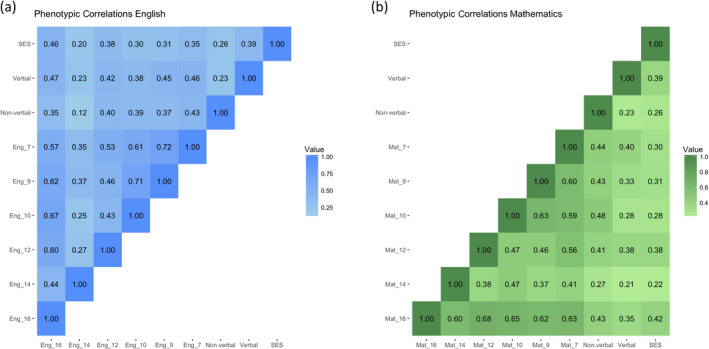
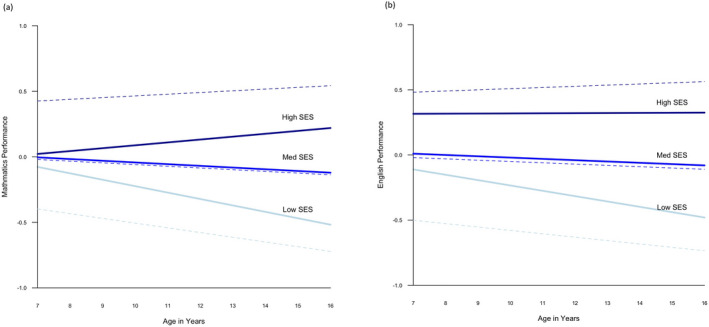
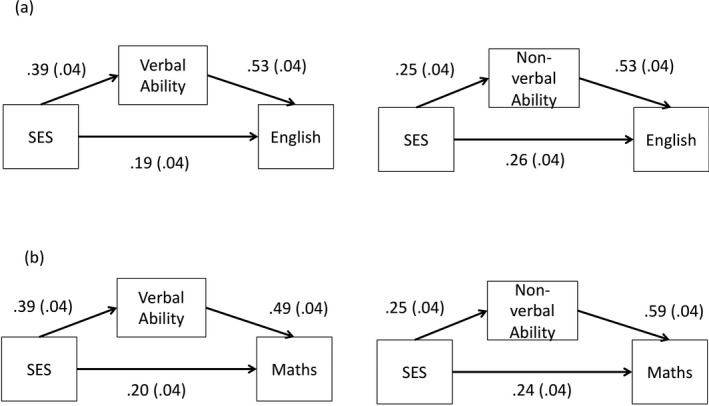
We compared the extent to which the long-term influence of family socioeconomic status (SES) on children's school performance from age 7 through 16 years was mediated by their preschool verbal and nonverbal ability. In 661 British children, who completed 17 researcher-administered ability tests at age 4.5 years, SES correlated more strongly with verbal than nonverbal ability (.39 vs. .26). Verbal ability mediated about half of the association between SES and school performance at age 7, while nonverbal ability accounted for a third of the link. Only SES, but not verbal or nonverbal ability, was associated with changes in school performance from age 7 to 16. We found that SES-related differences in school performance are only partly transmitted through children's preschool verbal abilities.
我们比较了从 7 岁到 16 岁,家庭社会经济地位(SES)对儿童学校表现的长期影响在多大程度上受到他们学前言语和非言语能力的影响。在 661 名英国儿童中,他们在 4.5 岁时完成了 17 项研究人员管理的能力测试,SES 与言语能力的相关性强于非言语能力(.39 对.26)。在 7 岁时,言语能力在 SES 与学校表现之间的关联中约占一半,而非言语能力占三分之一。只有 SES,而不是言语或非言语能力,与从 7 岁到 16 岁期间学校表现的变化有关。我们发现,与 SES 相关的学校表现差异仅部分通过儿童的学前言语能力传递。