Department of Biomedical Engineering, University of Virginia, PO Box 800759, Charlottesville, VA 22908-0759, USA.
Department of Pharmacology, University of Virginia, Charlottesville, VA, USA; Robert M. Berne Cardiovascular Research Center, University of Virginia, Charlottesville, VA, USA.
Matrix Biol. 2020 Sep;91-92:136-151. doi: 10.1016/j.matbio.2020.03.007. Epub 2020 Mar 21.
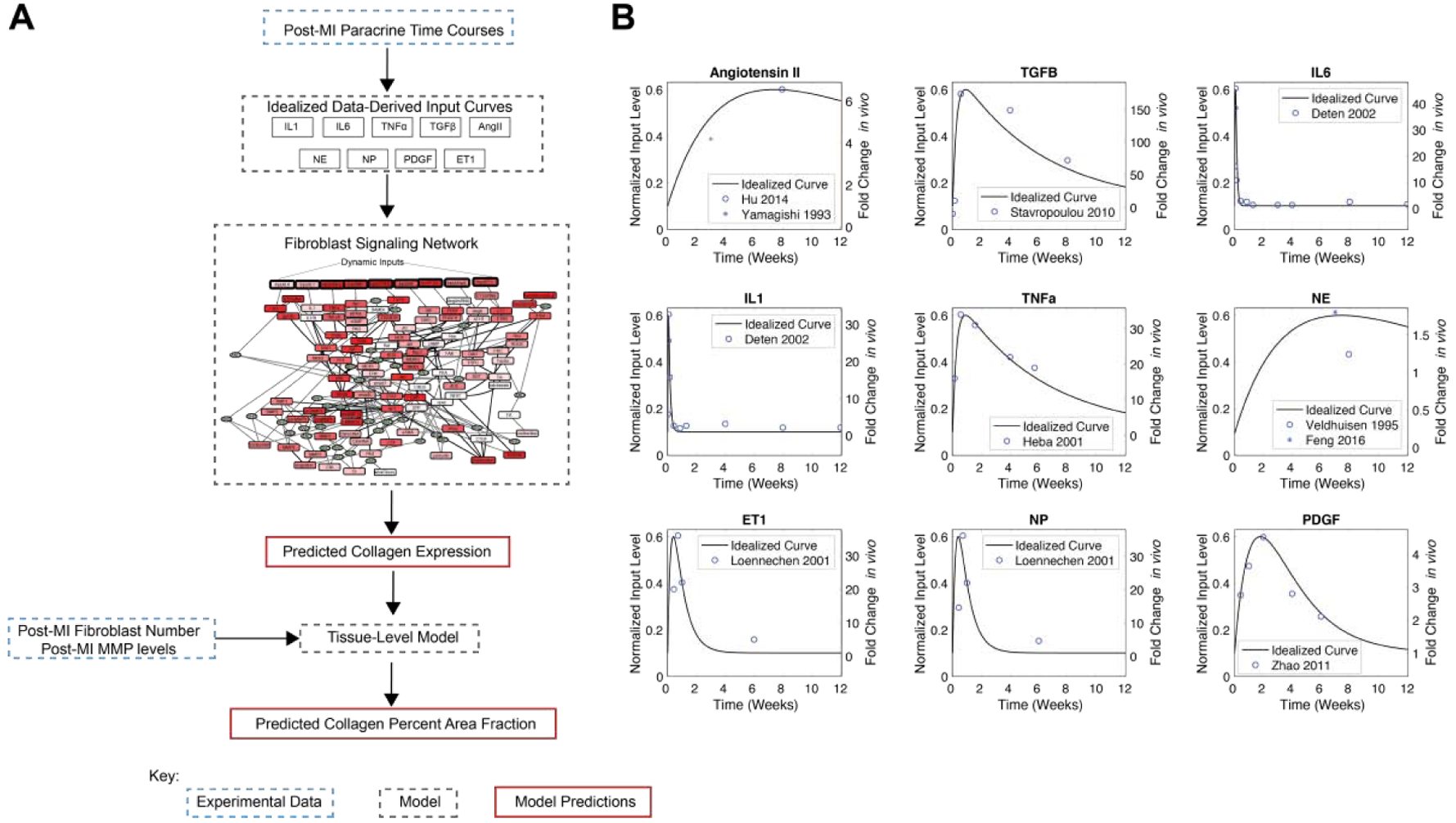
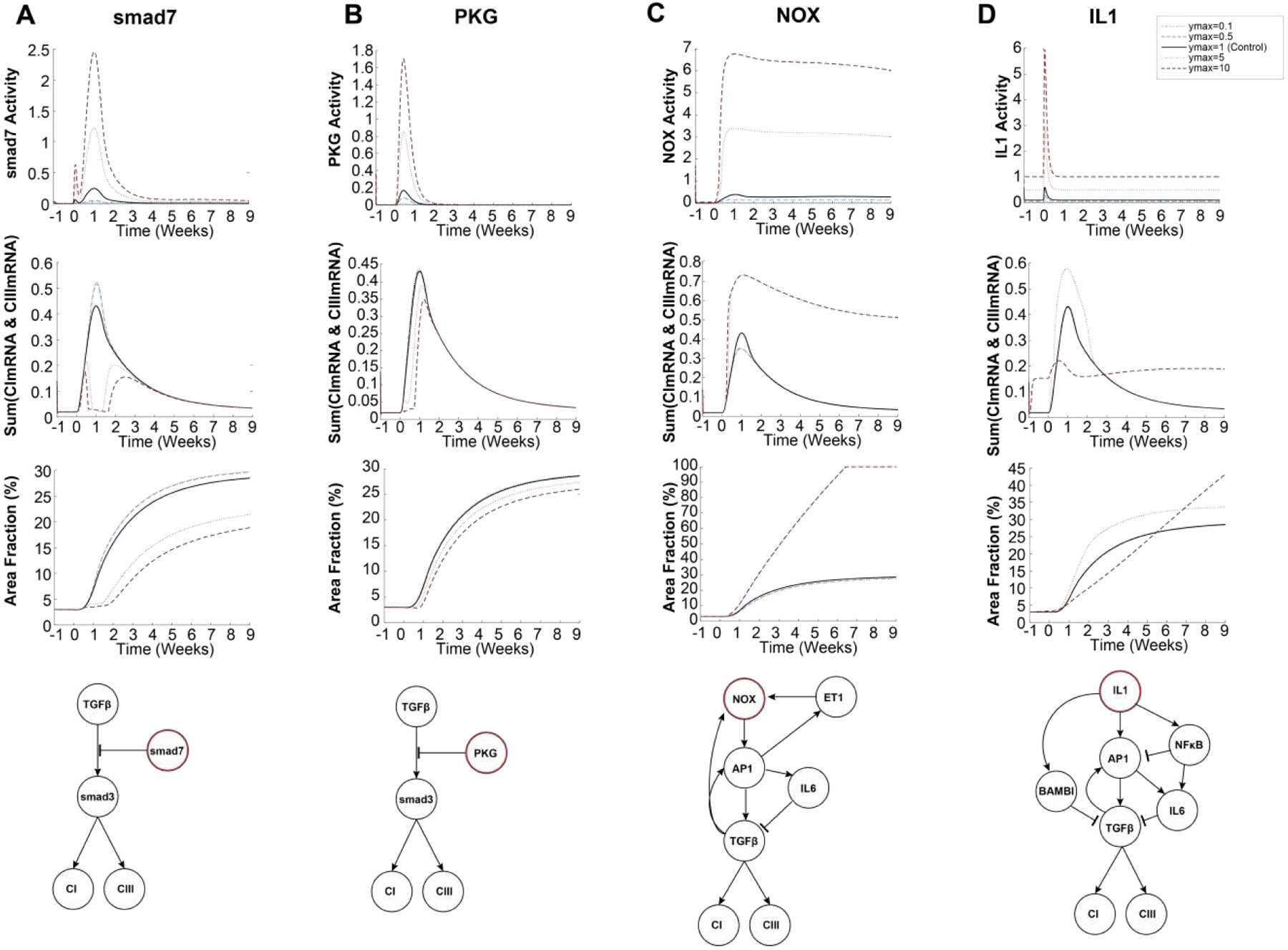
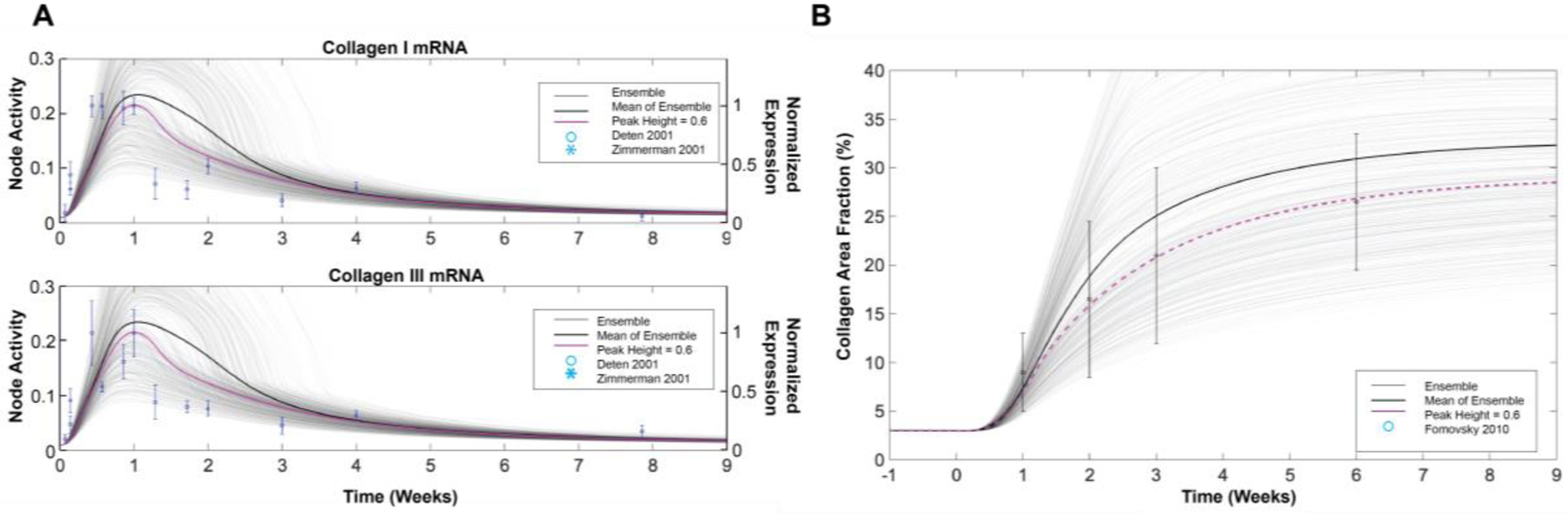
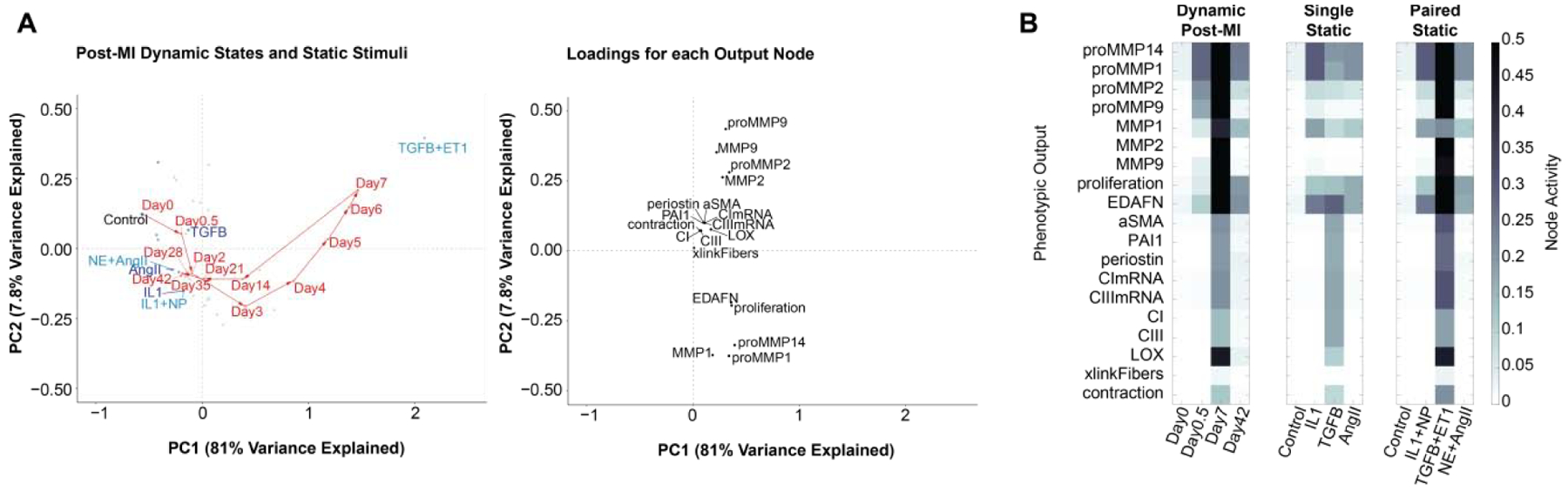
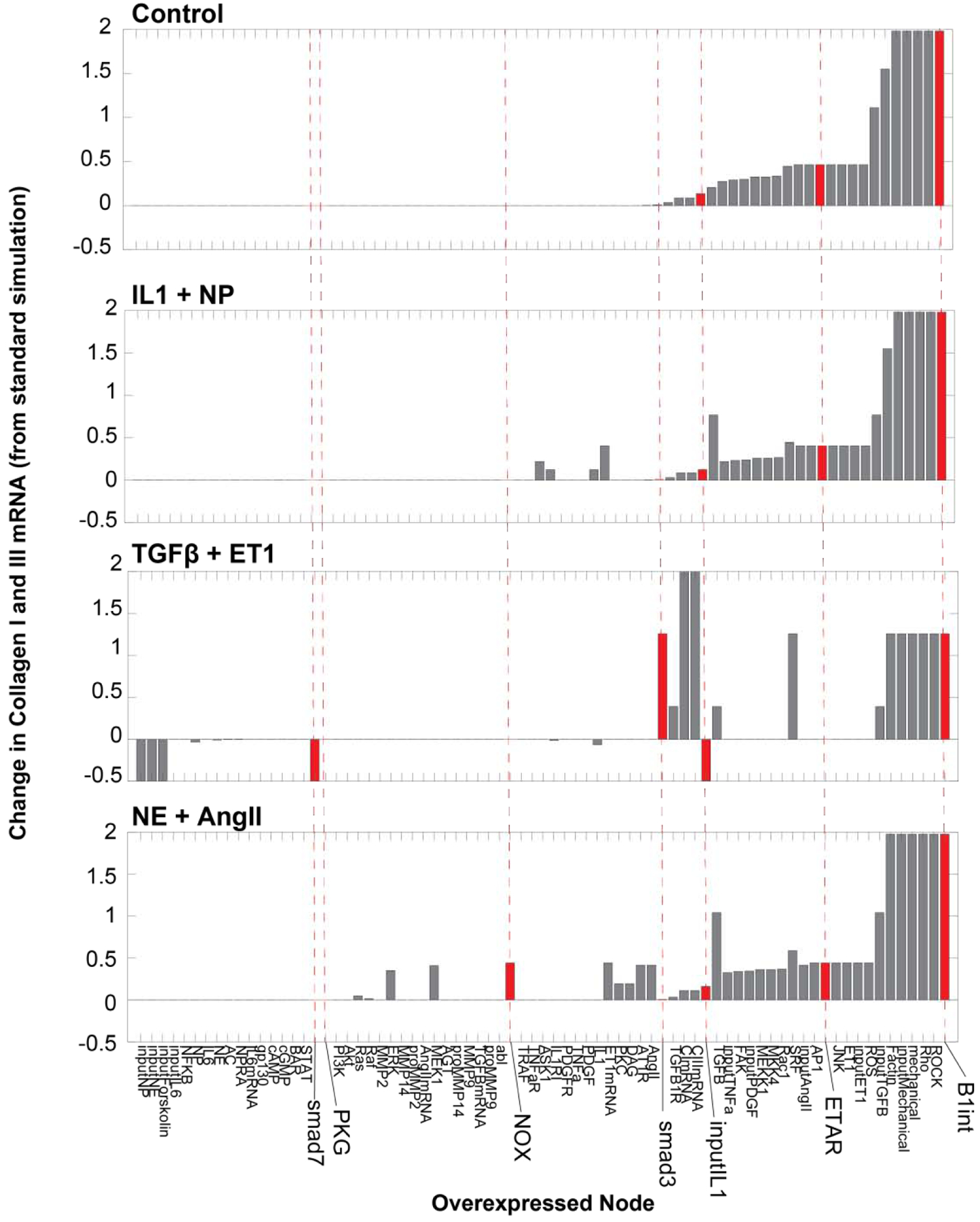
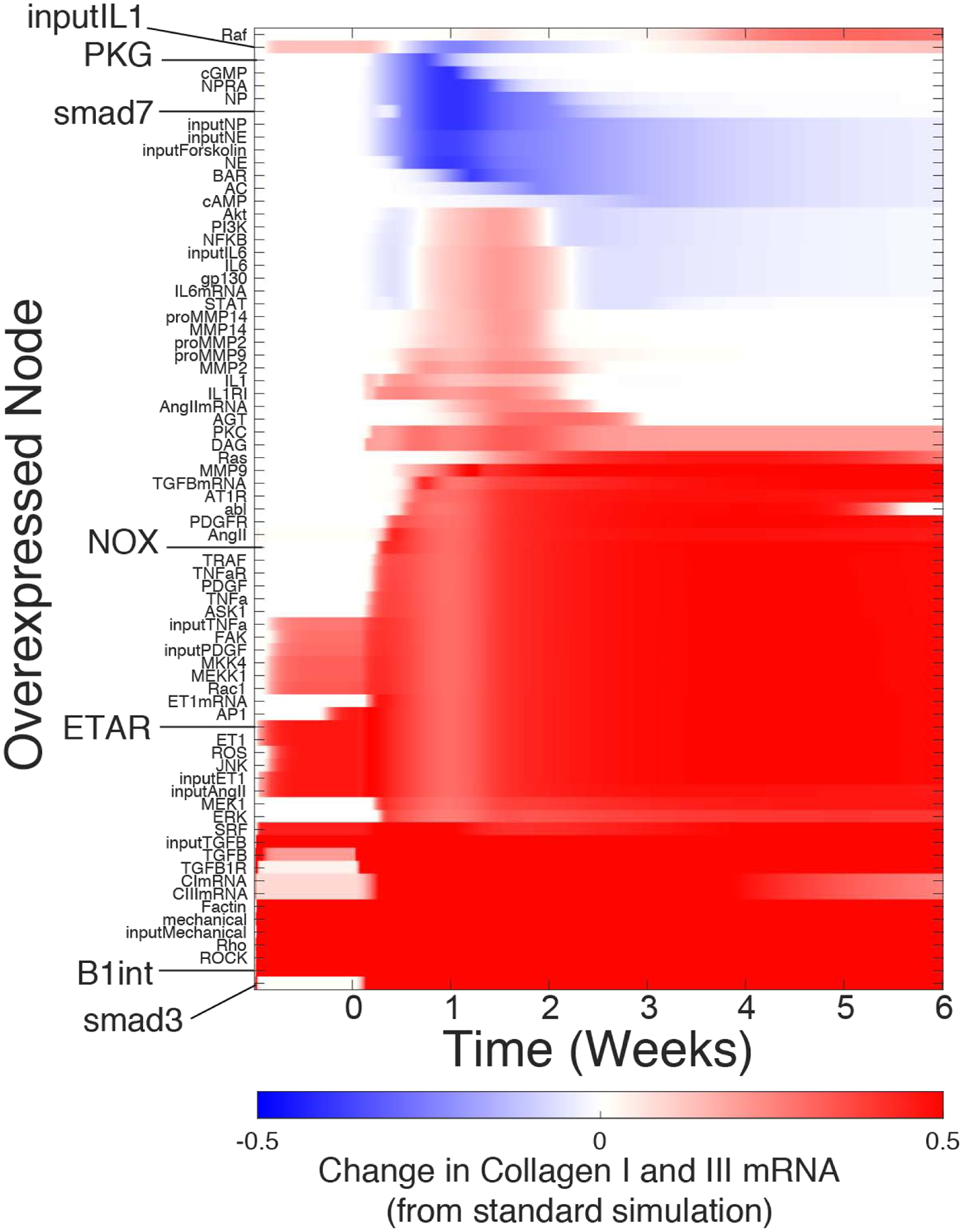
The fibroblast is a key mediator of wound healing in the heart and other organs, yet how it integrates multiple time-dependent paracrine signals to control extracellular matrix synthesis has been difficult to study in vivo. Here, we extended a computational model to simulate the dynamics of fibroblast signaling and fibrosis after myocardial infarction (MI) in response to time-dependent data for nine paracrine stimuli. This computational model was validated against dynamic collagen expression and collagen area fraction data from post-infarction rat hearts. The model predicted that while many features of the fibroblast phenotype at inflammatory or maturation phases of healing could be recapitulated by single static paracrine stimuli (interleukin-1 and angiotensin-II, respectively), mimicking the reparative phase required paired stimuli (e.g. TGFβ and endothelin-1). Virtual overexpression screens simulated with either static cytokine pairs or post-MI paracrine dynamic predicted phase-specific regulators of collagen expression. Several regulators increased (Smad3) or decreased (Smad7, protein kinase G) collagen expression specifically in the reparative phase. NADPH oxidase (NOX) overexpression sustained collagen expression from reparative to maturation phases, driven by TGFβ and endothelin positive feedback loops. Interleukin-1 overexpression had mixed effects, both enhancing collagen via the TGFβ positive feedback loop and suppressing collagen via NFκB and BAMBI (BMP and activin membrane-bound inhibitor) incoherent feed-forward loops. These model-based predictions reveal network mechanisms by which the dynamics of paracrine stimuli and interacting signaling pathways drive the progression of fibroblast phenotypes and fibrosis after myocardial infarction.
成纤维细胞是心脏和其他器官创伤愈合的关键介质,但它如何整合多个时间依赖的旁分泌信号来控制细胞外基质的合成,这在体内很难研究。在这里,我们扩展了一个计算模型,以模拟心肌梗死后(MI)成纤维细胞信号转导和纤维化的动力学,以响应 9 种旁分泌刺激的时间依赖数据。该计算模型通过对梗死后大鼠心脏的动态胶原表达和胶原面积分数数据进行验证。该模型预测,虽然修复阶段所需的配对刺激(例如 TGFβ 和内皮素-1)可以模拟修复阶段的成纤维细胞表型的许多炎症或成熟阶段的特征,但可以通过单一静态旁分泌刺激(分别为白细胞介素-1 和血管紧张素-II)来再现。使用静态细胞因子对或梗死后旁分泌动态进行的虚拟过表达筛选预测了胶原表达的特定修复阶段调节剂。几种调节剂特异性地增加(Smad3)或减少(Smad7、蛋白激酶 G)胶原表达,具体取决于修复阶段。NADPH 氧化酶(NOX)过表达通过 TGFβ 和内皮素正反馈环,从修复阶段持续到成熟阶段维持胶原表达。白细胞介素-1 过表达具有混合作用,通过 TGFβ 正反馈环增强胶原,通过 NFκB 和 BAMBI(BMP 和激活素膜结合抑制剂)非相干前馈环抑制胶原。这些基于模型的预测揭示了旁分泌刺激和相互作用的信号通路的动力学如何驱动心肌梗死后成纤维细胞表型和纤维化的进展的网络机制。