Department of Neurobiology, Institute of Life Sciences, Hebrew University of Jerusalem, Jerusalem, Israel.
The Edmond and Lily Safra Center for Brain Sciences, Hebrew University of Jerusalem, Jerusalem, Israel.
PLoS One. 2020 Mar 25;15(3):e0221541. doi: 10.1371/journal.pone.0221541. eCollection 2020.
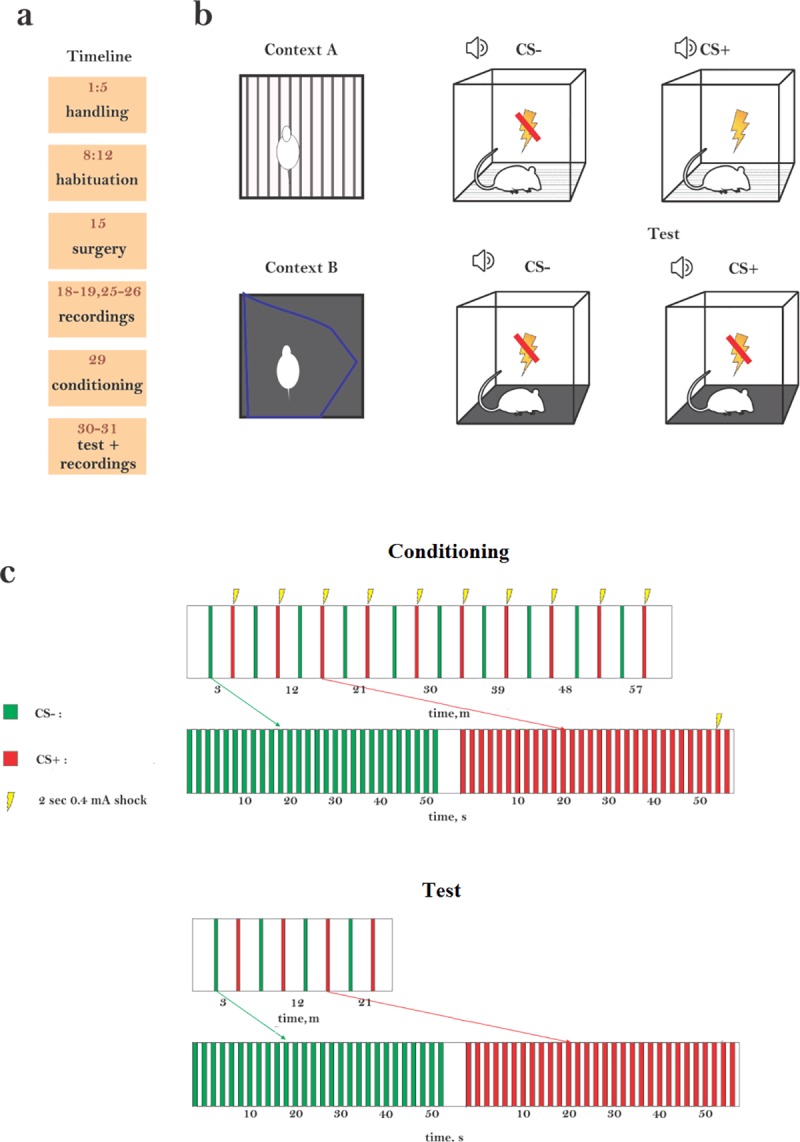
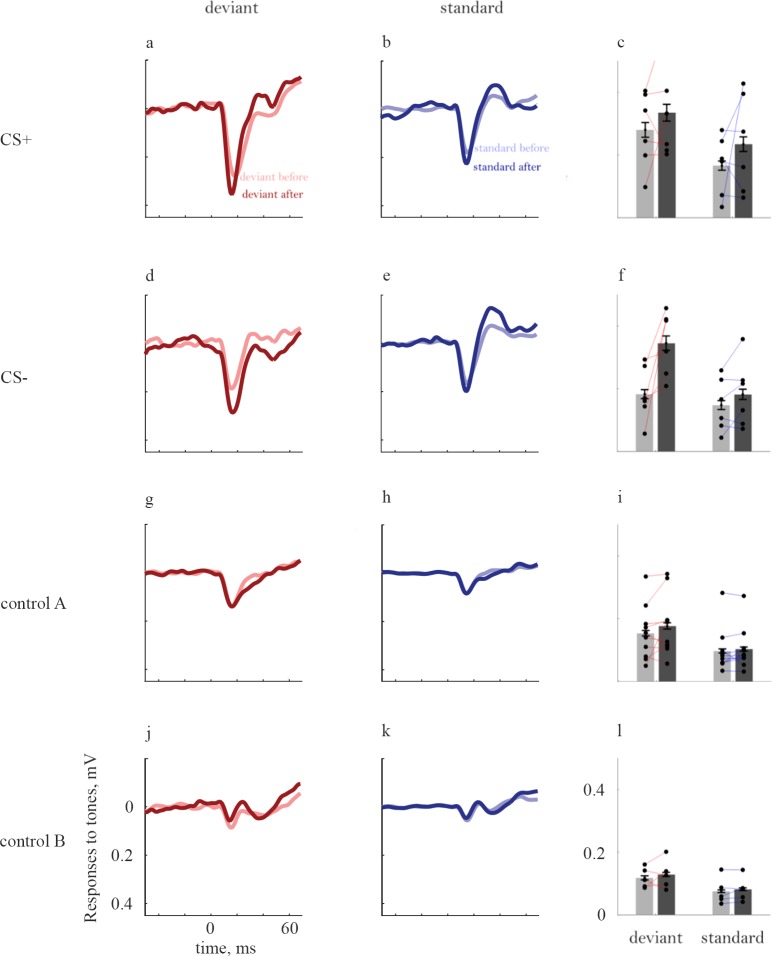
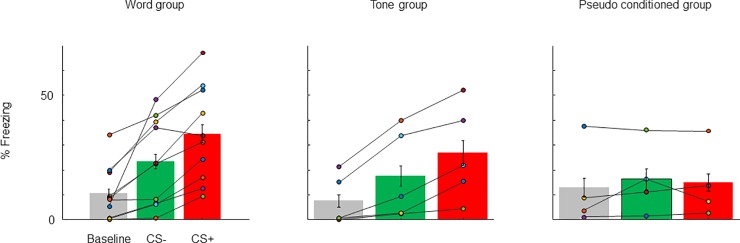
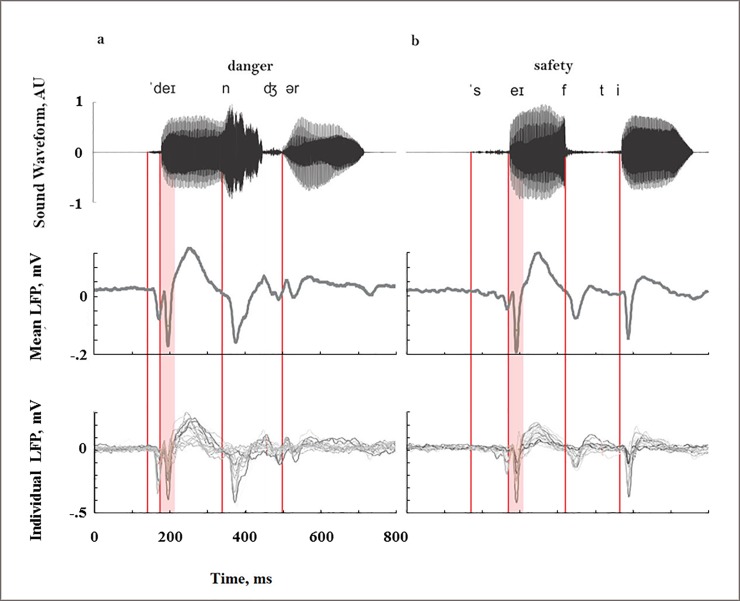
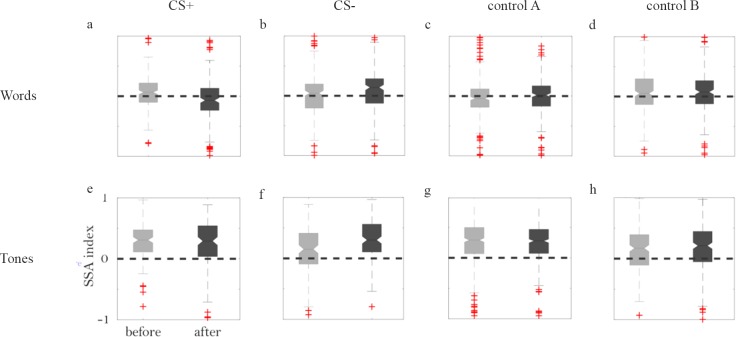
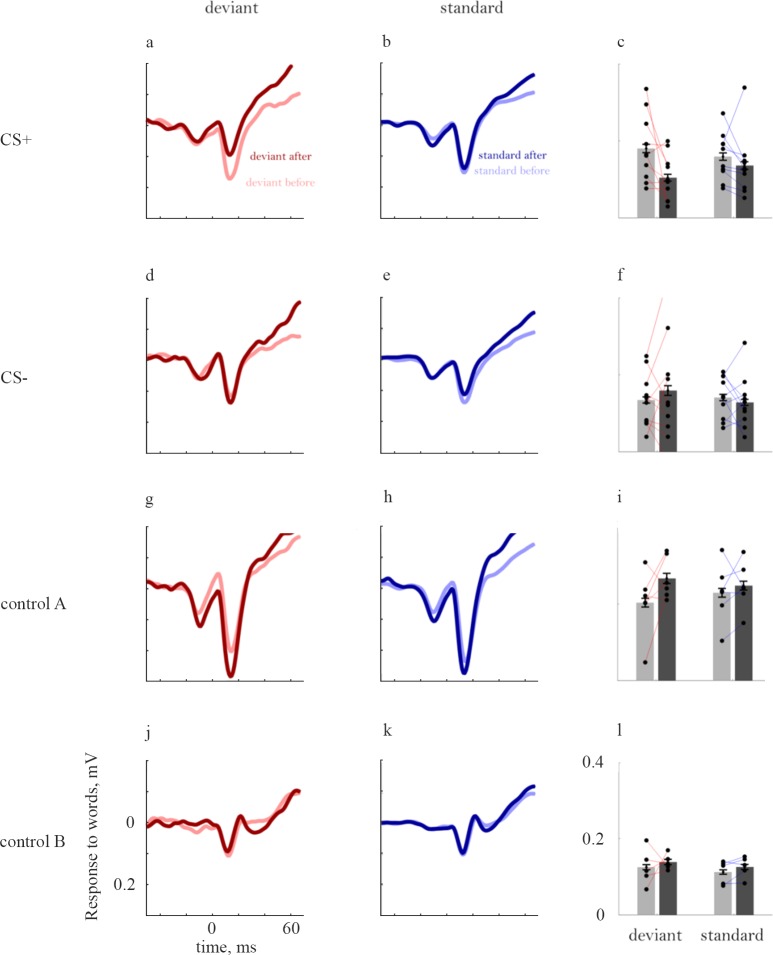
Stimulus-specific adaptation (SSA) is the reduction in responses to a common stimulus that does not generalize, or only partially generalizes, to other stimuli. SSA has been studied mainly with sounds that bear no behavioral meaning. We hypothesized that the acquisition of behavioral meaning by a sound should modify the amount of SSA evoked by that sound. To test this hypothesis, we used fear conditioning in rats, using two word-like stimuli, derived from the English words "danger" and "safety", as well as pure tones. One stimulus (CS+) was associated with a foot shock whereas the other stimulus (CS-) was presented without a concomitant foot shock. We recorded neural responses to the auditory stimuli telemetrically, using chronically implanted multi-electrode arrays in freely moving animals before and after conditioning. Consistent with our hypothesis, SSA changed in a way that depended on the behavioral role of the sound: the contrast between standard and deviant responses remained the same or decreased for CS+ stimuli but increased for CS- stimuli, showing that SSA is shaped by experience. In most cases the sensory responses underlying these changes in SSA increased following conditioning. Unexpectedly, the responses to CS+ word-like stimuli showed a specific, large decrease, which we interpret as evidence for substantial inhibitory plasticity.
刺激特异性适应(SSA)是指对一种共同刺激的反应减少,而这种刺激不会普遍化,或者只是部分普遍化到其他刺激。SSA 主要是在没有行为意义的声音上进行研究的。我们假设,一个声音获得行为意义应该会改变该声音引起的 SSA 的数量。为了验证这一假设,我们使用大鼠进行了恐惧条件反射实验,使用了两个类似单词的刺激,分别来自英语单词“danger”和“safety”,以及纯音。一个刺激(CS+)与足底电击相关,而另一个刺激(CS-)则没有伴随足底电击。我们使用慢性植入的多电极阵列在自由移动的动物中进行遥测记录听觉刺激的神经反应,在条件反射前后进行。与我们的假设一致,SSA 的变化方式取决于声音的行为作用:CS+刺激的标准和偏差反应之间的对比保持不变或减少,但 CS-刺激的对比增加,表明 SSA 是由经验塑造的。在大多数情况下,这些 SSA 变化背后的感觉反应在条件反射后增加。出乎意料的是,CS+类词刺激的反应表现出特定的、大幅度的减少,我们将其解释为大量抑制性可塑性的证据。