Max Planck Institute for Brain Research, Frankfurt, Germany.
Technical University of Munich, Department of Electrical and Computer Engineering, Munich, Germany.
Elife. 2021 Oct 14;10:e65309. doi: 10.7554/eLife.65309.
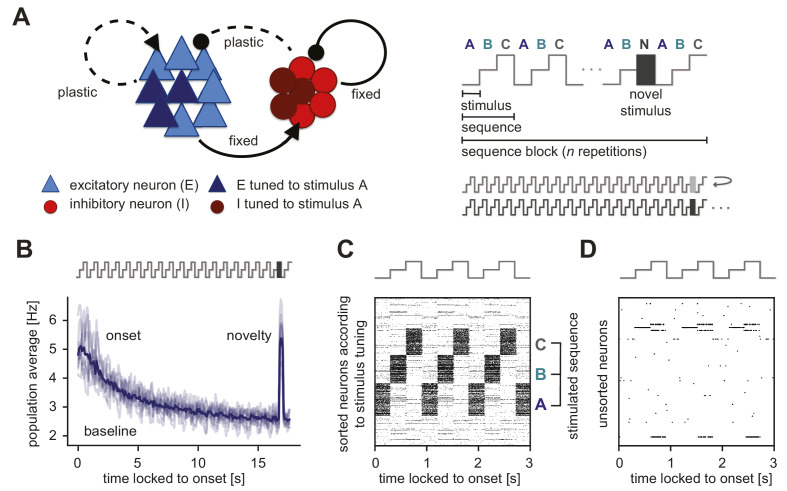
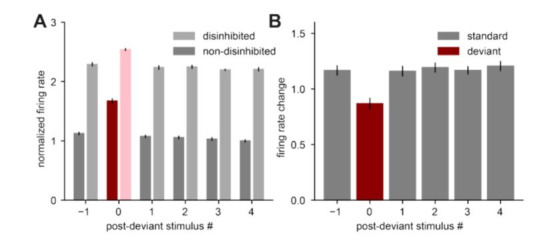
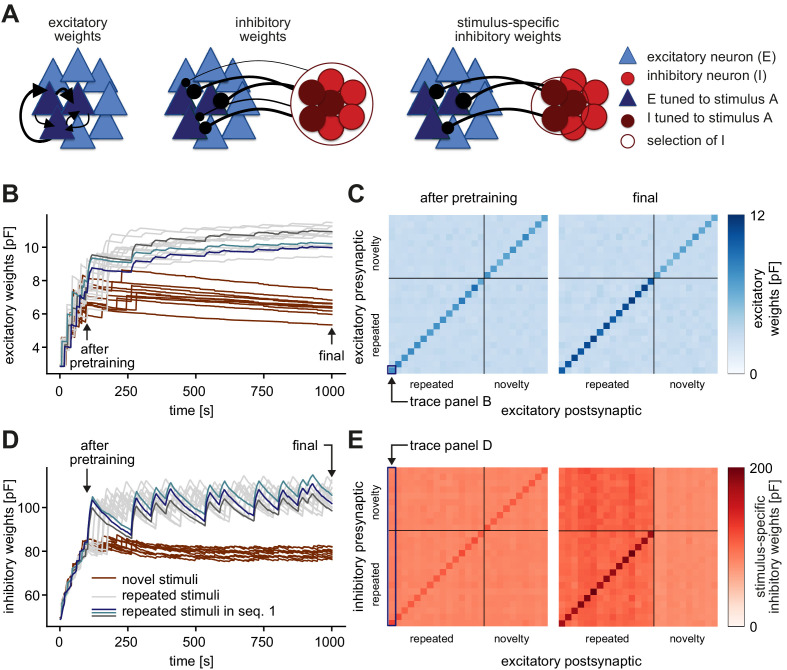
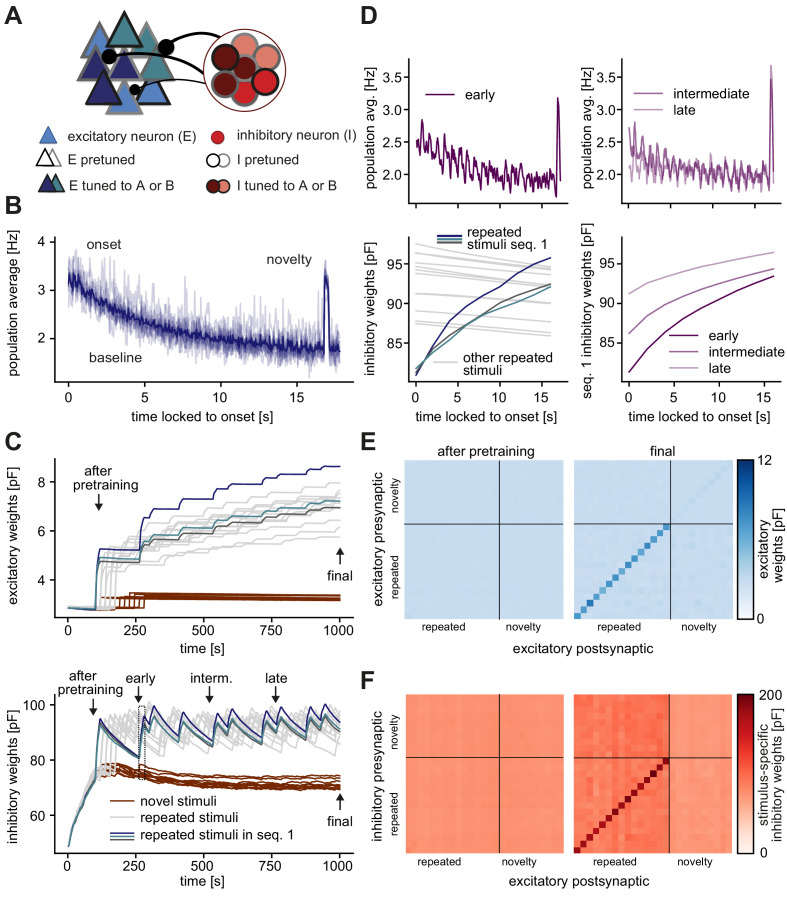
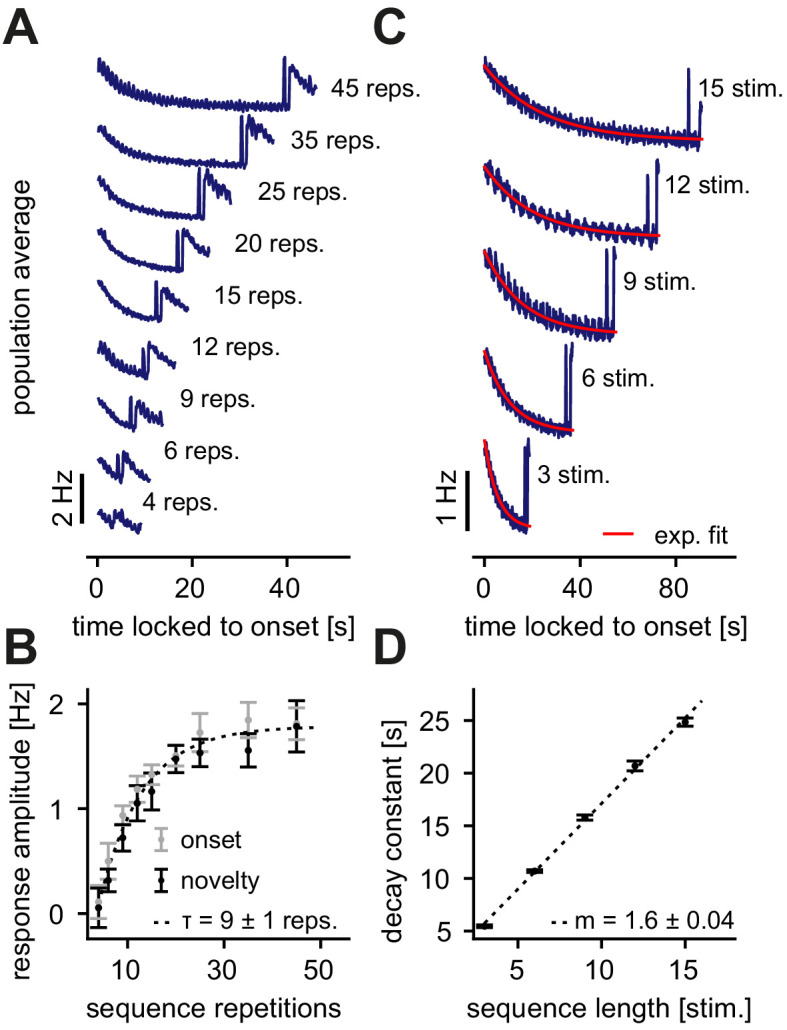
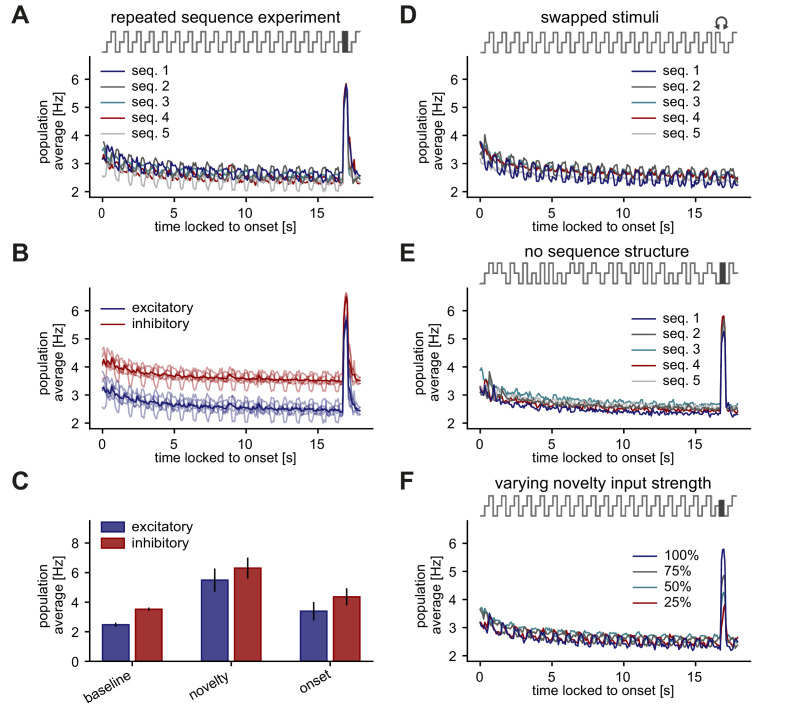
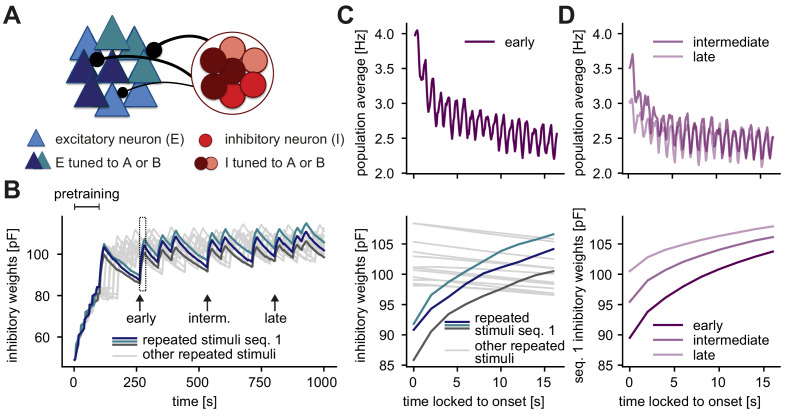
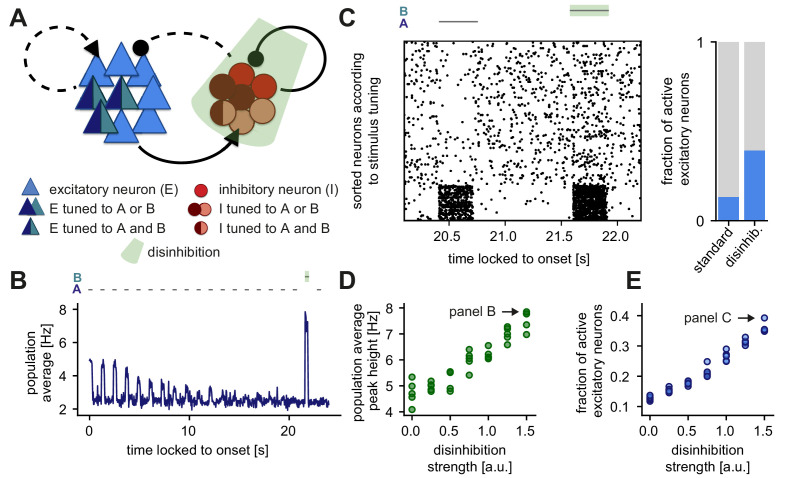
Animals depend on fast and reliable detection of novel stimuli in their environment. Neurons in multiple sensory areas respond more strongly to novel in comparison to familiar stimuli. Yet, it remains unclear which circuit, cellular, and synaptic mechanisms underlie those responses. Here, we show that spike-timing-dependent plasticity of inhibitory-to-excitatory synapses generates novelty responses in a recurrent spiking network model. Inhibitory plasticity increases the inhibition onto excitatory neurons tuned to familiar stimuli, while inhibition for novel stimuli remains low, leading to a network novelty response. The generation of novelty responses does not depend on the periodicity but rather on the distribution of presented stimuli. By including tuning of inhibitory neurons, the network further captures stimulus-specific adaptation. Finally, we suggest that disinhibition can control the amplification of novelty responses. Therefore, inhibitory plasticity provides a flexible, biologically plausible mechanism to detect the novelty of bottom-up stimuli, enabling us to make experimentally testable predictions.
动物依赖于快速而可靠地检测环境中的新刺激。与熟悉的刺激相比,多个感觉区域的神经元对新刺激的反应更强烈。然而,目前尚不清楚哪些电路、细胞和突触机制是这些反应的基础。在这里,我们表明,抑制性到兴奋性突触的尖峰时间依赖性可塑性在一个递归尖峰网络模型中产生新颖的反应。抑制性可塑性增加了对熟悉刺激调谐的兴奋性神经元的抑制,而对新颖刺激的抑制仍然较低,导致网络新颖反应。新颖反应的产生不依赖于周期性,而是依赖于呈现刺激的分布。通过包括抑制性神经元的调谐,网络进一步捕获了刺激特异性适应。最后,我们提出去抑制可以控制新颖反应的放大。因此,抑制性可塑性提供了一种灵活的、具有生物学合理性的机制来检测来自底部向上的刺激的新颖性,使我们能够做出可实验验证的预测。