Li Wenjie, Zhou Ying, Shang Chunyu, Sang Hui, Zhu Hong
Department of Gastroenterology, The First Affiliated Hospital of Nanjing Medical University, 300 Guangzhou Road, Nanjing 210029, China.
Gastroenterol Res Pract. 2020 Mar 9;2020:3245359. doi: 10.1155/2020/3245359. eCollection 2020.
Proton pump inhibitor (PPI) and other acid-suppressing drugs are widely used in the treatment of gastrointestinal ulcer, upper gastrointestinal bleeding, gastritis, and gastric cancer (GC). About 80% of GC patients receive acid suppression treatment. PPI suppresses the production of gastric acid by inhibiting the function of H/K-ATPase in gastric parietal cells and raises the pH value to achieve therapeutic purposes. Some studies have found that PPI had a certain antitumor effect in the proliferation and apoptosis of tumor cells. But the effects of environmental pH on the growth of GC cells and its mechanism are unknown. Therefore, we hoped to find the effects of culture medium pH on the biological behavior of GC cells by in vitro experiments and provide guidance for the use of acid-suppressing drugs in GC patients.
We aimed to observe the effects of pH changes in GC cell culture medium on the cell biological behavior of cancer cells and to analyze the potential mechanisms. We hoped to find out the effect of acid suppression on the growth of GC cells.
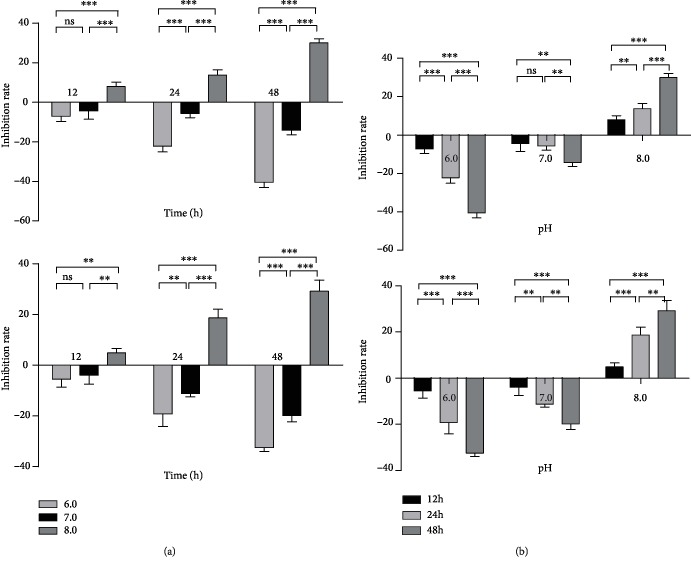
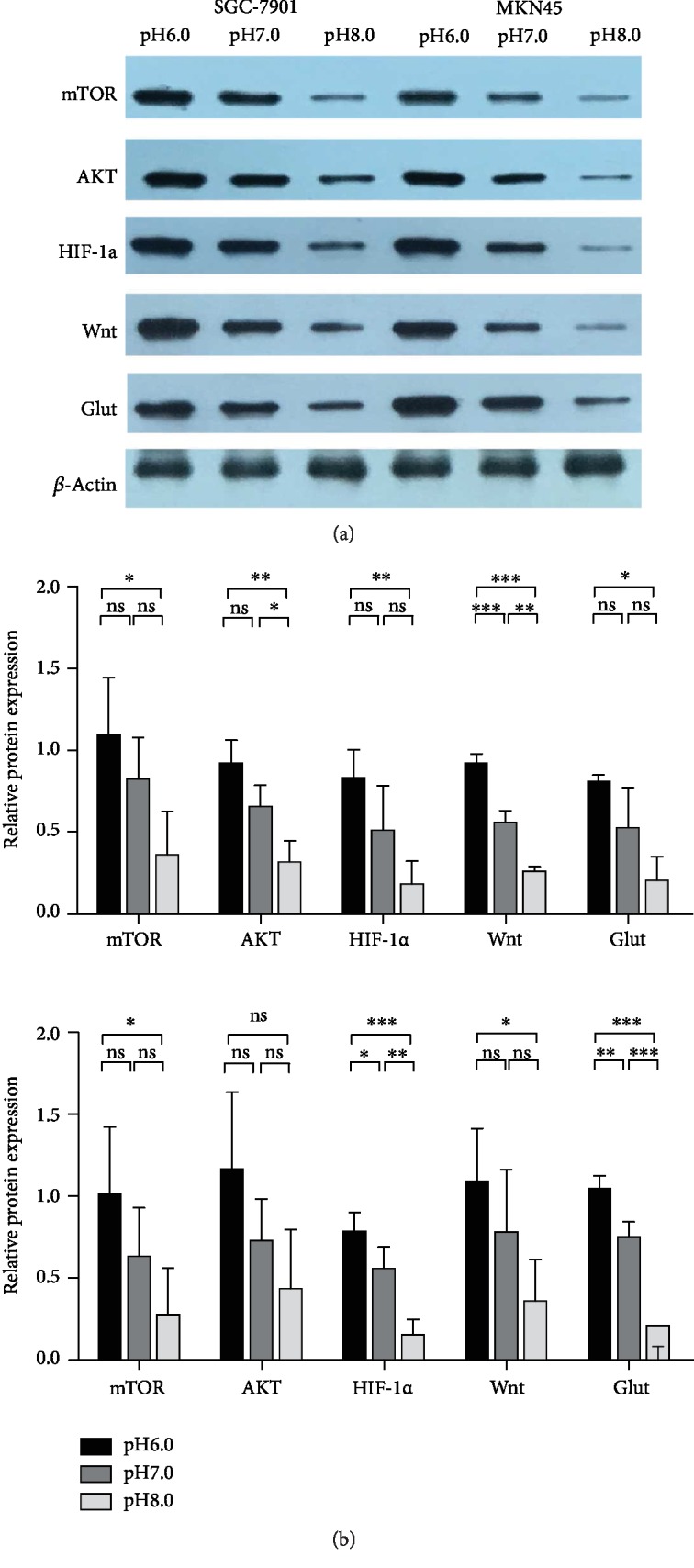
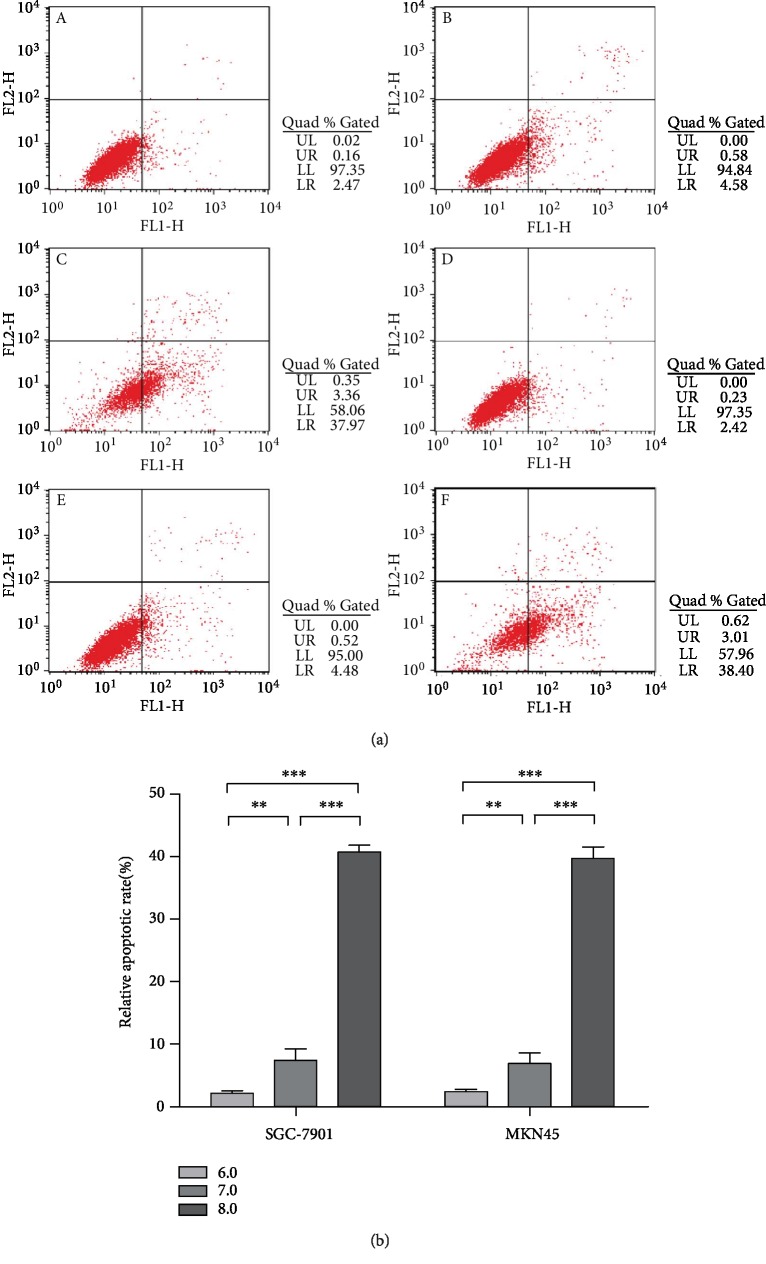
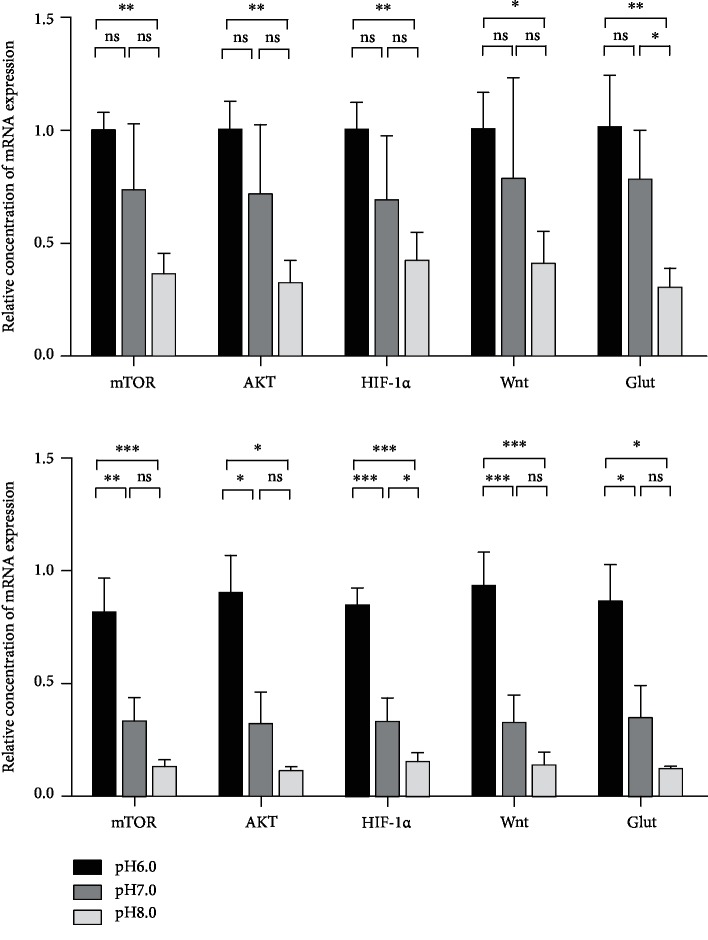
The GC cell lines (SGC-7901 and MKN45) were used as the research object. We adjusted the pH value in the cell culture medium to observe the changes in cell viability (MTT), apoptosis (flow cytometry), and invasion (Transwell) at pH 6, pH 7, and pH 8. qRT-PCR and western blot (WB) assays were used to determine the expression changes of genes and proteins (mTOR, AKT, Wnt, Glut, and HIF-1) at pH 6, pH 7, and pH 8.
The results of MTT showed that the viability of SGC-7901 and MKN45 in the pH 8.0 group was significantly weaker than that in the pH 6.0 or pH 7.0 group ( < 0.001). Flow cytometry results showed that the apoptosis of SGC-7901 and MKN45 in the pH 8.0 group was more obvious than that in the pH 6.0 or pH 7.0 group ( < 0.001). Flow cytometry results showed that the apoptosis of SGC-7901 and MKN45 in the pH 8.0 group was more obvious than that in the pH 6.0 or pH 7.0 group ( < 0.001). Flow cytometry results showed that the apoptosis of SGC-7901 and MKN45 in the pH 8.0 group was more obvious than that in the pH 6.0 or pH 7.0 group () at pH 6, pH 7, and pH 8. < 0.001). Flow cytometry results showed that the apoptosis of SGC-7901 and MKN45 in the pH 8.0 group was more obvious than that in the pH 6.0 or pH 7.0 group (.
Compared with the microacid environment, the microalkaline environment inhibited the viability, invasion, and expression of genes and proteins (mTOR, AKT, Wnt, Glut, and HIF-1) but promoted the apoptosis of GC cells and thus inhibited the growth of GC.) at pH 6, pH 7, and pH 8.
质子泵抑制剂(PPI)及其他抑酸药物广泛用于治疗胃肠道溃疡、上消化道出血、胃炎及胃癌(GC)。约80%的GC患者接受抑酸治疗。PPI通过抑制胃壁细胞中H/K - ATP酶的功能来抑制胃酸分泌,并提高pH值以达到治疗目的。一些研究发现,PPI在肿瘤细胞的增殖和凋亡方面具有一定的抗肿瘤作用。但环境pH对GC细胞生长的影响及其机制尚不清楚。因此,我们希望通过体外实验来探究培养基pH对GC细胞生物学行为的影响,并为GC患者使用抑酸药物提供指导。
我们旨在观察GC细胞培养基pH变化对癌细胞生物学行为的影响,并分析其潜在机制。我们希望找出抑酸对GC细胞生长的影响。
以GC细胞系(SGC - 7901和MKN45)作为研究对象。我们调节细胞培养基中的pH值,观察pH为6、pH为7和pH为8时细胞活力(MTT法)、凋亡(流式细胞术)及侵袭(Transwell法)的变化。采用qRT - PCR和蛋白质印迹(WB)分析来测定pH为6、pH为7和pH为8时基因和蛋白质(mTOR、AKT、Wnt、Glut及HIF - 1)的表达变化。
MTT结果显示,pH为8.0组的SGC - 7901和MKN45细胞活力明显弱于pH为6.0或pH为7.0组(<0.001)。流式细胞术结果显示,pH为8.0组的SGC - 7901和MKN45细胞凋亡比pH为6.0或pH为7.0组更明显(<0.001)。在pH为6、pH为7和pH为8时,流式细胞术结果显示pH为8.0组的SGC - 7901和MKN45细胞凋亡比pH为6.0或pH为7.0组更明显(<0.001)。流式细胞术结果显示pH为8.0组的SGC - 7901和MKN45细胞凋亡比pH为6.0或pH为7.0组更明显(<0.001)。
与微酸性环境相比,微碱性环境抑制了GC细胞的活力、侵袭以及基因和蛋白质(mTOR、AKT、Wnt、Glut及HIF - 1)的表达,但促进了GC细胞的凋亡,从而抑制了GC的生长。