South Andy, Lees Rosemary, Garrod Gala, Carson Jessica, Malone David, Hastings Ian
Liverpool School of Tropical Medicine (LSTM) Liverpool UK.
Innovative Vector Control Consortium (IVCC) Liverpool UK.
Evol Appl. 2019 Dec 10;13(4):738-751. doi: 10.1111/eva.12897. eCollection 2020 Apr.
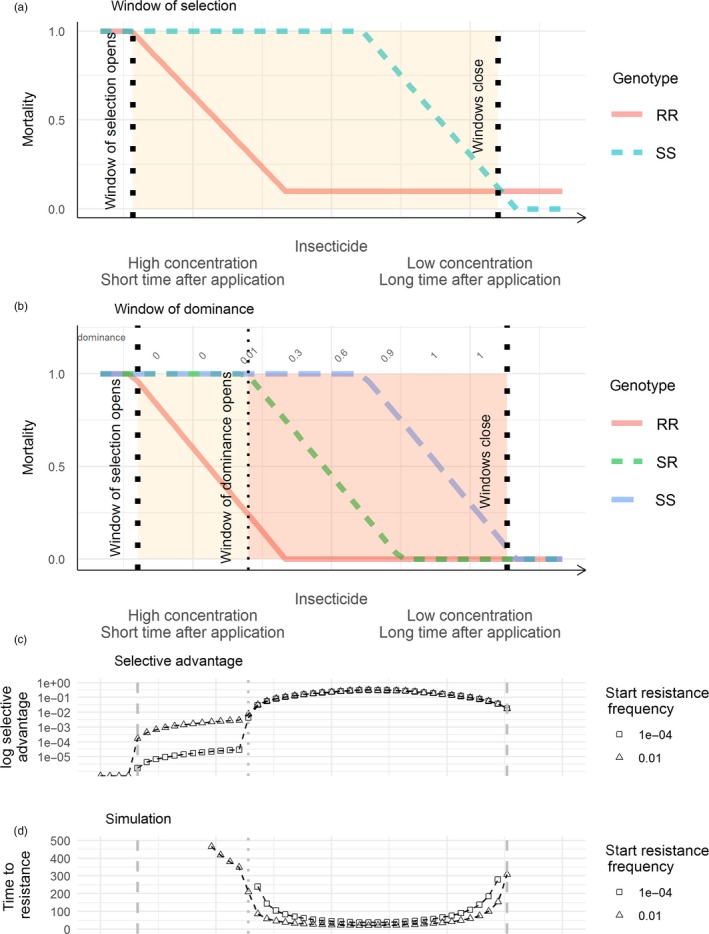
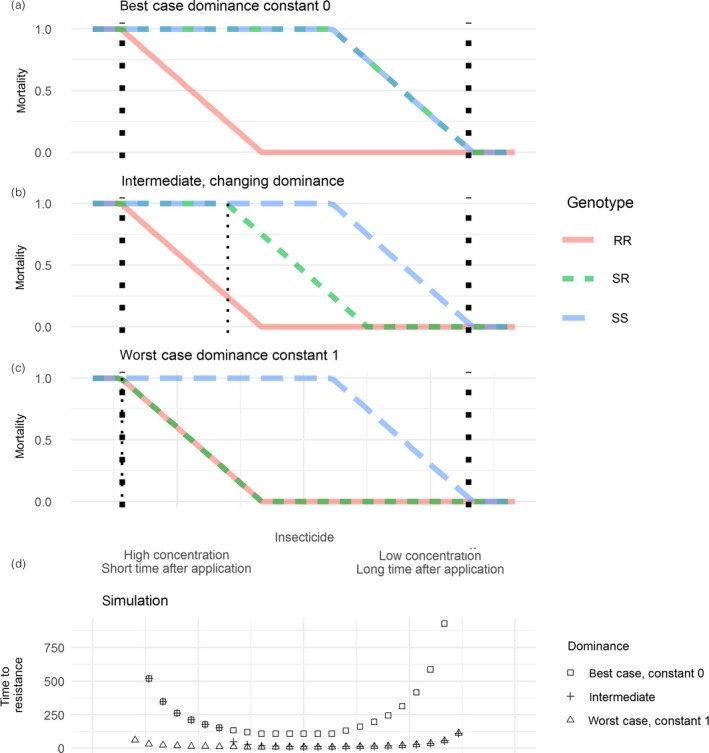
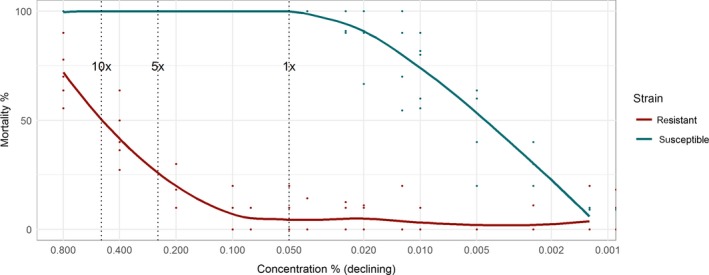
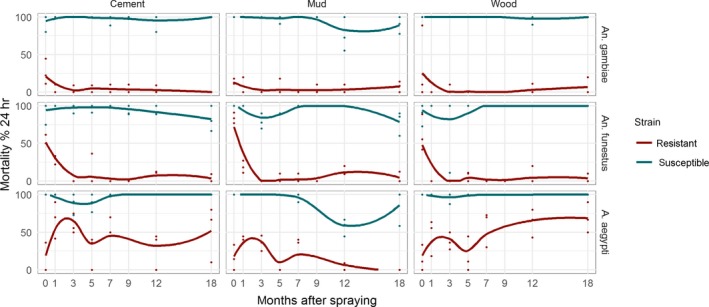
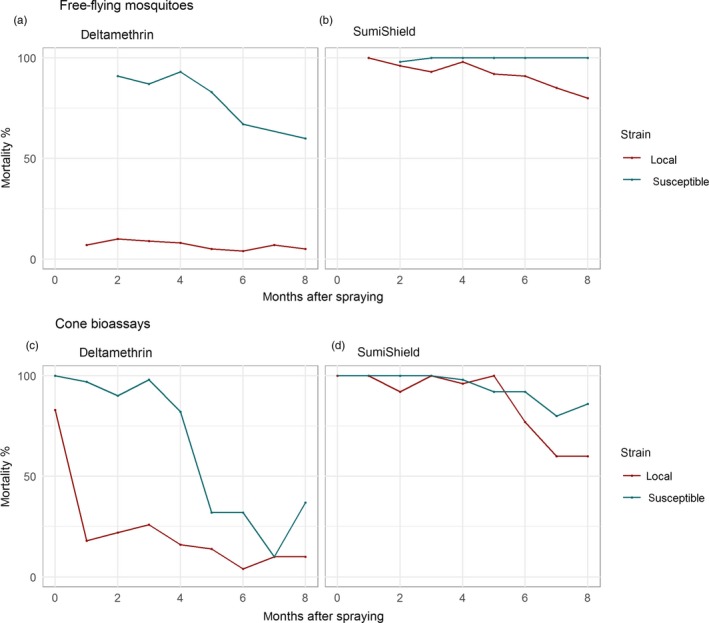
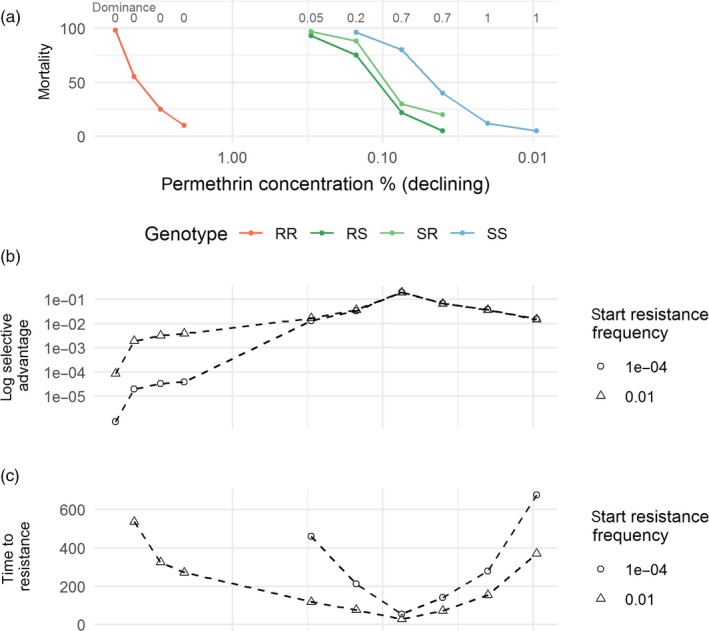
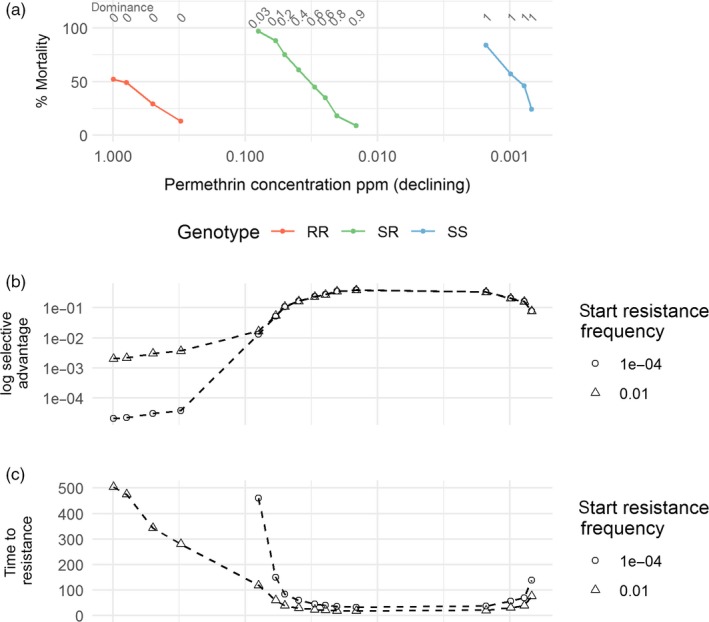
Persistent insecticides sprayed onto house walls, and incorporated into insecticide-treated bednets, provide long-acting, cost-effective control of vector-borne diseases such as malaria and leishmaniasis. The high concentrations that occur immediately postdeployment may kill both resistant and susceptible insects. However, insecticide concentration, and therefore killing ability, declines in the months after deployment. As concentrations decline, resistant insects start to survive, while susceptible insects are still killed. The period of time after deployment, within which the mortality of resistant individuals is lower than that of susceptible ones, has been termed the "window of selection" in other contexts. It is recognized as driving resistance in bacteria and malaria parasites, both of which are predominantly haploid. We argue that paying more attention to these mortality differences can help understand the evolution of insecticide resistance. Because insects are diploid, resistance encoded by single genes generates heterozygotes. This gives the potential for a narrower "window of dominance," within the window of selection, where heterozygote mortality is lower than that of susceptible homozygotes. We explore the general properties of windows of selection and dominance in driving resistance. We quantify their likely effect using data from new laboratory experiments and published data from the laboratory and field. These windows can persist months or years after insecticide deployments. Differential mortalities of resistant, susceptible and heterozygous genotypes, after public health deployments, constitute a major challenge to controlling resistance. Greater attention to mortality differences by genotype would inform strategies to reduce the evolution of resistance to existing and new insecticides.
喷洒在房屋墙壁上并融入经杀虫剂处理蚊帐中的长效杀虫剂,能经济高效地控制疟疾和利什曼病等媒介传播疾病。部署后即刻出现的高浓度杀虫剂可能会杀死抗性和敏感昆虫。然而,在部署后的几个月里,杀虫剂浓度以及杀虫能力会下降。随着浓度降低,抗性昆虫开始存活,而敏感昆虫仍会被杀死。在部署后的一段时间内,抗性个体的死亡率低于敏感个体,这一时期在其他情况下被称为“选择窗口”。人们认为它会促使细菌和疟原虫产生抗性,这两者主要都是单倍体。我们认为,更多地关注这些死亡率差异有助于理解杀虫剂抗性的演变。由于昆虫是二倍体,单基因编码的抗性会产生杂合子。这使得在选择窗口内可能存在一个更窄的“显性窗口”,即杂合子死亡率低于敏感纯合子的时期。我们探讨了选择窗口和显性窗口在促使抗性产生方面的一般特性。我们利用新的实验室实验数据以及已发表的实验室和现场数据来量化它们可能产生的影响。这些窗口在杀虫剂部署后可能持续数月或数年。公共卫生部署后抗性、敏感和杂合基因型的死亡率差异,对控制抗性构成了重大挑战。更多地关注不同基因型的死亡率差异,将为减少对现有和新型杀虫剂抗性演变的策略提供依据。