Levick Bethany, South Andy, Hastings Ian M
Department of Parasitology, Liverpool School of Tropical Medicine, Liverpool, United Kingdom.
Independent consultant, Norwich, United Kingdom.
PLoS Comput Biol. 2017 Jan 17;13(1):e1005327. doi: 10.1371/journal.pcbi.1005327. eCollection 2017 Jan.
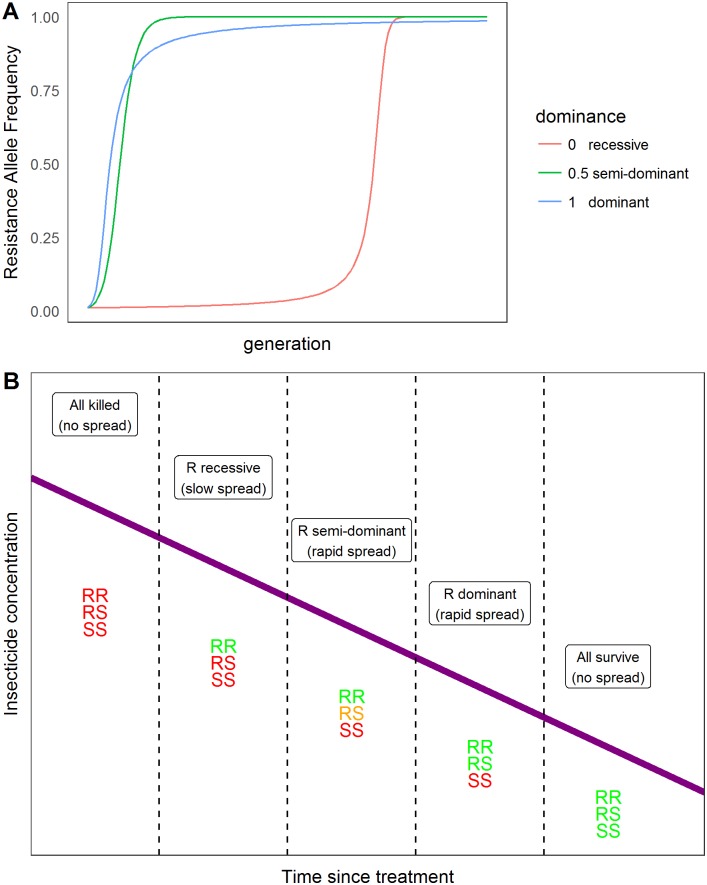
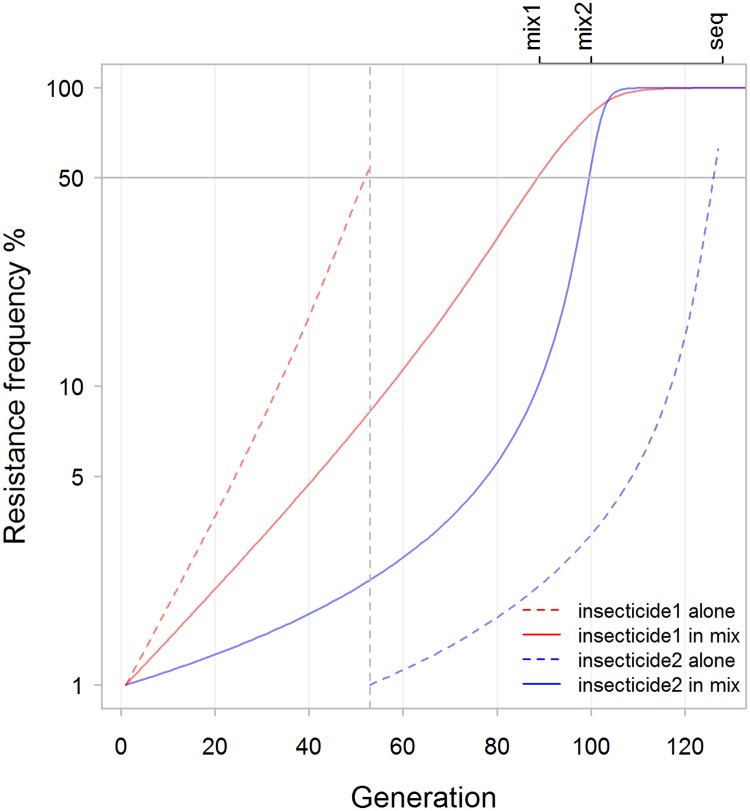
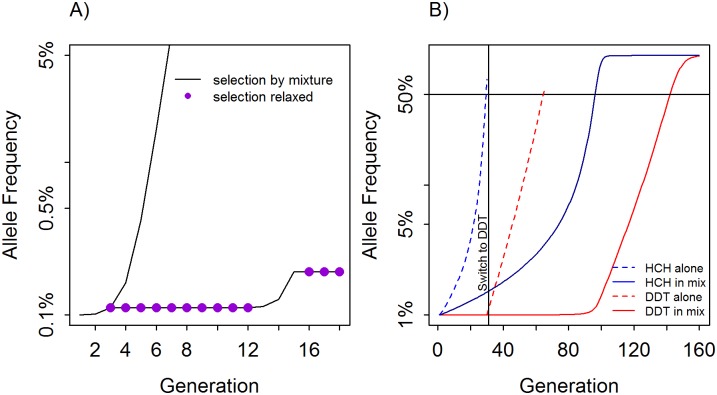
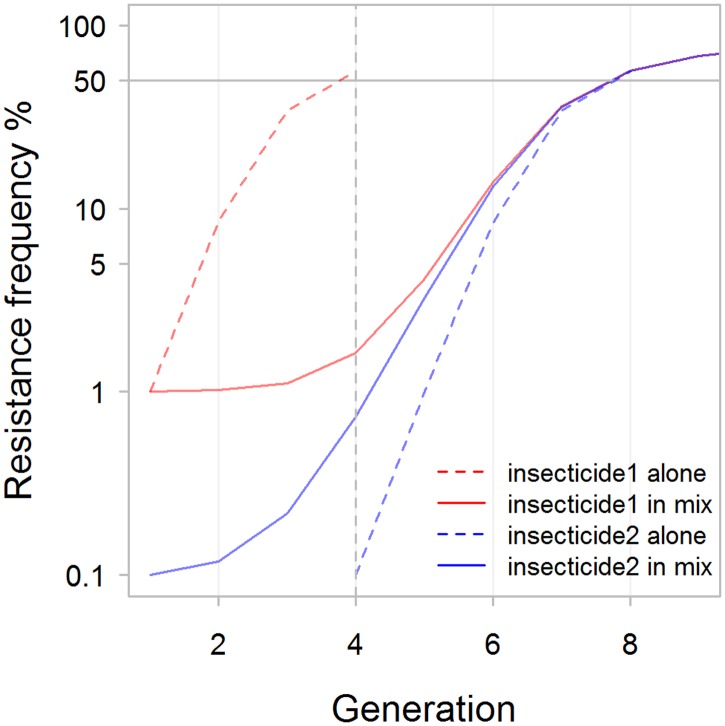
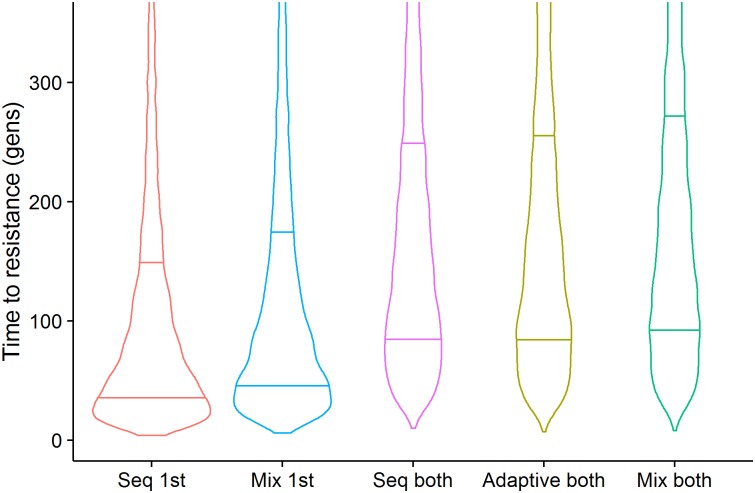
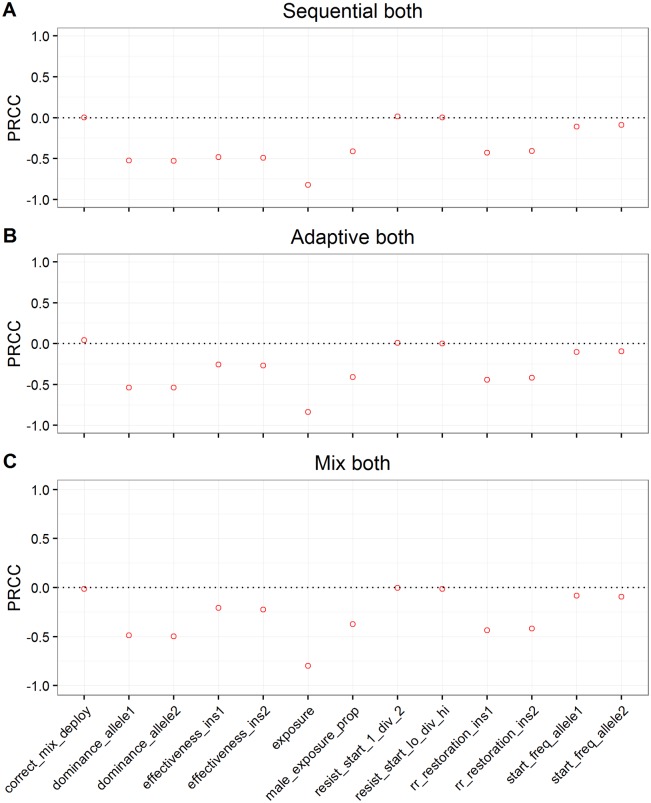
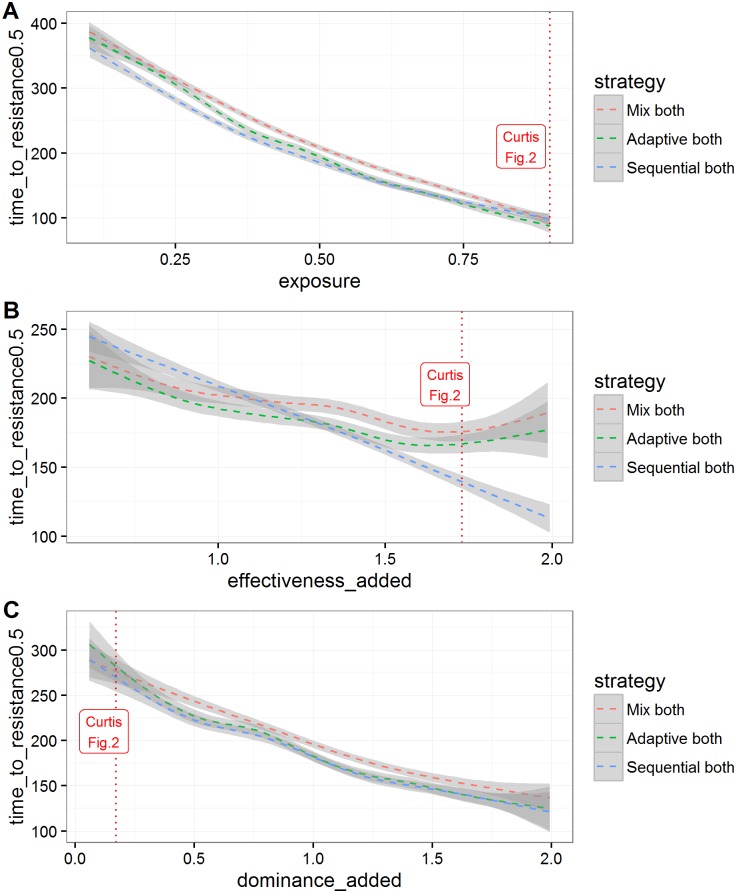
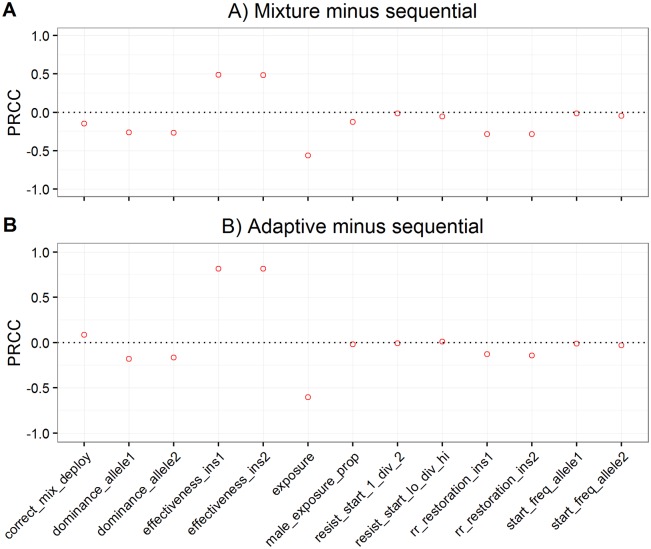
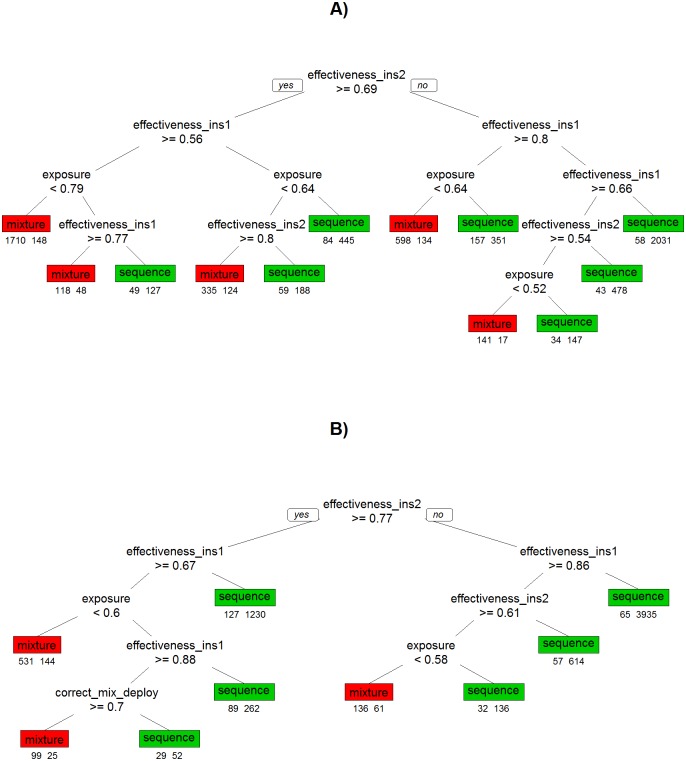
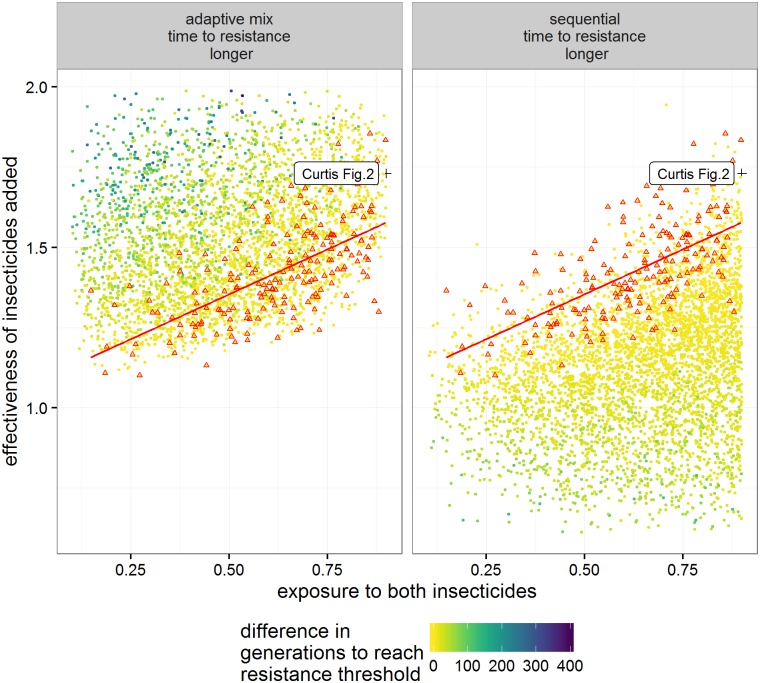
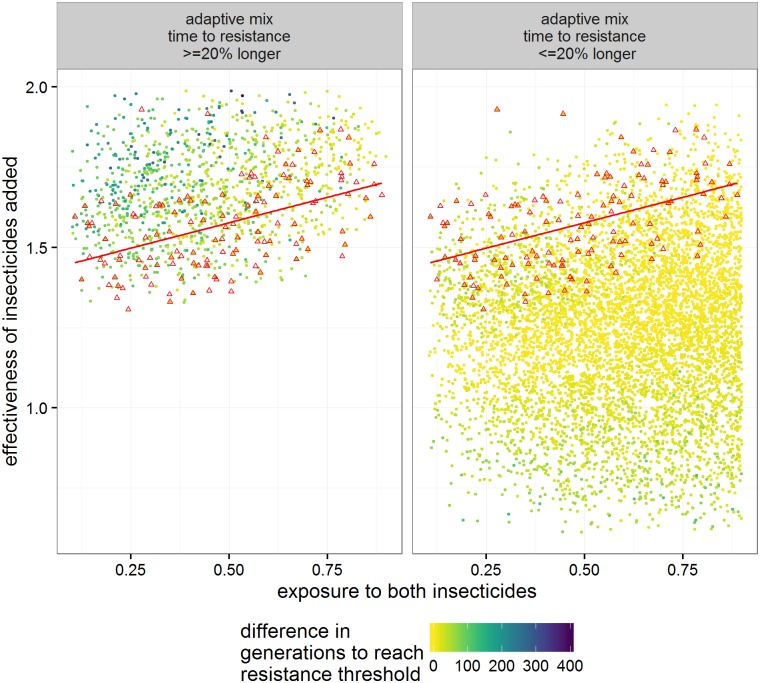
We develop a flexible, two-locus model for the spread of insecticide resistance applicable to mosquito species that transmit human diseases such as malaria. The model allows differential exposure of males and females, allows them to encounter high or low concentrations of insecticide, and allows selection pressures and dominance values to differ depending on the concentration of insecticide encountered. We demonstrate its application by investigating the relative merits of sequential use of insecticides versus their deployment as a mixture to minimise the spread of resistance. We recover previously published results as subsets of this model and conduct a sensitivity analysis over an extensive parameter space to identify what circumstances favour mixtures over sequences. Both strategies lasted more than 500 mosquito generations (or about 40 years) in 24% of runs, while in those runs where resistance had spread to high levels by 500 generations, 56% favoured sequential use and 44% favoured mixtures. Mixtures are favoured when insecticide effectiveness (their ability to kill homozygous susceptible mosquitoes) is high and exposure (the proportion of mosquitoes that encounter the insecticide) is low. If insecticides do not reliably kill homozygous sensitive genotypes, it is likely that sequential deployment will be a more robust strategy. Resistance to an insecticide always spreads slower if that insecticide is used in a mixture although this may be insufficient to outperform sequential use: for example, a mixture may last 5 years while the two insecticides deployed individually may last 3 and 4 years giving an overall 'lifespan' of 7 years for sequential use. We emphasise that this paper is primarily about designing and implementing a flexible modelling strategy to investigate the spread of insecticide resistance in vector populations and demonstrate how our model can identify vector control strategies most likely to minimise the spread of insecticide resistance.
我们开发了一种灵活的双基因座模型,用于模拟适用于传播疟疾等人类疾病的蚊子物种中杀虫剂抗性的传播情况。该模型允许雄性和雌性接触不同剂量的杀虫剂,使其遭遇高浓度或低浓度的杀虫剂,并允许选择压力和显性值根据所接触的杀虫剂浓度而有所不同。我们通过研究杀虫剂的顺序使用与混合使用的相对优点来展示该模型的应用,以尽量减少抗性的传播。我们将之前发表的结果作为该模型的子集进行恢复,并在广泛的参数空间上进行敏感性分析,以确定在哪些情况下混合使用比顺序使用更有利。在24%的模拟运行中,两种策略都持续了超过500代蚊子(约40年),而在那些到500代时抗性已传播到高水平的运行中,56%的情况有利于顺序使用,44%的情况有利于混合使用。当杀虫剂效力(其杀死纯合易感蚊子的能力)较高且暴露率(接触杀虫剂的蚊子比例)较低时,混合使用更有利。如果杀虫剂不能可靠地杀死纯合敏感基因型,那么顺序使用可能是一种更稳健的策略。如果将杀虫剂混合使用,对该杀虫剂的抗性传播总是会更慢,尽管这可能不足以胜过顺序使用:例如,一种混合物可能持续5年,而单独使用的两种杀虫剂可能分别持续3年和4年,顺序使用的总体“寿命”为7年。我们强调,本文主要是关于设计和实施一种灵活的建模策略,以研究病媒种群中杀虫剂抗性的传播,并展示我们的模型如何能够识别最有可能最小化杀虫剂抗性传播的病媒控制策略。