Galárraga-Vinueza Maria Elisa, Tangl Stefan, Bianchini Marco, Magini Ricardo, Obreja Karina, Gruber Reinhard, Schwarz Frank
Department of Oral Surgery and Implantology, Carolinum, Goethe University, Frankfurt, Germany.
Post-Graduate Program in Implant Dentistry (PPGO), Federal University of Santa Catarina (UFSC), Florianópolis, SC, Brazil.
Int J Implant Dent. 2020 Mar 25;6(1):12. doi: 10.1186/s40729-020-00208-8.
Inflammatory osteolysis is the clinical hallmark of peri-implantitis. The morphology of the remaining peri-implant bone and the level of osseointegration, however, remain unknown. Our aim was to characterize advanced peri-implantitis bone defects in humans.
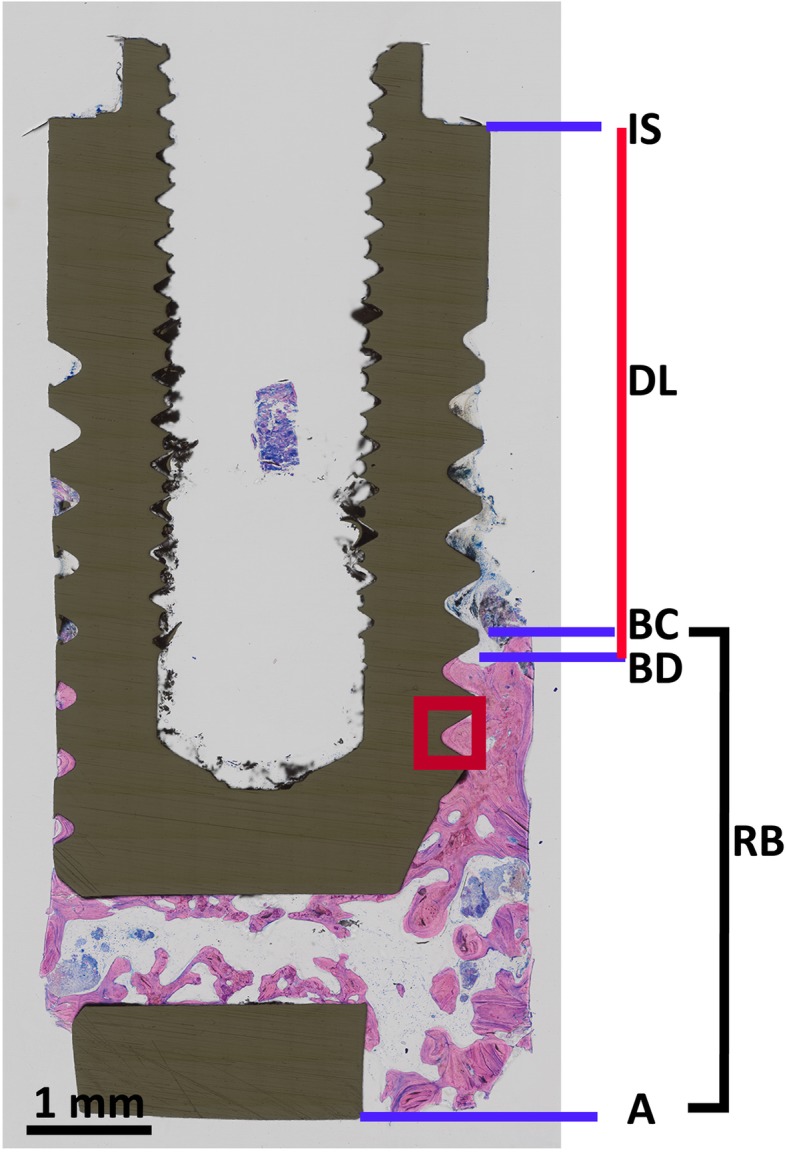
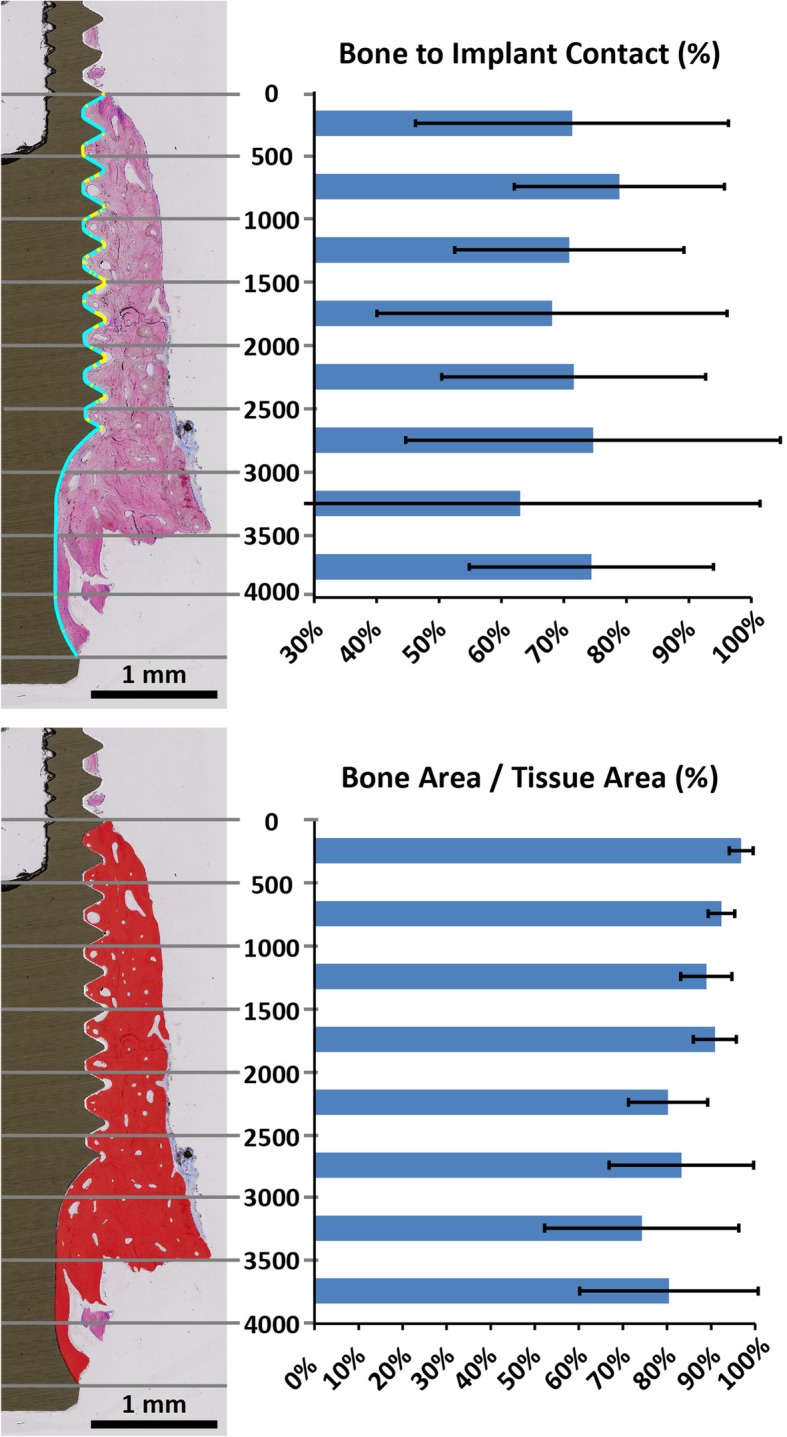
Four patients (3 female and 1 male) were diagnosed with peri-implantitis. A total of 5 implants with machined surfaces and a mean loading time of 12 ± 6 years were removed due to advanced bone loss. The defect extension, the peri-implant bone density (bone area per tissue area in percentage), bone-to-implant contact (%), and the number of filled and empty osteocyte lacunae were calculated based on undecalcified histological specimens.
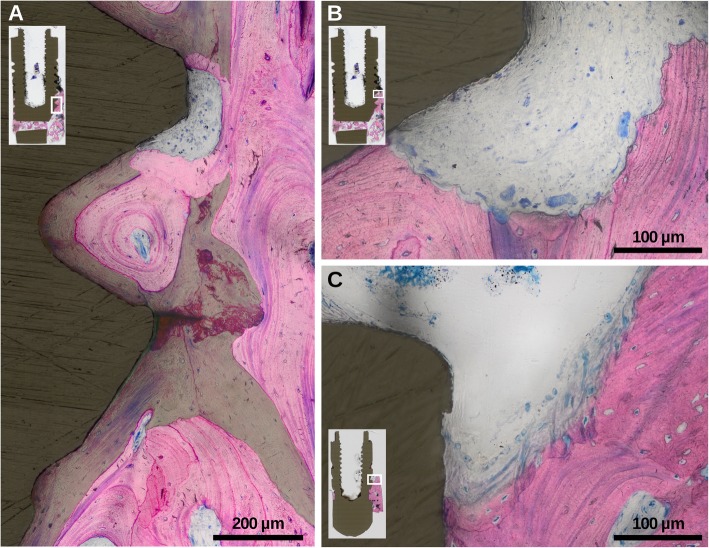
The defect extension was on average 4.2 mm (95% CI 0.8-3.4). Remaining peri-implant bone showed a high density of 85.5% (95% CI 79.1-91.3) and covered in total 74% (95% CI 70.5-77.5) of the implant surface. Filled and empty osteocyte lacunae density was on average 191 and 165/mm (95% CI 132-251; 103-225), respectively. Histology further revealed signs of ongoing bone formation and resorption.
There are signs that suggest that once the original cortical bone is lost due to peri-implantitis, the remaining apical trabecular bone is reinforced and transformed into cortical bone that might take over the functional load.
炎性骨溶解是种植体周围炎的临床特征。然而,剩余种植体周围骨的形态以及骨结合水平仍不清楚。我们的目的是对人类晚期种植体周围炎骨缺损进行特征描述。
4例患者(3例女性,1例男性)被诊断为种植体周围炎。由于严重骨吸收,共取出5枚表面经过机械加工、平均植入时间为12±6年的种植体。基于未脱钙组织学标本计算缺损范围、种植体周围骨密度(骨面积占组织面积的百分比)、骨与种植体的接触面积(%)以及填充和空的骨细胞陷窝数量。
缺损范围平均为4.2 mm(95%可信区间0.8 - 3.4)。剩余种植体周围骨显示高密度为85.5%(95%可信区间79.1 -