Department of Orthopedic, Eighth Medical Center of PLA General Hospital, Beijing 100091, China.
Mediators Inflamm. 2020 Mar 9;2020:8295149. doi: 10.1155/2020/8295149. eCollection 2020.
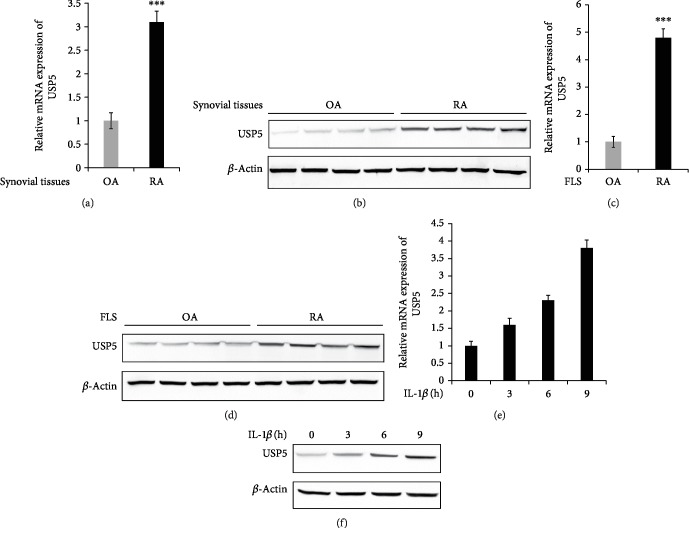
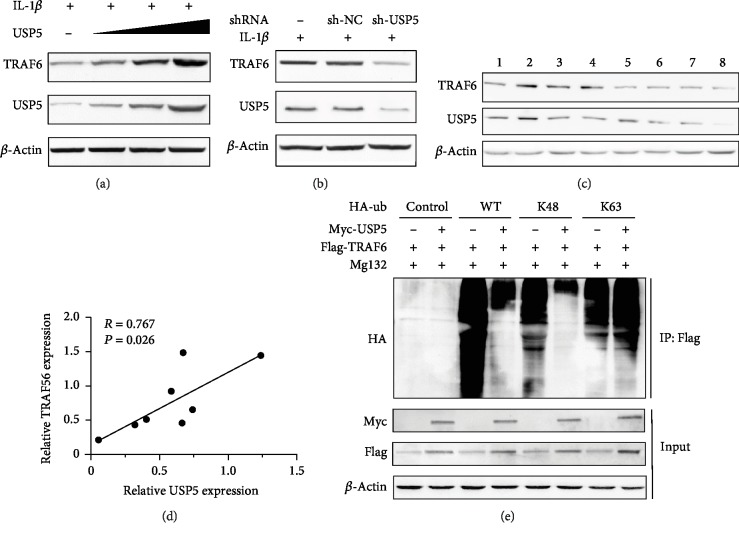
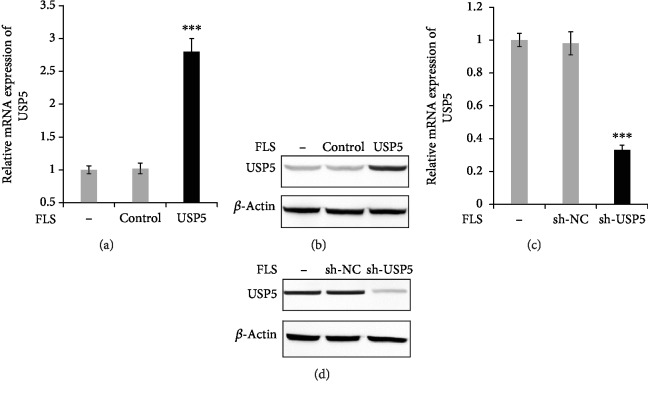
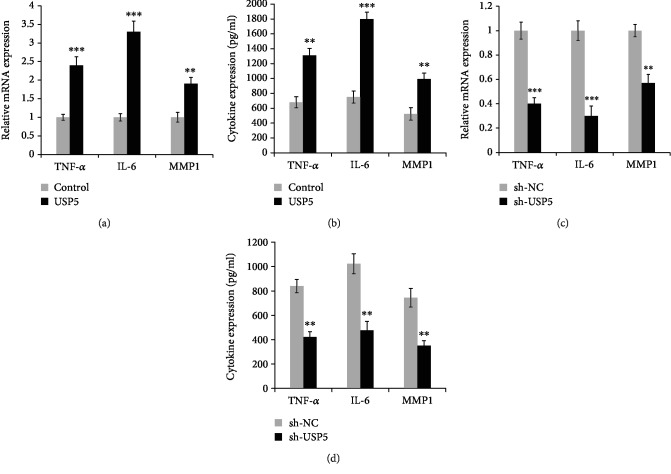
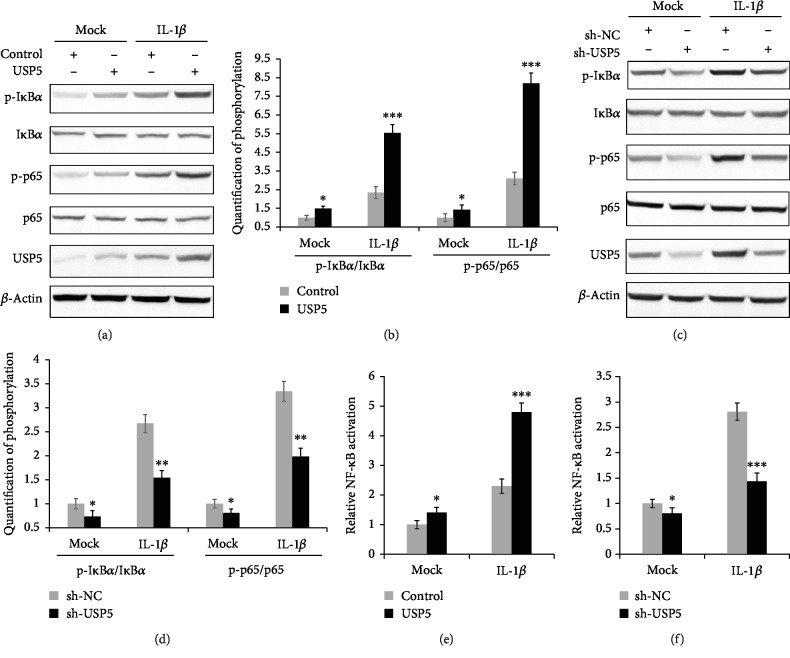
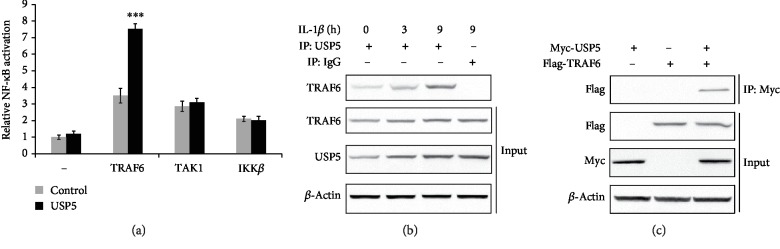
Rheumatoid arthritis (RA) is a worldwide chronic autoimmune inflammatory disease which is affecting approximately 1% of the total population. It is characterized by abnormal proliferation of fibroblast-like synoviocytes (FLS) and increased production of proinflammatory cytokines. In the current study, we were aiming to investigate the role of ubiquitin-specific protease 5 (USP5) in the inflammatory process in RA-FLS. Expression of USP5 was found upregulated in RA-FLS compared with that in osteoarthritis- (OA-) FLS, and IL-1 stimulation increased USP5 expression in a time-dependent manner. Furthermore, we found that USP5 overexpression significantly aggravated proinflammatory cytokine production and related nuclear factor B (NF-B) signaling activation. Consistently, silencing of USP5 decreased the release of cytokines and inhibited the activation of NF-B. In addition, USP5 was found to interact with tumor necrosis factor receptor-associated factor 6 (TRAF6) and remove its K48-linked polyubiquitination chains therefore stabilizing TRAF6. Our data showed that a USP5-positive cell regulates inflammatory processes in RA-FLS and suggested USP5 as a potential target for RA treatment.
类风湿关节炎(RA)是一种全球性的慢性自身免疫性炎症性疾病,影响着大约 1%的总人口。其特征是成纤维样滑膜细胞(FLS)异常增殖和促炎细胞因子的产生增加。在本研究中,我们旨在研究泛素特异性蛋白酶 5(USP5)在 RA-FLS 炎症过程中的作用。与骨关节炎(OA)-FLS 相比,USP5 在 RA-FLS 中的表达上调,IL-1 刺激以时间依赖性方式增加 USP5 的表达。此外,我们发现 USP5 的过表达显著加重了促炎细胞因子的产生和相关核因子 B(NF-B)信号的激活。一致地,USP5 的沉默减少了细胞因子的释放并抑制了 NF-B 的激活。此外,发现 USP5 与肿瘤坏死因子受体相关因子 6(TRAF6)相互作用并去除其 K48 连接的多泛素化链,从而稳定 TRAF6。我们的数据表明,USP5 阳性细胞调节 RA-FLS 中的炎症过程,并提示 USP5 可能成为 RA 治疗的潜在靶点。