Pandith Shahzad A, Dar Riyaz Ahmad, Lattoo Surrinder K, Shah Manzoor A, Reshi Zafar A
1Department of Botany, University of Kashmir, Srinagar, Jammu and Kashmir 190006 India.
2Plant Biotechnology Division, CSIR-Indian Institute of Integrative Medicine, Canal Road, Jammu Tawi, 180001 India.
Phytochem Rev. 2018;17(3):573-609. doi: 10.1007/s11101-018-9551-7. Epub 2018 Feb 21.
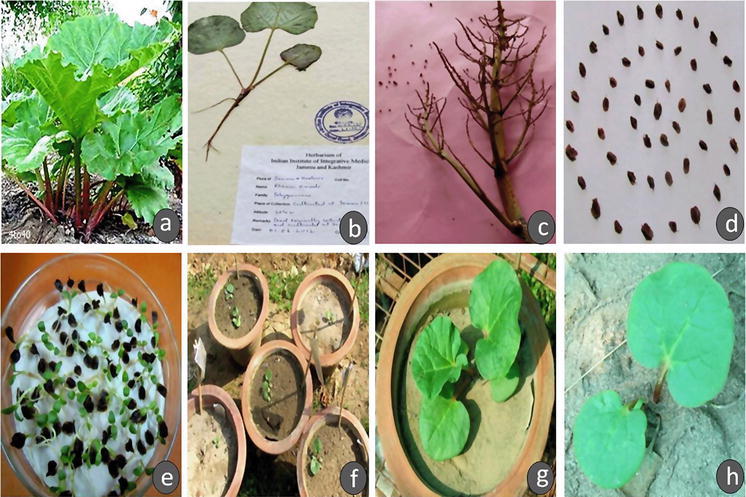
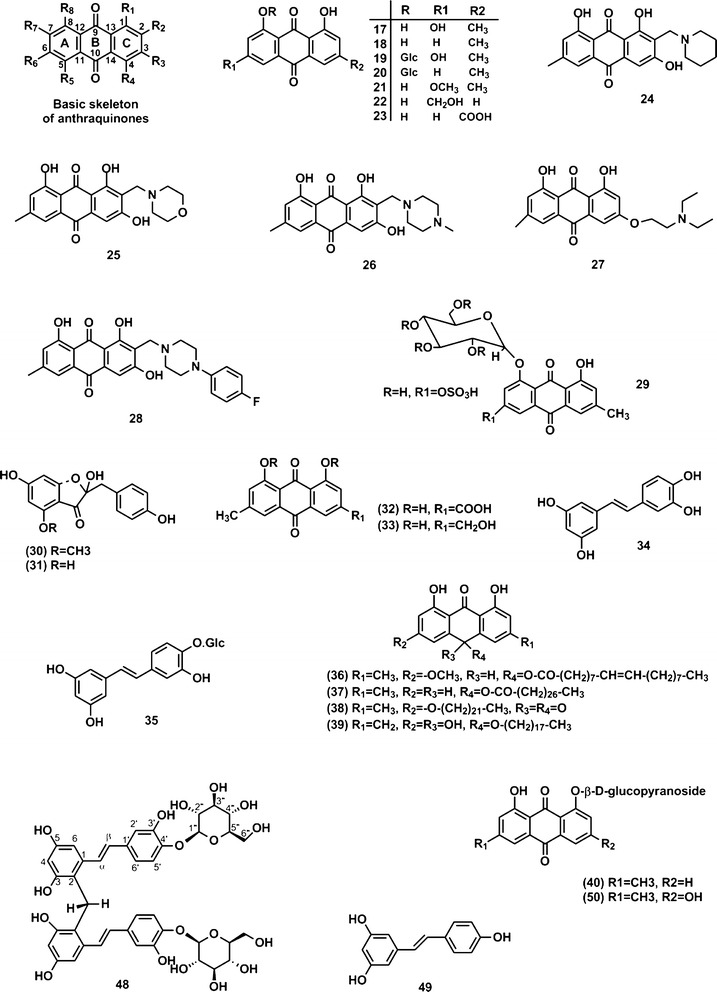
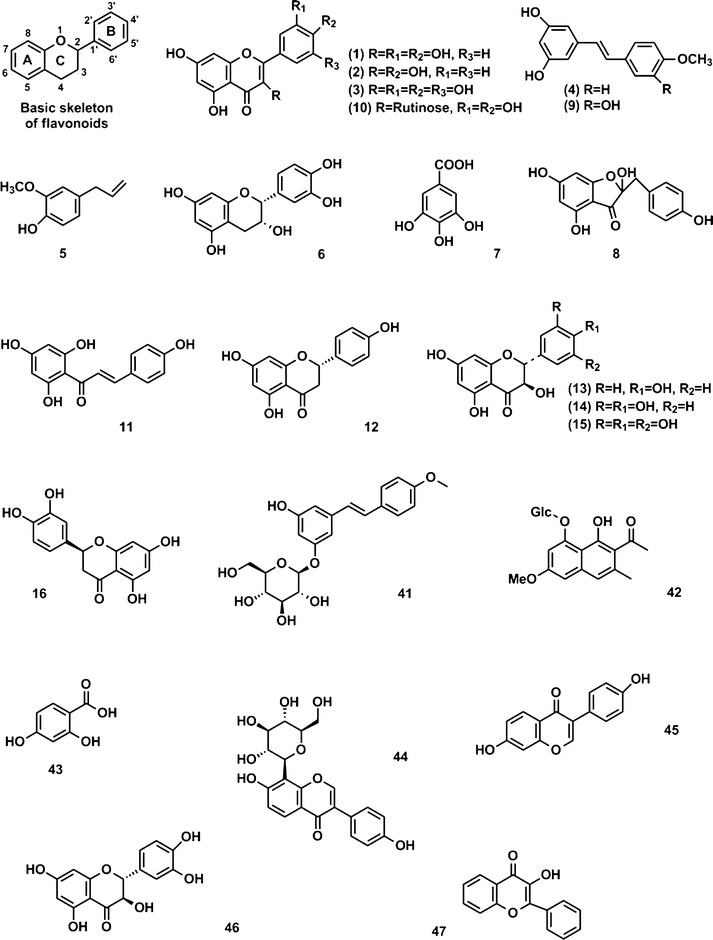
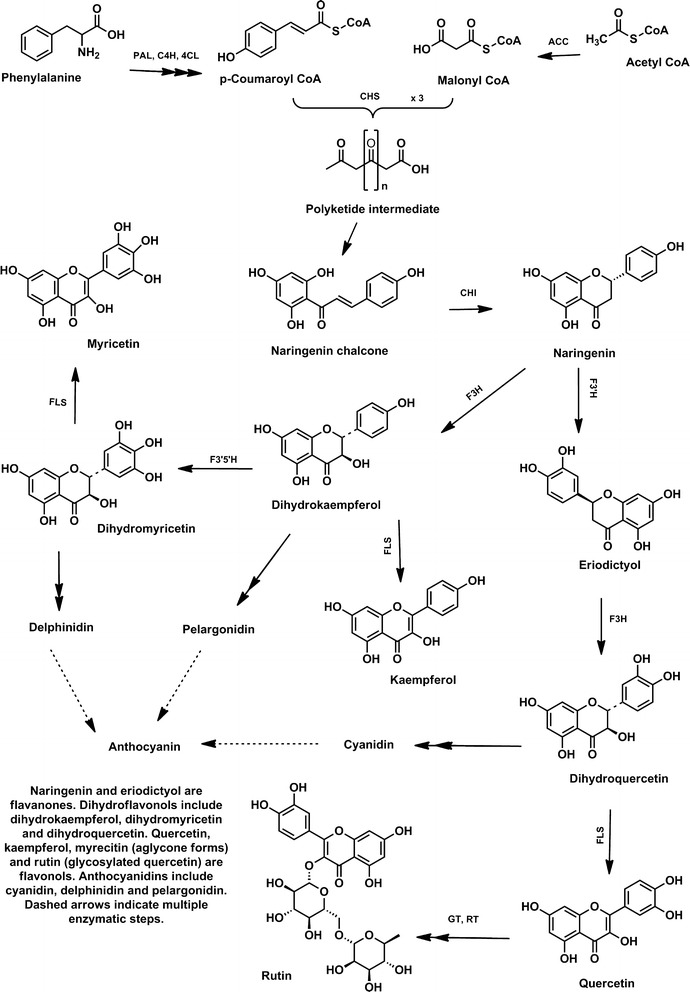
(Himalayan Rhubarb) is a multipurpose, endemic and endangered medicinal herb of North Western Himalayas. It finds extensive use as a medicinal herb since antiquity in different traditional systems of medicine to cure a wide range of ailments related to the circulatory, digestive, endocrine, respiratory and skeletal systems as well as to treat various infectious diseases. The remedying properties of this plant species are ascribed to a set of diverse bioactive secondary metabolite constituents, particularly anthraquinones (emodin, chrysophanol, physcion, aloe-emodin and rhein) and stilbenoids (piceatannol, resveratrol), besides dietary flavonoids known for their putative health benefits. Recent studies demonstrate the pharmacological efficacy of some of these metabolites and/or their derivatives as lead molecules for the treatment of various human diseases. Present review comprehensively covers the literature available on from 1980 to early 2018. The review provides up-to-date information available on its botany for easy identification of the plant, and origin and historical perspective detailing its trade and commerce. Distribution, therapeutic potential in relation to traditional uses and pharmacology, phytochemistry and general biosynthesis of major chemical constituents are also discussed. Additionally, efficient and reproducible in vitro propagation studies holding vital significance in preserving the natural germplasm of the plant and for its industrial exploitation have also been highlighted. The review presents a detailed perspective for future studies to conserve and sustainably make use of this endangered plant species at a commercial scale.
(喜马拉雅大黄)是喜马拉雅西北部一种具有多种用途的地方性濒危药用草本植物。自古以来,它就在不同的传统医学体系中被广泛用作草药,用于治疗与循环、消化、内分泌、呼吸和骨骼系统相关的多种疾病,以及治疗各种传染病。这种植物物种的治疗特性归因于一组多样的生物活性次生代谢产物成分,特别是蒽醌类(大黄素、 Chrysophanol、大黄酚、芦荟大黄素和大黄酸)和芪类(piceatannol、白藜芦醇),此外还有因其假定的健康益处而闻名的膳食黄酮类化合物。最近的研究表明,其中一些代谢产物和/或其衍生物作为治疗各种人类疾病的先导分子具有药理功效。本综述全面涵盖了1980年至2018年初关于[具体内容缺失]的现有文献。该综述提供了有关其植物学的最新信息,以便于识别该植物,并详细介绍了其起源以及贸易和商业的历史背景。还讨论了其分布、与传统用途相关的治疗潜力以及药理学、植物化学和主要化学成分的一般生物合成。此外,还强调了高效且可重复的体外繁殖研究,这些研究对于保护该植物的天然种质及其工业开发具有至关重要的意义。该综述为未来在商业规模上保护和可持续利用这种濒危植物物种的研究提供了详细的视角。