Wang Yugang, Singhal Udit, Qiao Yuanyuan, Kasputis Tadas, Chung Jae-Seung, Zhao Huiru, Chammaa Farah, Belardo Jacob A, Roth Therese M, Zhang Hao, Zaslavsky Alexander B, Palapattu Ganesh S, Pienta Kenneth J, Chinnaiyan Arul M, Taichman Russell S, Cackowski Frank C, Morgan Todd M
Department of Urology, University of Michigan, Ann Arbor, MI 48109.
Michigan Center for Translational Pathology, Department of Pathology, University of Michigan, Ann Arbor, MI 48109.
Transl Oncol. 2020 Apr;13(4):100747. doi: 10.1016/j.tranon.2020.100747. Epub 2020 Mar 25.
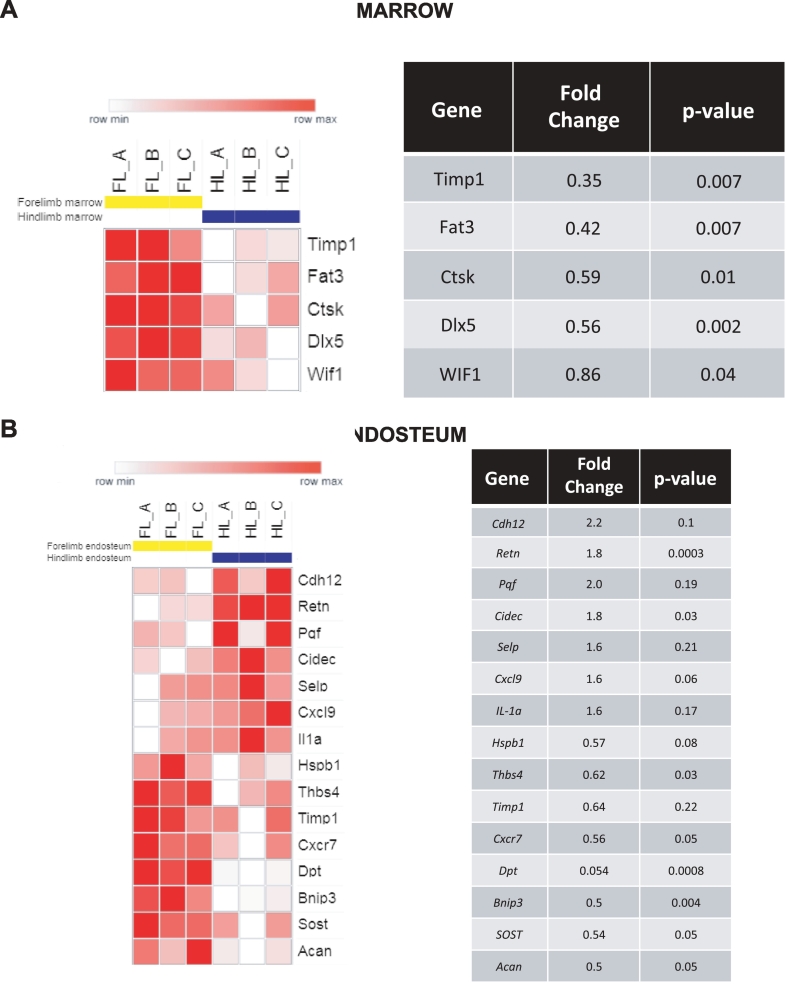
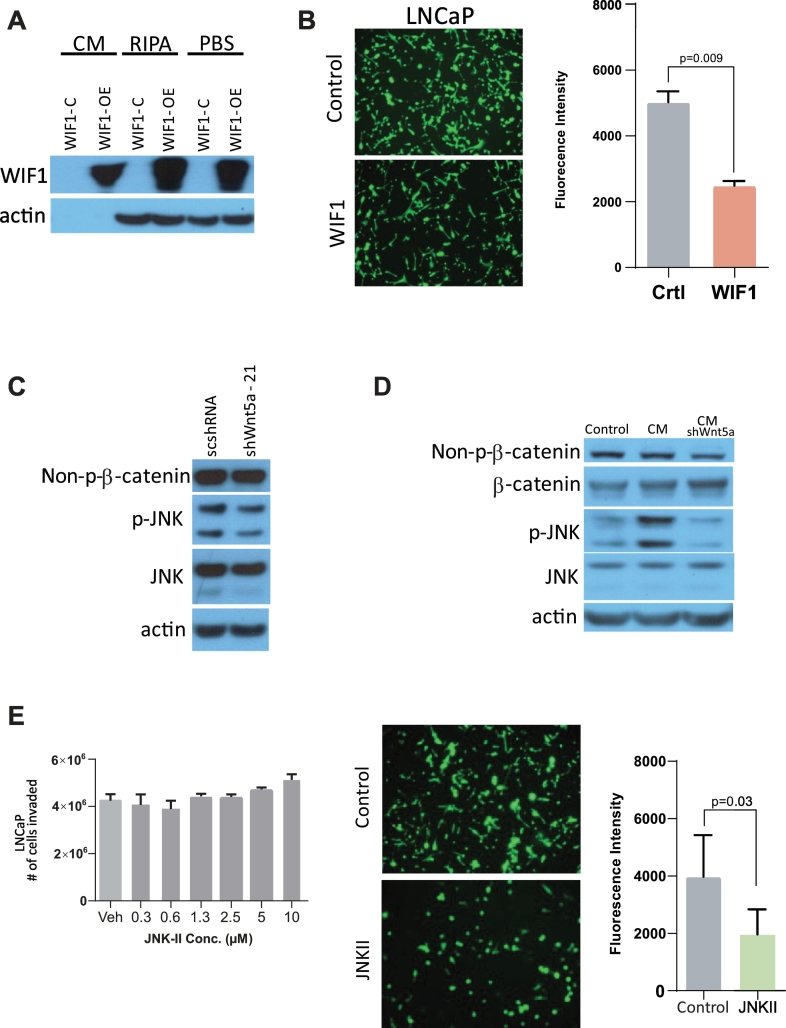
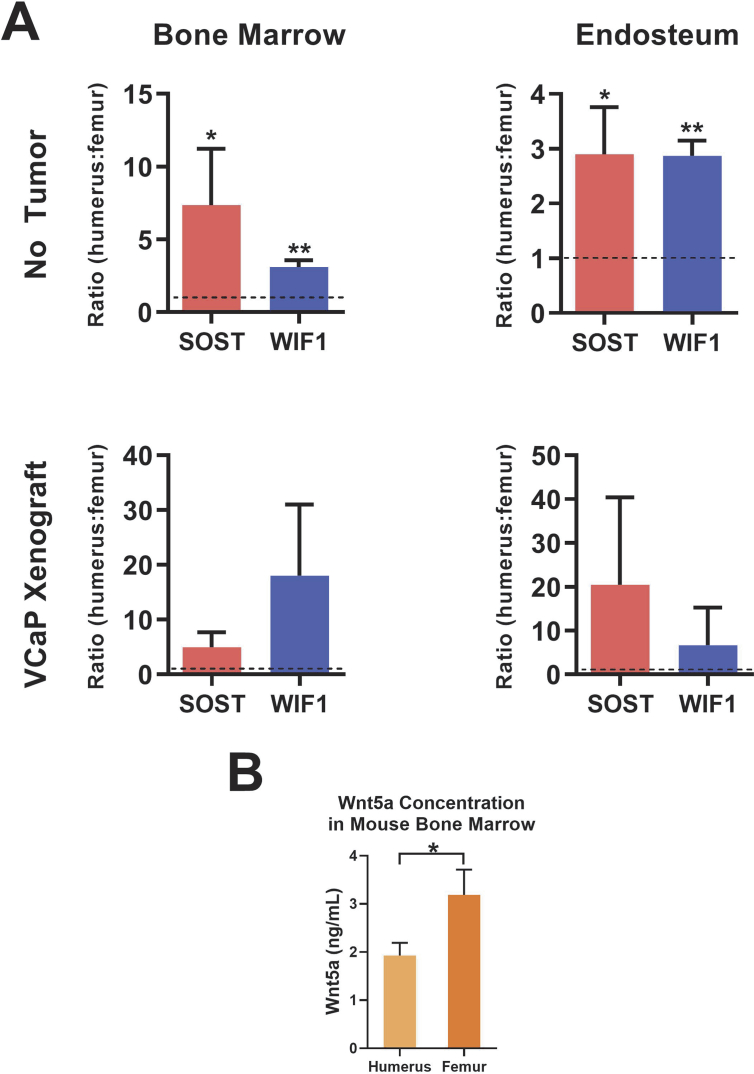
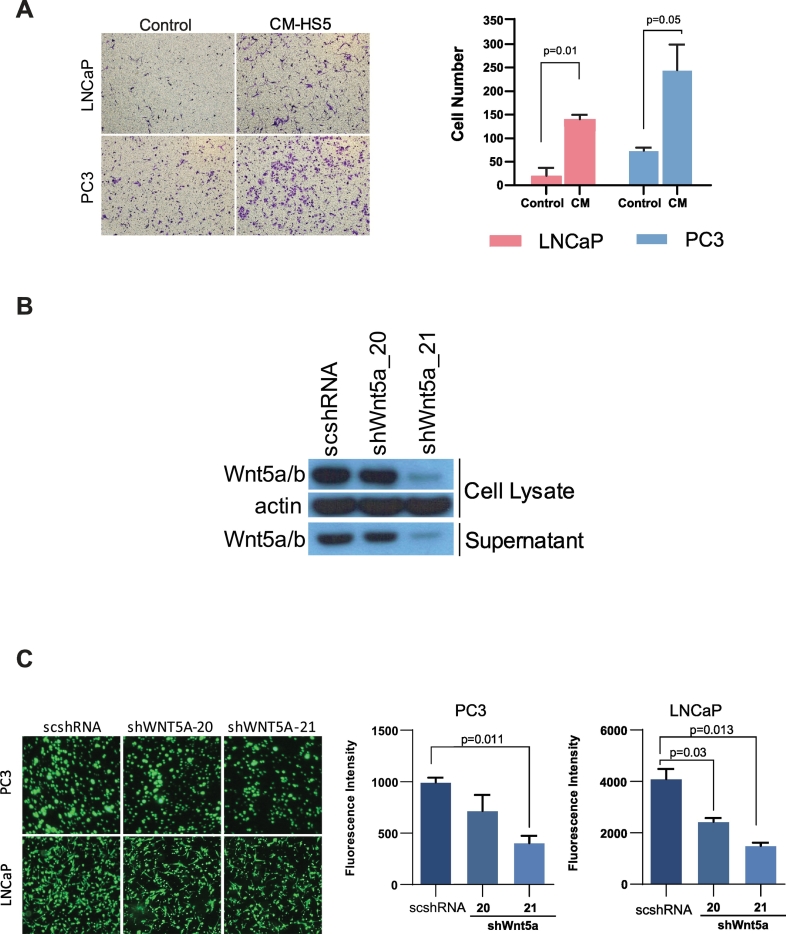
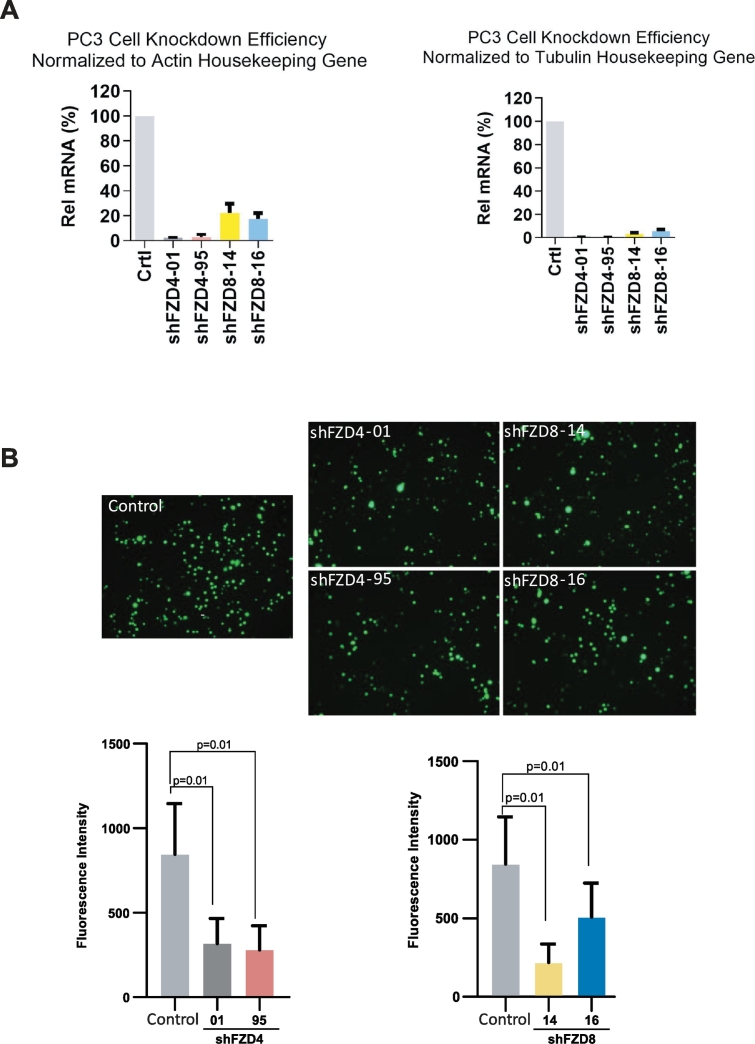
Wnt signaling has been implicated as a driver of prostate cancer-related osteoblast differentiation, and previous studies have linked modifications in Wnt function with the induction of tumor metastasis. A unique aspect of prostate cancer bone metastases in mouse models is their relative predilection to the hindlimb (femur) compared to the forelimb (humerus). Comparative gene expression profiling was performed within the humerus and femur from non-tumor-bearing mice to evaluate differences in the microenvironments of these locations. This revealed the relative overexpression of the Wnt signaling inhibitors WIF1 and SOST in the humerus compared to the femur, with increased WNT5A expression in femur bone marrow, suggesting a coordinated upregulation of Wnt signals within the femur compared to the humerus. Conditioned medium (CM) from bone marrow stromal cells (HS-5 cells) was used to mimic the bone marrow microenvironment, which strongly promoted prostate cancer cell invasion (3.3-fold increase in PC3 cells, P < .05; 7-fold increase in LNCaP cells, P < .05). WNT5A shRNA knockdown within the CM-producing HS-5 cells significantly decreased PC3 (56%, P < .05) and LNCaP (60%, P < .05) cell invasion. Similarly, preincubation of CM with WIF1 significantly blocked LNCaP cell invasion (40%, P < .05). shRNA-mediated knockdown of the Wnt receptors FZD4 and FZD8 also strongly inhibited tumor cell invasion (60% inhibition shFZD4, P < .05; 63% shFZD8, P < .05). Furthermore, small molecule inhibition of JNK, which is an important component of the noncanonical Wnt signaling pathway, significantly inhibited CM-mediated tumor invasion. Overall, this study reveals a role for Wnt signaling as a driver of prostate cancer bone metastatic tropism and invasion.
Wnt信号通路被认为是前列腺癌相关成骨细胞分化的驱动因素,先前的研究已将Wnt功能的改变与肿瘤转移的诱导联系起来。小鼠模型中前列腺癌骨转移的一个独特之处在于,与前肢(肱骨)相比,它们相对更倾向于后肢(股骨)。对无肿瘤小鼠的肱骨和股骨进行了比较基因表达谱分析,以评估这些部位微环境的差异。这显示与股骨相比,肱骨中Wnt信号抑制剂WIF1和SOST相对过表达,股骨骨髓中WNT5A表达增加,表明与肱骨相比,股骨内Wnt信号存在协同上调。来自骨髓基质细胞(HS-5细胞)的条件培养基(CM)用于模拟骨髓微环境,其强烈促进前列腺癌细胞侵袭(PC3细胞增加3.3倍,P<0.05;LNCaP细胞增加7倍,P<0.05)。在产生CM的HS-5细胞中敲低WNT5A shRNA可显著降低PC3(56%,P<0.05)和LNCaP(60%,P<0.05)细胞侵袭。同样,用WIF1预孵育CM可显著阻断LNCaP细胞侵袭(40%,P<0.05)。shRNA介导的Wnt受体FZD4和FZD8敲低也强烈抑制肿瘤细胞侵袭(shFZD4抑制60%,P<0.05;shFZD8抑制63%,P<0.05)。此外,小分子抑制非经典Wnt信号通路的重要组成部分JNK可显著抑制CM介导的肿瘤侵袭。总体而言,本研究揭示了Wnt信号通路作为前列腺癌骨转移嗜性和侵袭驱动因素的作用。