Whitehorn Penelope R, Navarro Laetitia M, Schröter Matthias, Fernandez Miguel, Rotllan-Puig Xavier, Marques Alexandra
Karlsruhe Institute of Technology KIT, Institute of Meteorology and Climate Research Atmospheric Environmental Research (IMK-IFU), Kreuzeckbahnstraße 19, 82467 Garmisch-Partenkirchen, Germany.
German Centre for Integrative Biodiversity Research (iDiv), Halle-Jena-Leipzig, Deutscher Platz 5e, 04103 Leipzig, Germany.
Biol Conserv. 2019 Jul;235:157-163. doi: 10.1016/j.biocon.2019.04.016.
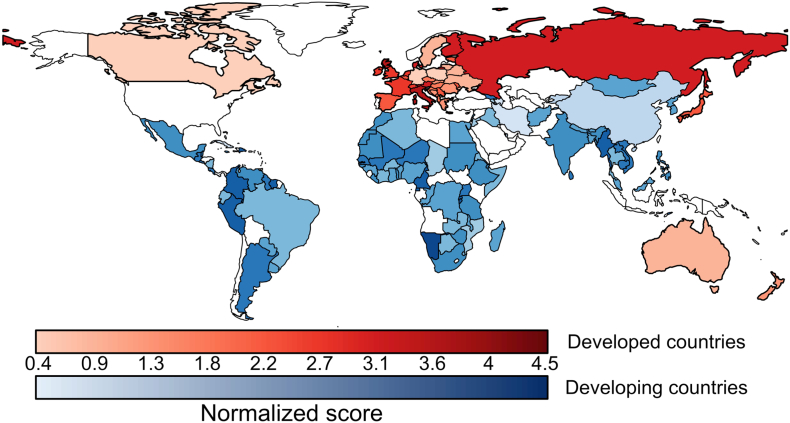
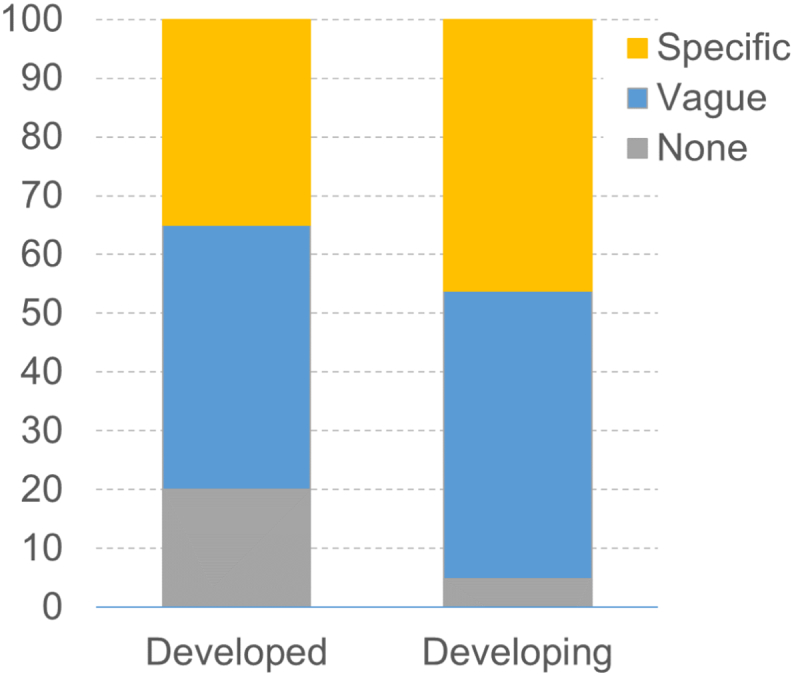
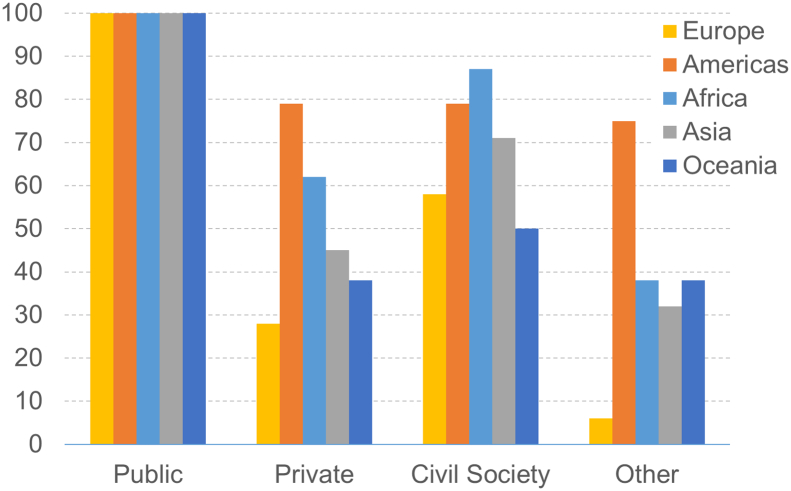
Biodiversity is suffering dramatic declines across the globe, threatening the ability of ecosystems to provide the services on which humanity depends. Mainstreaming biodiversity into the plans, strategies and policies of different economic sectors is key to reversing these declines. The importance of this mainstreaming is recognized by the Convention on Biological Diversity (CBD) and its Aichi targets. Individual countries can implement the goals of the CBD through their National Biodiversity Strategies and Action Plans (NBSAPs), which aim to, inter alia, support the mainstreaming of biodiversity into the policies of key economic sectors, such as agriculture, forestry and fisheries. This paper investigates the performance of countries at incorporating biodiversity mainstreaming into their post-2010 NBSAPs. We conduct a large-scale review of 144 NBSAPs against five criteria and calculate a national-level indicator for comparing levels of mainstreaming among countries. Our results show that developing countries, particularly those in Africa, have higher scores, indicating that they have a higher awareness of the importance of biodiversity mainstreaming. Developing nations were also more likely to involve a greater range of stakeholders in the NBSAP development process, whilst developed nations were less likely to give specific details about the monetary contributions of biodiversity to their economies. Overall, our findings suggest that biodiversity mainstreaming remains a challenge across much of the world, but that progress in some areas can provide direction and momentum in the future.
全球生物多样性正在急剧下降,这威胁到生态系统提供人类赖以生存的服务的能力。将生物多样性纳入不同经济部门的计划、战略和政策的主流,是扭转这些下降趋势的关键。《生物多样性公约》(CBD)及其爱知目标认识到了这种主流化的重要性。各个国家可以通过其国家生物多样性战略和行动计划(NBSAPs)来实现《生物多样性公约》的目标,这些计划除其他外,旨在支持将生物多样性纳入关键经济部门(如农业、林业和渔业)的政策主流。本文调查了各国在将生物多样性主流化纳入其2010年后国家生物多样性战略和行动计划方面的表现。我们根据五项标准对144份国家生物多样性战略和行动计划进行了大规模审查,并计算了一个国家层面的指标,用于比较各国的主流化水平。我们的结果表明,发展中国家,特别是非洲的发展中国家,得分较高,这表明它们对生物多样性主流化重要性的认识更高。发展中国家在国家生物多样性战略和行动计划制定过程中也更有可能让更多利益相关者参与,而发达国家则不太可能详细说明生物多样性对其经济的货币贡献。总体而言,我们的研究结果表明,生物多样性主流化在世界大部分地区仍然是一项挑战,但某些领域的进展可为未来提供方向和动力。