Department of Rehabilitation Medicine, Tokai University School of Medicine, Kanagawa, Japan.
Department of Rehabilitation Medicine, The Jikei University Hospital, Tokyo, Japan.
J Neurol. 2020 Jul;267(7):2029-2041. doi: 10.1007/s00415-020-09777-5. Epub 2020 Mar 26.
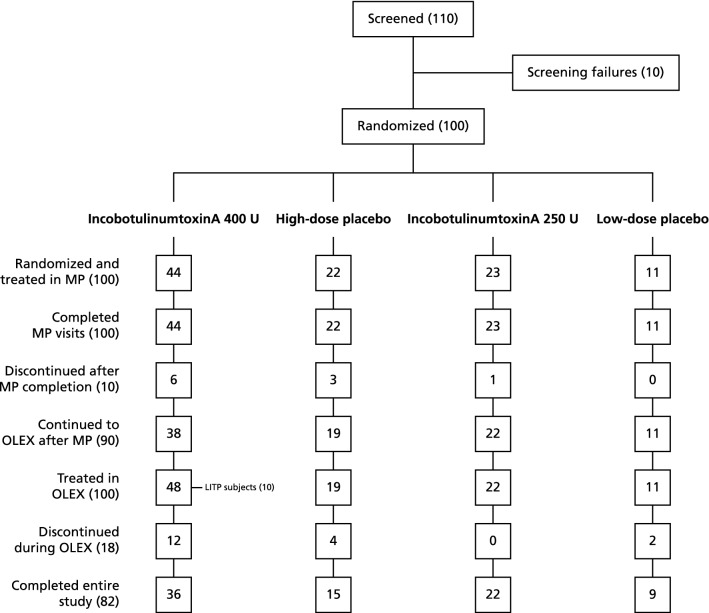
Upper-limb spasticity frequently occurs after stroke and there is a clinical need for more effective therapies. The Phase III J-PURE study assessed the efficacy and safety of incobotulinumtoxinA up to 400 U for post-stroke upper-limb spasticity in Japan.
In the 12-week main period (MP) of this double-blind, placebo-controlled study, Japanese subjects with upper-limb spasticity received one injection cycle of incobotulinumtoxinA 400 U, 250 U, or matching placebo. Eligible subjects enrolled in an open-label extension (OLEX) period of three injection cycles of incobotulinumtoxinA 400 U (32-40 weeks). The primary objective was to establish the efficacy of a single incobotulinumtoxinA injection using the Modified Ashworth Scale (MAS) wrist score. Secondary efficacy outcomes and safety were also assessed.
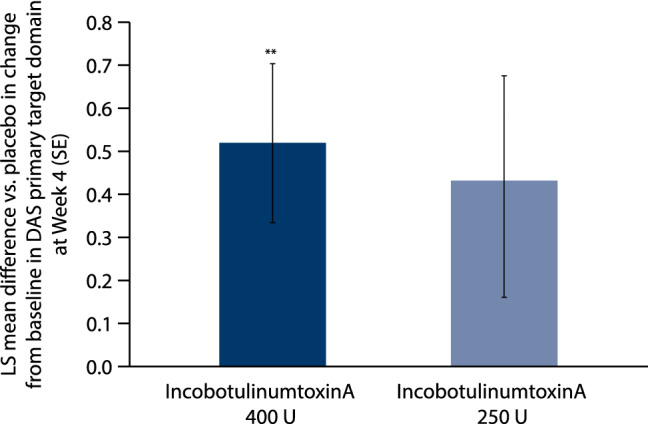
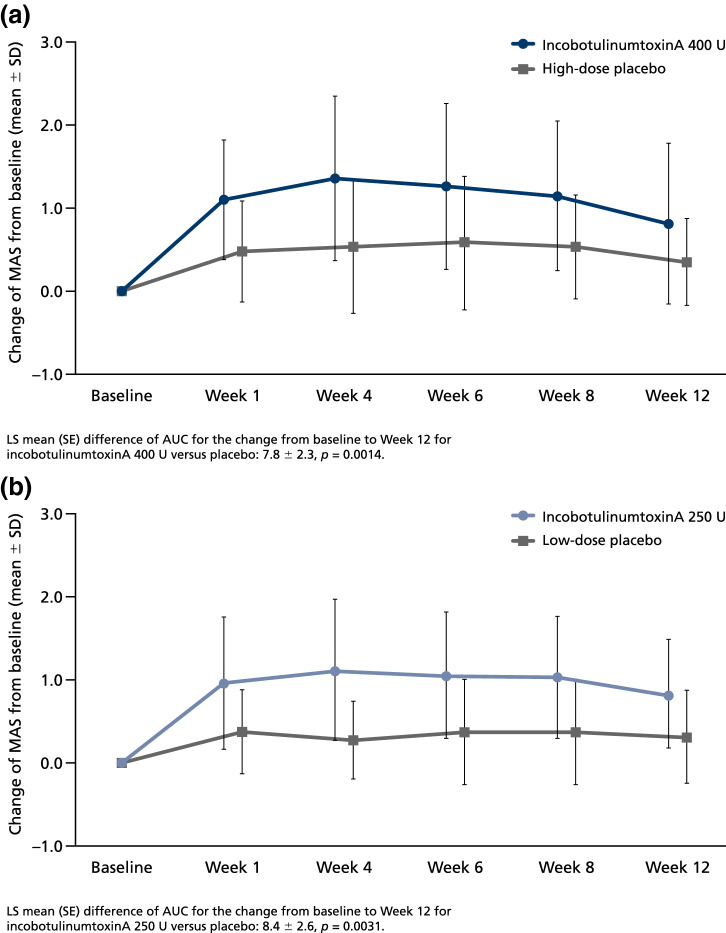
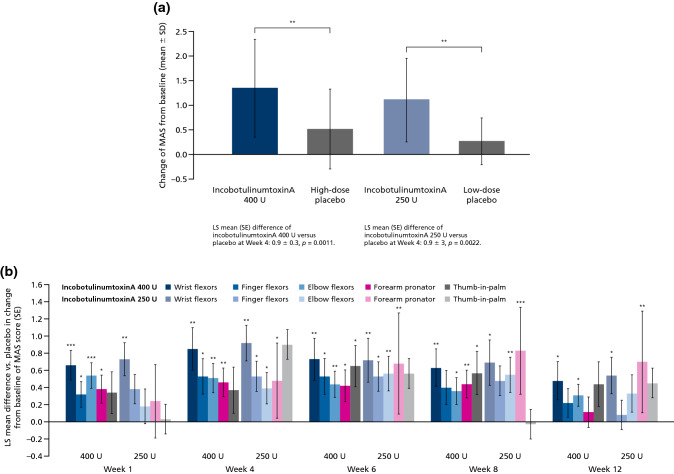
Among 100 treated subjects, AUCs for incobotulinumtoxinA 400 and 250 U were significantly different versus placebo (p = 0.0014 and p = 0.0031, respectively) for change from baseline in MAS wrist score to the end of the MP, with similar results from baseline to week 4. IncobotulinumtoxinA 400 U was superior versus placebo across other spasticity patterns and at most study visits. Improvements were maintained throughout the OLEX period. Disability Assessment Scale and Investigator's Clinical Global Impression scores improved significantly for incobotulinumtoxinA 400 U versus placebo from baseline to week 4 (p = 0.0067 and p < 0.0001, respectively). IncobotulinumtoxinA was well tolerated up to 52 weeks, with no unexpected adverse events.
IncobotulinumtoxinA reduced (pathologically) increased muscle tone, improved functionality and was well tolerated in Japanese subjects with post-stroke upper-limb spasticity.
上肢痉挛性瘫痪在中风后经常发生,需要更有效的治疗方法。III 期 J-PURE 研究评估了在日本患有中风后上肢痉挛性瘫痪的患者使用 400U 依降钙素的疗效和安全性。
在这项双盲、安慰剂对照的研究的 12 周主要期间(MP),日本上肢痉挛性瘫痪患者接受了 1 个 400U 、 250U 或匹配安慰剂的依降钙素注射周期。符合条件的患者参加了依降钙素 400U 的开放标签扩展(OLEX)期 3 个注射周期(32-40 周)。主要目标是使用改良 Ashworth 量表(MAS)腕部评分来确定单次依降钙素注射的疗效。还评估了次要疗效结果和安全性。
在 100 名接受治疗的患者中,与安慰剂相比,依降钙素 400U 和 250U 的 AUC 从基线到 MP 结束时的 MAS 腕部评分变化明显不同(p=0.0014 和 p=0.0031),从基线到第 4 周的结果相似。依降钙素 400U 在大多数研究访视时在其他痉挛模式中优于安慰剂。在整个 OLEX 期间,疗效得以维持。从基线到第 4 周,依降钙素 400U 与安慰剂相比,残疾评估量表和研究者临床总体印象评分显著改善(p=0.0067 和 p<0.0001)。依降钙素耐受良好,至 52 周时无意外不良事件。
依降钙素降低了(病理性)增加的肌肉张力,改善了功能,并且在日本中风后上肢痉挛性瘫痪患者中耐受良好。