School of Biosciences, Cardiff University, Cardiff, United Kingdom; Institute of Physiologically Active Compounds Russian Academy of Sciences (IPAC RAS), Moscow Region, Russian Federation.
School of Biosciences, Cardiff University, Cardiff, United Kingdom; Institute of Physiologically Active Compounds Russian Academy of Sciences (IPAC RAS), Moscow Region, Russian Federation.
Neurobiol Aging. 2020 Jul;91:76-87. doi: 10.1016/j.neurobiolaging.2020.02.026. Epub 2020 Mar 5.
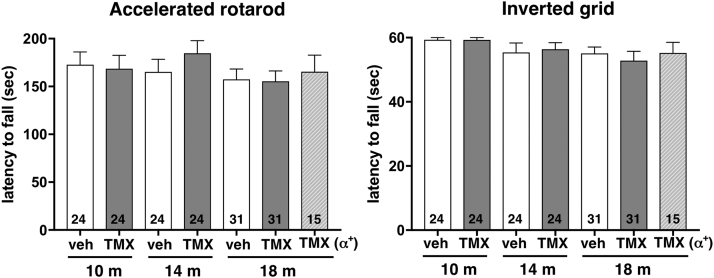
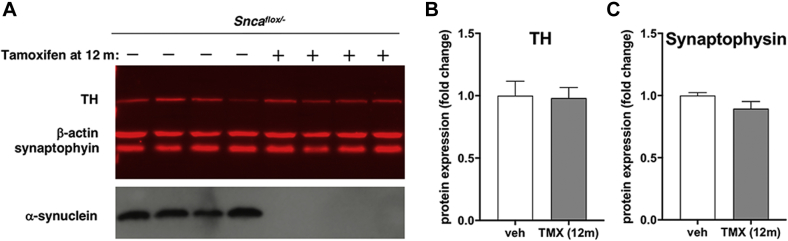
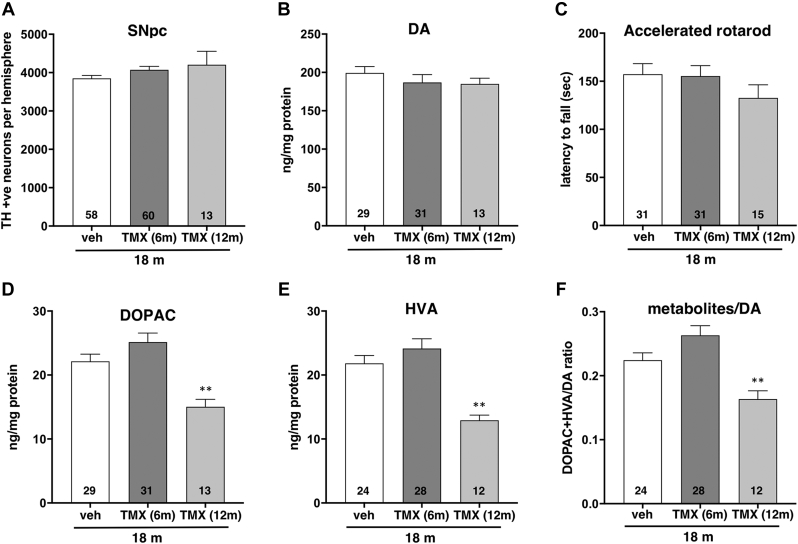
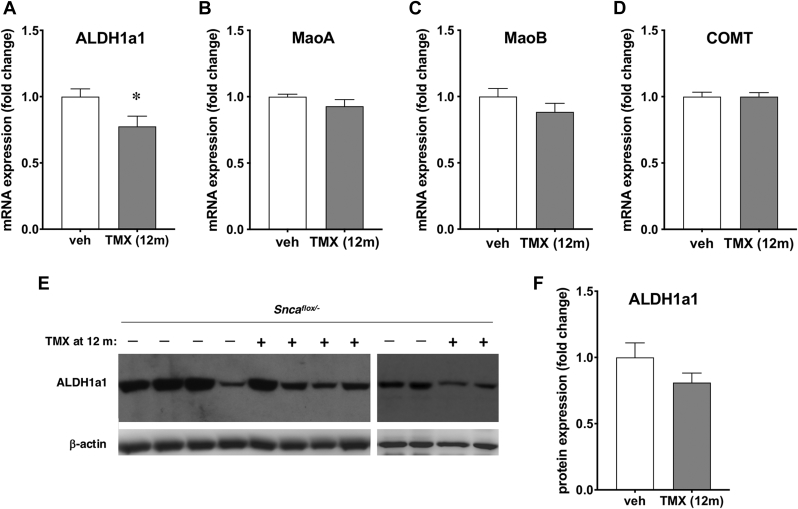
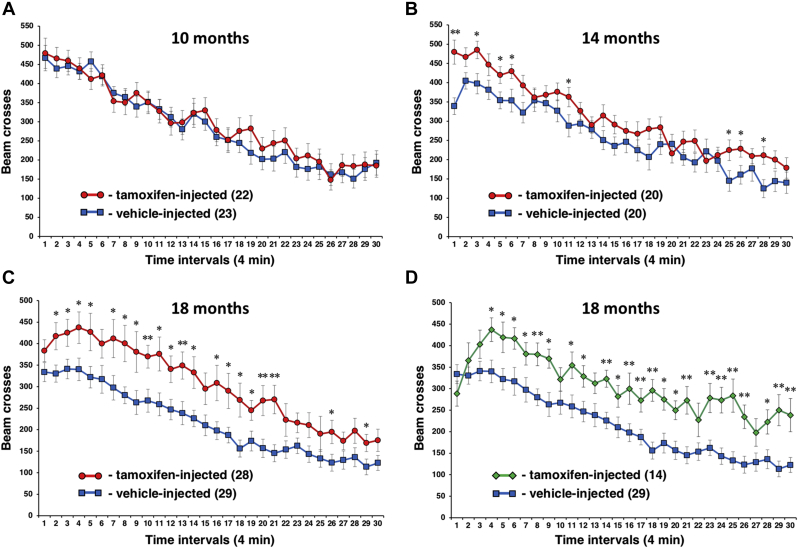
The etiology and pathogenesis of Parkinson's disease (PD) are tightly linked to the gain-of-function of α-synuclein. However, gradual accumulation of α-synuclein aggregates in dopaminergic neurons of substantia nigra pars compacta (SNpc) leads to the depletion of the functional pool of soluble α-synuclein, and therefore, creates loss-of-function conditions, particularly in presynaptic terminals of these neurons. Studies of how this late-onset depletion of a protein involved in many important steps of neurotransmission contributes to PD progression and particularly, to worsening the nigrostriatal pathology at late stages of the disease are limited and obtained data, are controversial. Recently, we produced a mouse line for conditional knockout of the gene encoding α-synuclein, and here we used its tamoxifen-inducible pan-neuronal inactivation to study consequences of the adult-onset (from the age of 6 months) and late-onset (from the age of 12 months) α-synuclein depletion to the nigrostriatal system. No significant changes of animal balance/coordination, the number of dopaminergic neurons in the SNpc and the content of dopamine and its metabolites in the striatum were observed after adult-onset α-synuclein depletion, but in aging (18-month-old) late-onset depleted mice we found a significant reduction of major dopamine metabolites without changes to the content of dopamine itself. Our data suggest that this might be caused, at least partially, by reduced expression of aldehyde dehydrogenase ALDH1a1 and could lead to the accumulation of toxic intermediates of dopamine catabolism. By extrapolating our findings to a potential clinical situation, we suggest that therapeutic downregulation of α-synuclein expression in PD patients is a generally safe option as it should not cause adverse side effects on the functionality of their nigrostriatal system. However, if started in aged patients, this type of therapy might trigger slight functional changes of the nigrostriatal system with potentially unwanted additive effect to already existing pathology.
帕金森病(PD)的病因和发病机制与α-突触核蛋白的功能获得紧密相关。然而,α-突触核蛋白在黑质致密部(SNpc)多巴胺能神经元中的逐渐积累导致可溶性α-突触核蛋白功能池的耗竭,因此,创造了功能丧失的条件,特别是在这些神经元的突触前末梢。关于这种涉及许多神经递质传递重要步骤的蛋白质的迟发性耗竭如何导致 PD 进展,特别是在疾病晚期加重黑质纹状体病理学的研究是有限的,并且获得的数据是有争议的。最近,我们构建了一种条件敲除编码α-突触核蛋白基因的小鼠系,在这里我们使用其他莫昔芬诱导的全神经元失活来研究成年(6 月龄)和迟发性(12 月龄)α-突触核蛋白耗竭对黑质纹状体系统的影响。在成年期(6 月龄)α-突触核蛋白耗竭后,动物平衡/协调、SNpc 中多巴胺能神经元数量和纹状体中多巴胺及其代谢物含量均无明显变化,但在老年(18 月龄)迟发性耗竭小鼠中,我们发现主要多巴胺代谢物含量显著降低,而多巴胺本身的含量没有变化。我们的数据表明,这至少部分是由于醛脱氢酶 ALDH1a1 的表达减少引起的,可能导致多巴胺代谢毒性中间产物的积累。通过将我们的发现推断到潜在的临床情况,我们建议在 PD 患者中下调α-突触核蛋白表达是一种普遍安全的选择,因为它不应对其黑质纹状体系统的功能产生不良副作用。然而,如果在老年患者中开始这种治疗,可能会引发黑质纹状体系统的轻微功能变化,对已经存在的病理产生潜在的不良附加效应。