Jayasinghe Kushani, Quinlan Catherine, Mallett Andrew J, Kerr Peter G, McClaren Belinda, Nisselle Amy, Mallawaarachchi Amali, Polkinghorne Kevan R, Patel Chirag, Best Stephanie, Stark Zornitza
Department of Nephrology, Monash Health, Melbourne, Australia.
Department of Medicine, Monash University, Melbourne, Australia.
Kidney Int Rep. 2020 Nov 10;6(2):272-283. doi: 10.1016/j.ekir.2020.10.030. eCollection 2021 Feb.
Genomic testing is becoming widely available as a diagnostic tool, although widespread implementation is not yet established in nephrology.
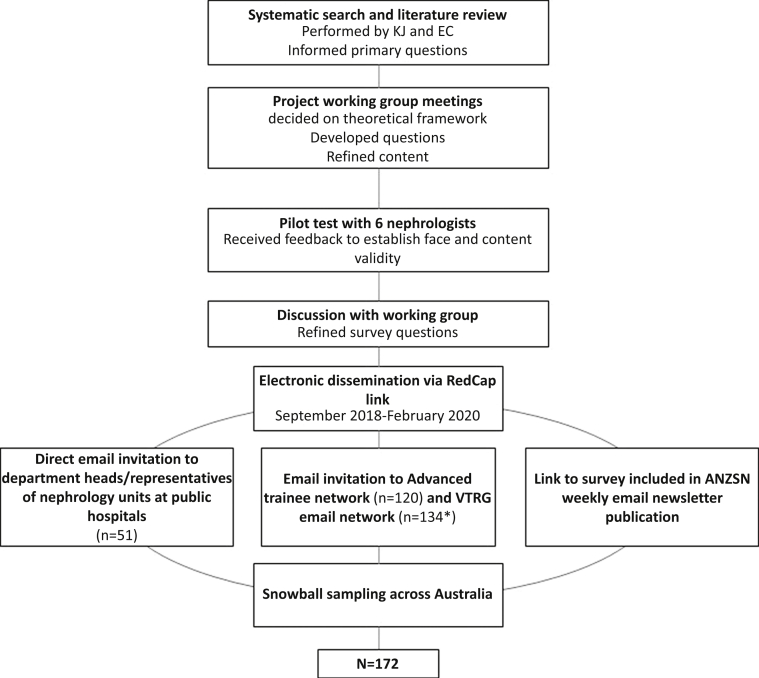
An anonymous electronic survey was administered to investigate experience and confidence with genomic tests, perceived clinical utility of genomic services, preferences for service delivery models, and readiness for implementation among nephrologists. Questions were guided by a comprehensive literature review and published tools, including a validated theoretical framework for implementation of genomic medicine: Consolidated Framework for Implementation Research (CFIR).
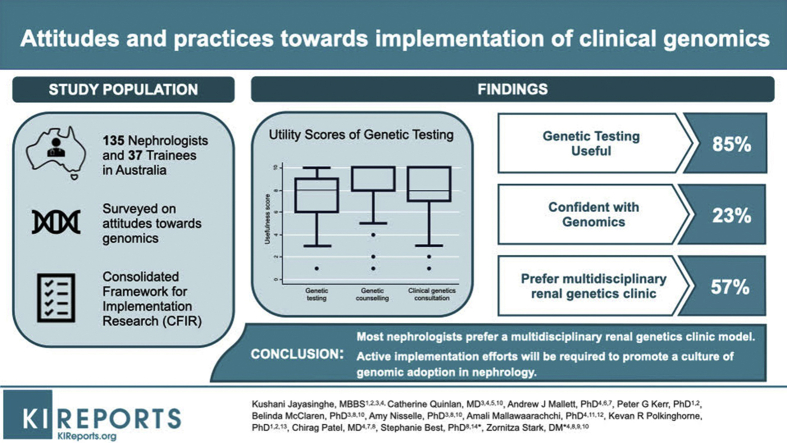
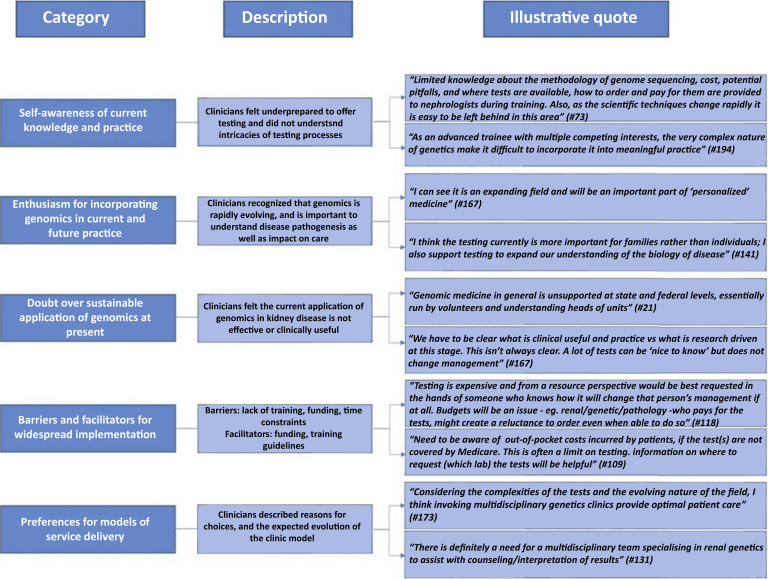
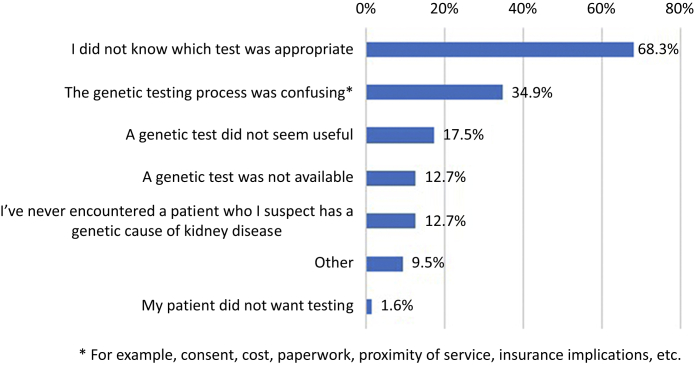
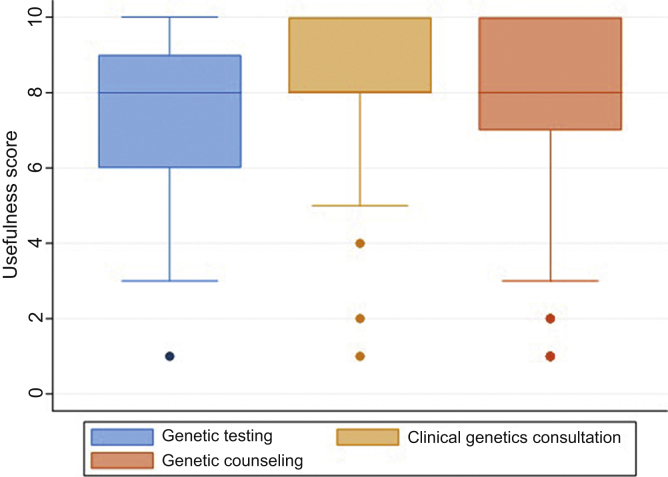
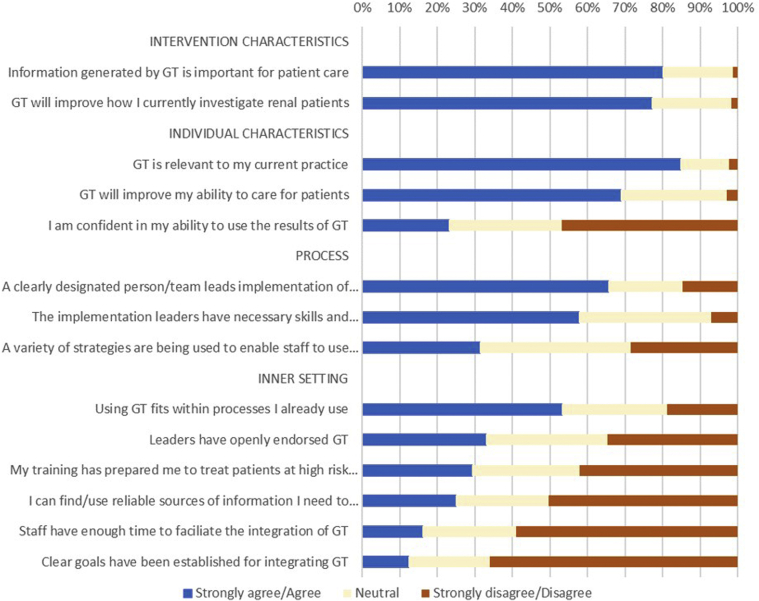
Responses were received from 224 clinicians, of which 172 were eligible for analysis. Most clinicians (132 [76%]) had referred at least one patient to a genetics clinic. Despite most clinicians (136 [85%]) indicating that they believed genetic testing would be useful, only 39 (23%) indicated they felt confident to use results of genomic testing, with pediatric clinicians feeling more confident compared with adult clinicians (12 of 20 [60%] vs. 27 of 149 [18%]), < 0.01, Fisher exact). A multidisciplinary renal genetics clinic was the preferred model among clinicians surveyed (98 of 172 [57%]). A key implementation barrier highlighted related to the hospital or organizational culture and/or environment. Specific barriers noted in quantitative and qualitative responses included inadequate staffing, learning resources, and funding.
Our findings suggest support for genomic testing among nephrologists, with a strong preference for a multidisciplinary model (involving a nephrologist, clinical geneticist, and genetic counselor). Broad-ranging interventions are urgently required to shift the current culture and ensure successful implementation of genomics in nephrology, including reducing knowledge gaps, increased funding and resources, disease-specific guidelines, and streamlining of testing processes.
基因组检测作为一种诊断工具正变得越来越普及,尽管在肾脏病学领域尚未广泛应用。
开展了一项匿名电子调查,以调查肾脏病医生在基因组检测方面的经验和信心、对基因组服务临床效用的认知、对服务提供模式的偏好以及实施意愿。问题基于全面的文献综述和已发表的工具制定,包括一个经过验证的基因组医学实施理论框架:实施研究综合框架(CFIR)。
共收到224名临床医生的回复,其中172名符合分析条件。大多数临床医生(132名[76%])至少将一名患者转诊至遗传学诊所。尽管大多数临床医生(136名[85%])表示他们认为基因检测会有用,但只有39名(23%)表示他们有信心使用基因组检测结果,儿科临床医生比成人临床医生更有信心(20名中的12名[60%]对149名中的27名[18%],P<0.01,Fisher精确检验)。在接受调查的临床医生中,多学科肾脏遗传学诊所是首选模式(172名中的98名[57%])。突出的一个关键实施障碍与医院或组织文化和/或环境有关。定量和定性回复中指出的具体障碍包括人员不足、学习资源和资金不足。
我们的研究结果表明肾脏病医生对基因组检测持支持态度,强烈倾向于多学科模式(包括肾脏病医生、临床遗传学家和遗传咨询师)。迫切需要采取广泛的干预措施来改变当前的文化,并确保基因组学在肾脏病学中的成功实施,包括减少知识差距、增加资金和资源、制定针对特定疾病的指南以及简化检测流程。