Institute of Hematology and Blood Transfusion, U Nemocnice 1, 128 20 Prague, Czech Republic.
Faculty of Science, Charles University, Albertov 2038, 128 00 Prague, Czech Republic.
Cells. 2020 Mar 26;9(4):794. doi: 10.3390/cells9040794.
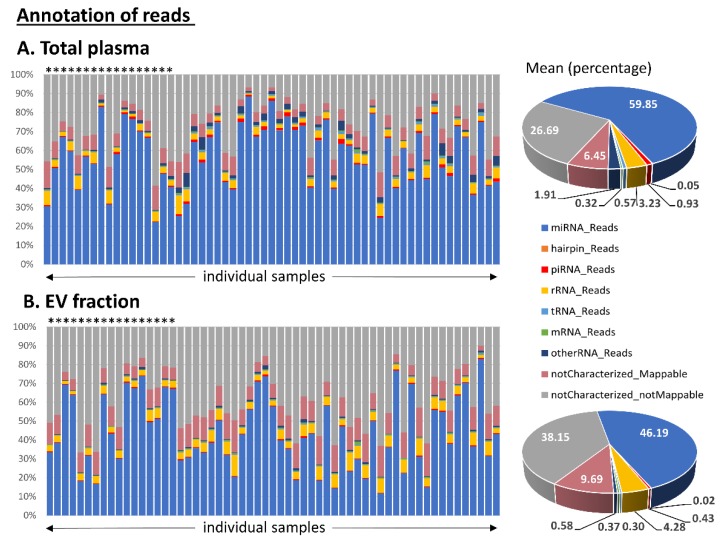
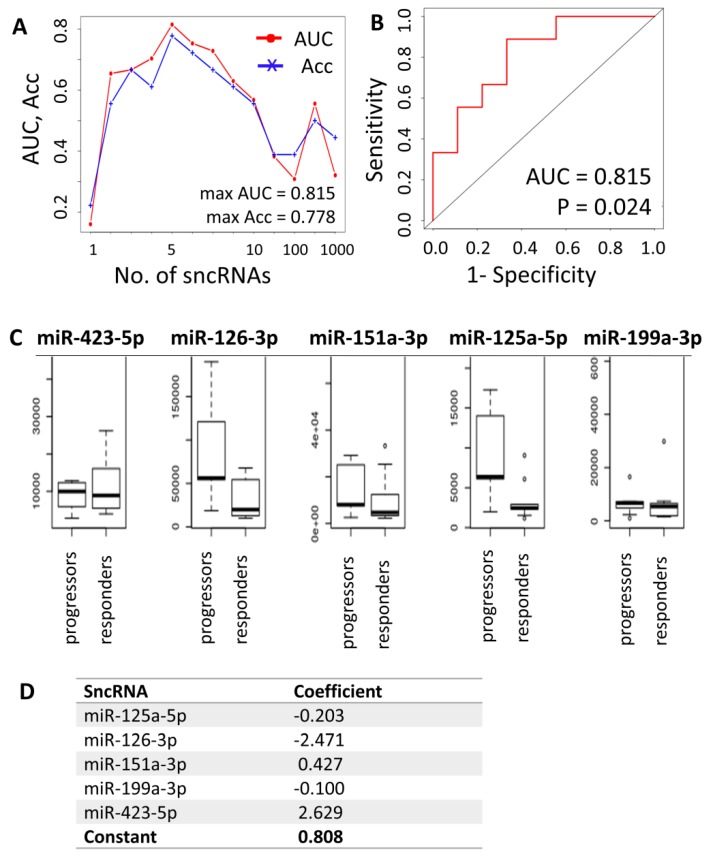
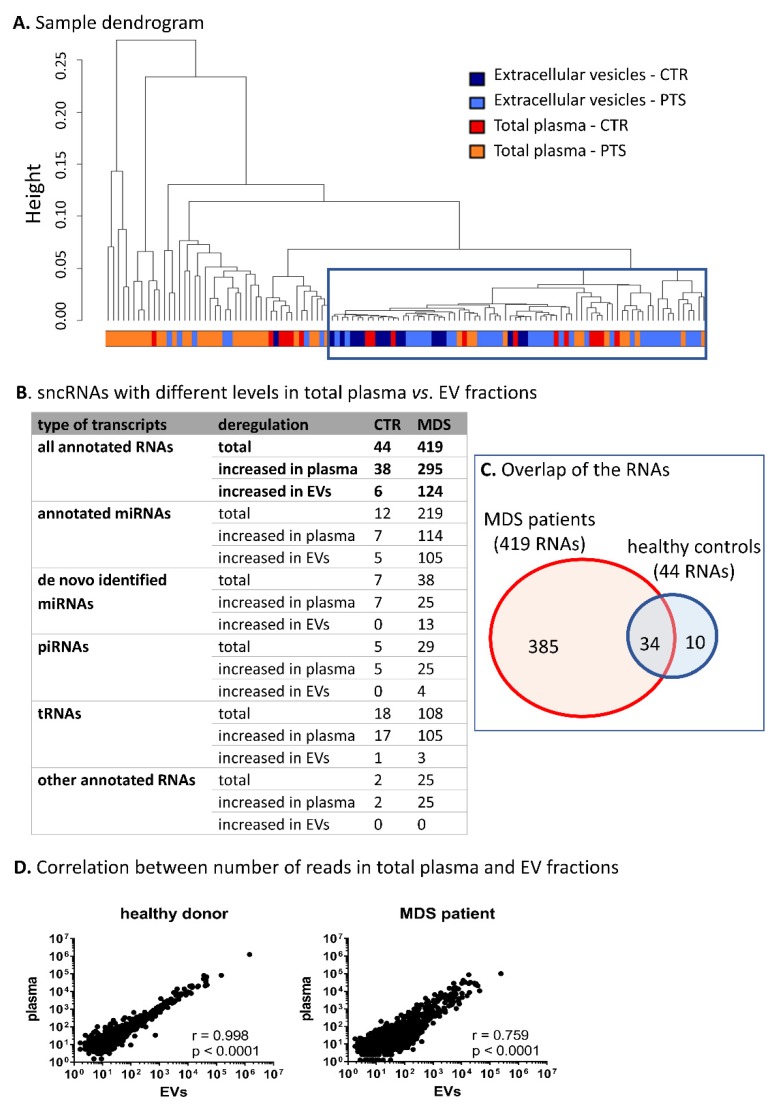
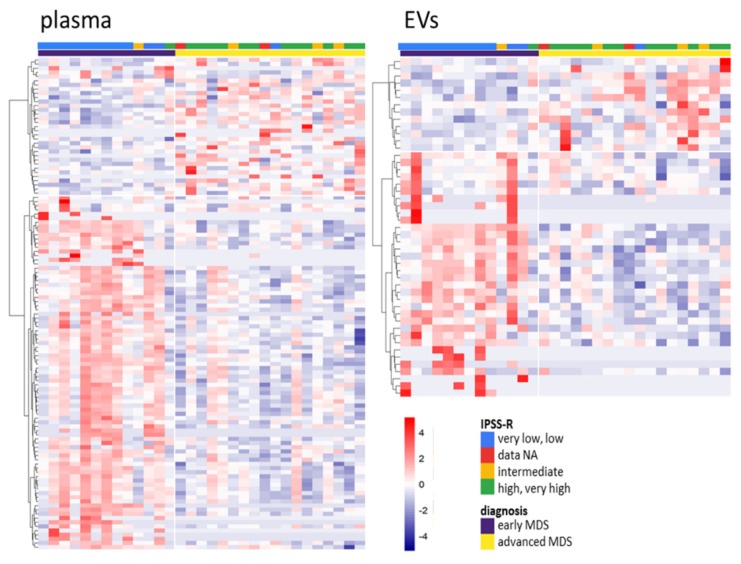
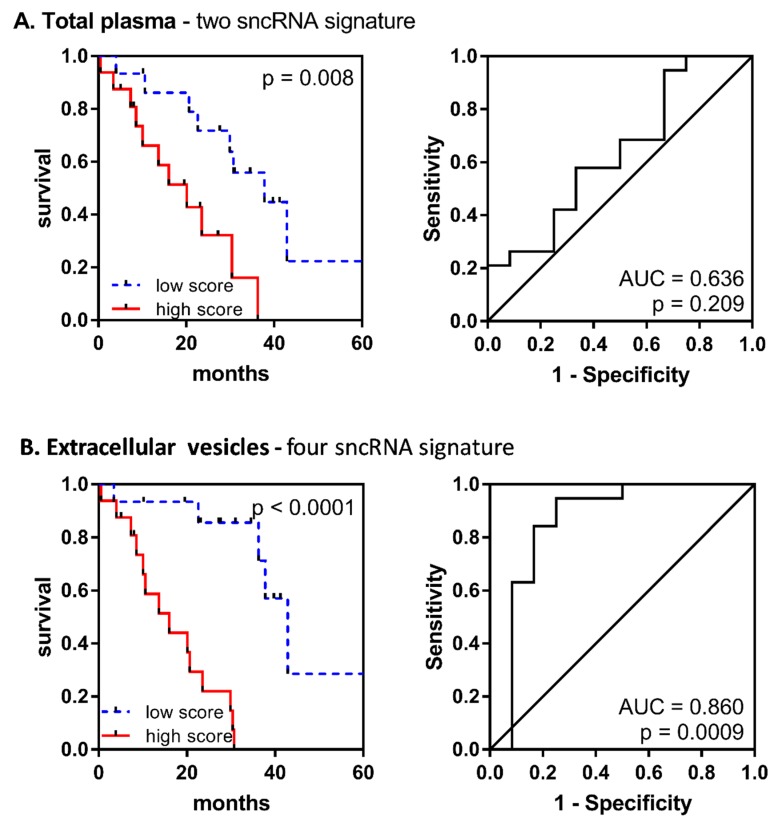
Myelodysplastic syndromes (MDS) are hematopoietic stem cell disorders with large heterogeneity at the clinical and molecular levels. As diagnostic procedures shift from bone marrow biopsies towards less invasive techniques, circulating small noncoding RNAs (sncRNAs) have become of particular interest as potential novel noninvasive biomarkers of the disease. We aimed to characterize the expression profiles of circulating sncRNAs of MDS patients and to search for specific RNAs applicable as potential biomarkers. We performed small RNA-seq in paired samples of total plasma and plasma-derived extracellular vesicles (EVs) obtained from 42 patients and 17 healthy controls and analyzed the data with respect to the stage of the disease, patient survival, response to azacitidine, mutational status, and RNA editing. Significantly higher amounts of RNA material and a striking imbalance in RNA content between plasma and EVs (more than 400 significantly deregulated sncRNAs) were found in MDS patients compared to healthy controls. Moreover, the RNA content of EV cargo was more homogeneous than that of total plasma, and different RNAs were deregulated in these two types of material. Differential expression analyses identified that many hematopoiesis-related miRNAs (e.g., miR-34a, miR-125a, and miR-150) were significantly increased in MDS and that miRNAs clustered on 14q32 were specifically increased in early MDS. Only low numbers of circulating sncRNAs were significantly associated with somatic mutations in the or genes. Survival analysis defined a signature of four sncRNAs (miR-1237-3p, U33, hsa_piR_019420, and miR-548av-5p measured in EVs) as the most significantly associated with overall survival (HR = 5.866, < 0.001). In total plasma, we identified five circulating miRNAs (miR-423-5p, miR-126-3p, miR-151a-3p, miR-125a-5p, and miR-199a-3p) whose combined expression levels could predict the response to azacitidine treatment. In conclusion, our data demonstrate that circulating sncRNAs show specific patterns in MDS and that their expression changes during disease progression, providing a rationale for the potential clinical usefulness of circulating sncRNAs in MDS prognosis. However, monitoring sncRNA levels in total plasma or in the EV fraction does not reflect one another, instead, they seem to represent distinctive snapshots of the disease and the data should be interpreted circumspectly with respect to the type of material analyzed.
骨髓增生异常综合征(MDS)是一种造血干细胞疾病,在临床和分子水平上具有很大的异质性。随着诊断程序从骨髓活检转向侵袭性较小的技术,循环小非编码 RNA(sncRNA)作为疾病潜在的新型非侵入性生物标志物引起了特别关注。我们旨在描述 MDS 患者循环 sncRNA 的表达谱,并寻找可作为潜在生物标志物的特定 RNA。我们对 42 名患者和 17 名健康对照者的总血浆和血浆衍生细胞外囊泡(EV)的配对样本进行了小 RNA-seq,并对数据进行了分析,以评估疾病的阶段、患者的生存、阿扎胞苷的反应、突变状态和 RNA 编辑。与健康对照组相比,MDS 患者的 RNA 物质含量明显更高,血浆和 EV 之间的 RNA 含量存在明显失衡(超过 400 个明显失调的 sncRNA)。此外,EV 货物的 RNA 含量比总血浆更均匀,并且这两种类型的物质中都存在不同的 RNA 失调。差异表达分析表明,许多与造血相关的 miRNA(例如 miR-34a、miR-125a 和 miR-150)在 MDS 中显著增加,并且 14q32 上的 miRNA 簇在早期 MDS 中特异性增加。只有少数循环 sncRNA 与 或 基因的体细胞突变显著相关。生存分析定义了由 4 个 sncRNA(在 EV 中测量的 miR-1237-3p、U33、hsa_piR_019420 和 miR-548av-5p)组成的特征作为与总生存时间最显著相关的特征(HR=5.866, < 0.001)。在总血浆中,我们鉴定了五个循环 miRNA(miR-423-5p、miR-126-3p、miR-151a-3p、miR-125a-5p 和 miR-199a-3p),其表达水平的组合可预测阿扎胞苷治疗的反应。总之,我们的数据表明,循环 sncRNA 在 MDS 中表现出特定的模式,并且它们的表达在疾病进展过程中发生变化,为循环 sncRNA 在 MDS 预后中的潜在临床应用提供了依据。然而,在总血浆或 EV 部分中监测 sncRNA 水平并不能相互反映,相反,它们似乎代表了疾病的独特快照,并且应根据分析的材料类型谨慎解释数据。