Division of Diabetes, Endocrinology, and Metabolism, Vanderbilt University Medical Center, Nashville,TN 37232, USA.
Division of Allergy, Pulmonary, and Critical Care Medicine, Vanderbilt University Medical Center,Nashville, TN 37232, USA.
Nutrients. 2020 Mar 26;12(4):911. doi: 10.3390/nu12040911.
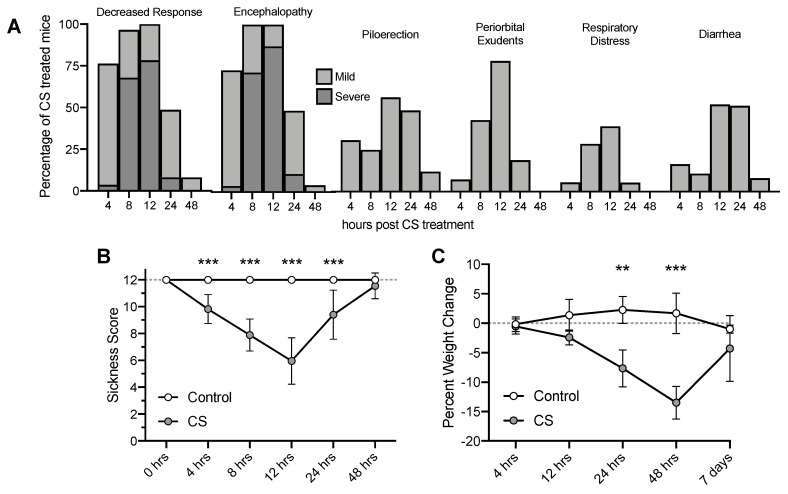
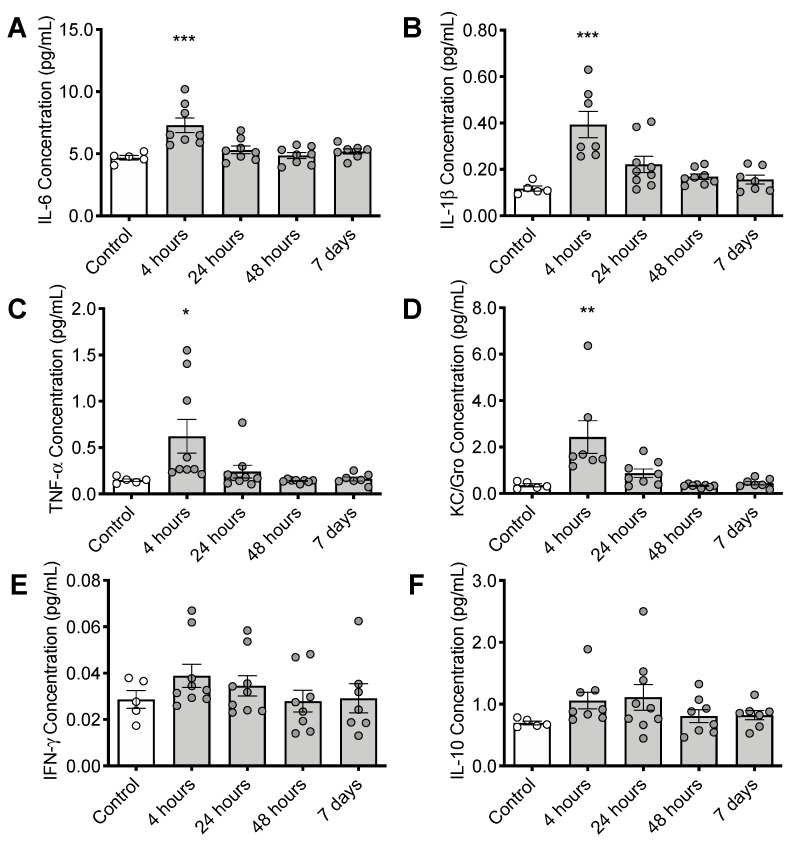
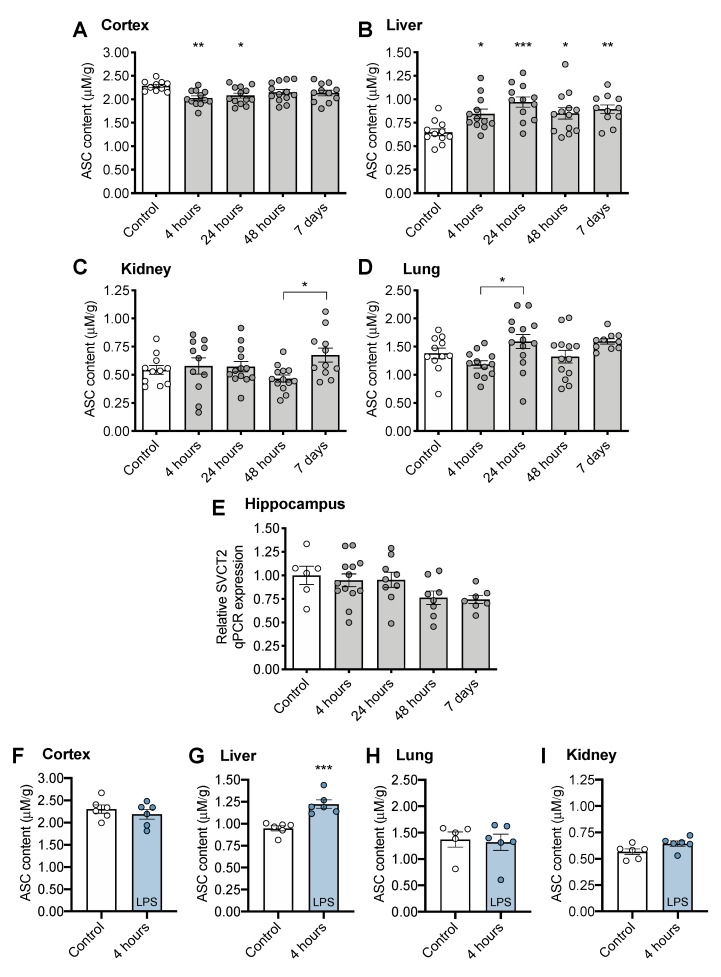
Vitamin C (ascorbate, ASC) is a critical antioxidant in the body with specific roles in the brain. Despite a recent interest in vitamin C therapies for critical care medicine, little is known about vitamin C regulation during acute inflammation and critical illnesses such as sepsis. Using a cecal slurry (CS) model of sepsis in mice, we determined ASC and inflammatory changes in the brain following the initial treatment. ASC levels in the brain were acutely decreased by approximately 10% at 4 and 24 h post CS treatment. Changes were accompanied by a robust increase in liver ASC levels of up to 50%, indicating upregulation of synthesis beginning at 4 h and persisting up to 7 days post CS treatment. Several key cytokines interleukin 6 (IL-6), interleukin 1β (IL-1β), tumor necrosis factor alpha (TNFα), and chemokine (C-X-C motif) ligand 1 (CXCL1, KC/Gro) were also significantly elevated in the cortex at 4 h post CS treatment, although these levels returned to normal by 48 h. These data strongly suggest that ASC reserves are directly challenged throughout illness and recovery from sepsis. Given the timescale of this response, decreases in cortical ASC are likely driven by hyper-acute neuroinflammatory processes. However, future studies are required to confirm this relationship and to investigate how this deficiency may subsequently impact neuroinflammation.
维生素 C(抗坏血酸,ASC)是体内一种重要的抗氧化剂,在大脑中具有特定的作用。尽管最近人们对维生素 C 治疗危重病医学产生了兴趣,但对于急性炎症和脓毒症等危重病期间维生素 C 的调节知之甚少。我们使用小鼠盲肠内容物(CS)脓毒症模型,在初始治疗后确定了 ASC 和大脑中的炎症变化。CS 处理后 4 小时和 24 小时,大脑中的 ASC 水平急性下降约 10%。变化伴随着肝脏 ASC 水平的显著增加,高达 50%,表明从 4 小时开始合成上调,并持续到 CS 处理后 7 天。几种关键细胞因子白细胞介素 6(IL-6)、白细胞介素 1β(IL-1β)、肿瘤坏死因子α(TNFα)和趋化因子(C-X-C 基序)配体 1(CXCL1,KC/Gro)在 CS 处理后 4 小时也在皮质中显著升高,尽管这些水平在 48 小时内恢复正常。这些数据强烈表明,在疾病过程中和脓毒症恢复过程中,ASC 储备直接受到挑战。鉴于这种反应的时间尺度,皮质 ASC 的减少可能是由超急性神经炎症过程驱动的。然而,需要进一步的研究来证实这种关系,并研究这种缺乏如何随后影响神经炎症。