Bulgari Daniela, Fiorini Lisa, Gianoncelli Alessandra, Bertuzzi Michela, Gobbi Emanuela
Piattaforma di Microbiologia Agroalimentare ed Ambientale (Pi.Mi.A.A.), AgroFood Lab, Department of Molecular and Translational Medicine, University of Brescia, Brescia, Italy.
Piattaforma di Proteomica, AgroFood Lab, Department of Molecular and Translational Medicine, University of Brescia, Brescia, Italy.
Front Microbiol. 2020 Mar 12;11:200. doi: 10.3389/fmicb.2020.00200. eCollection 2020.
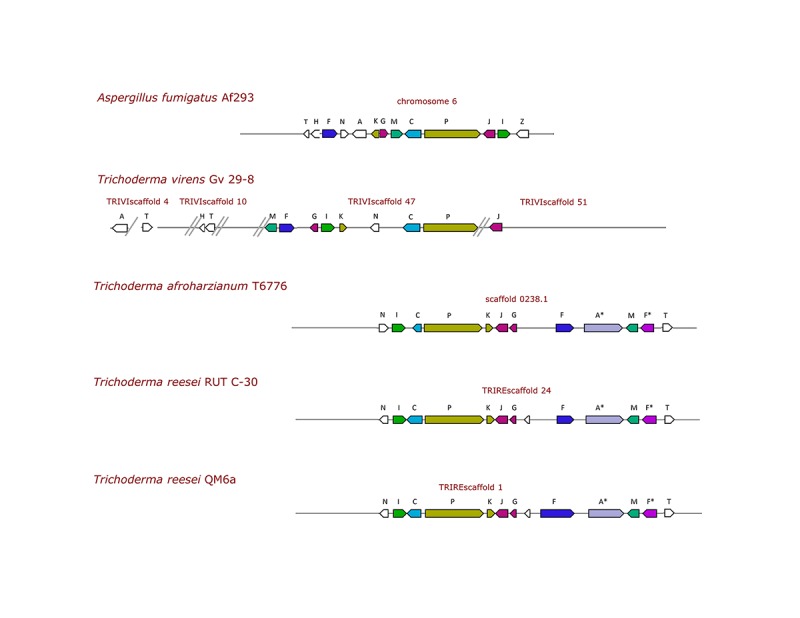
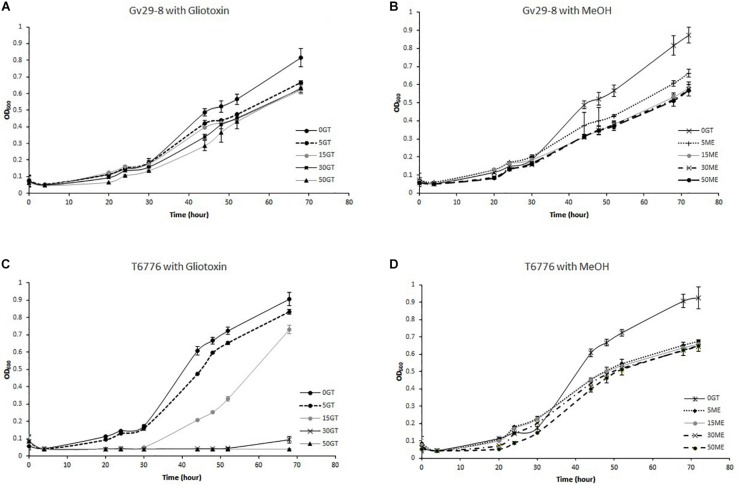
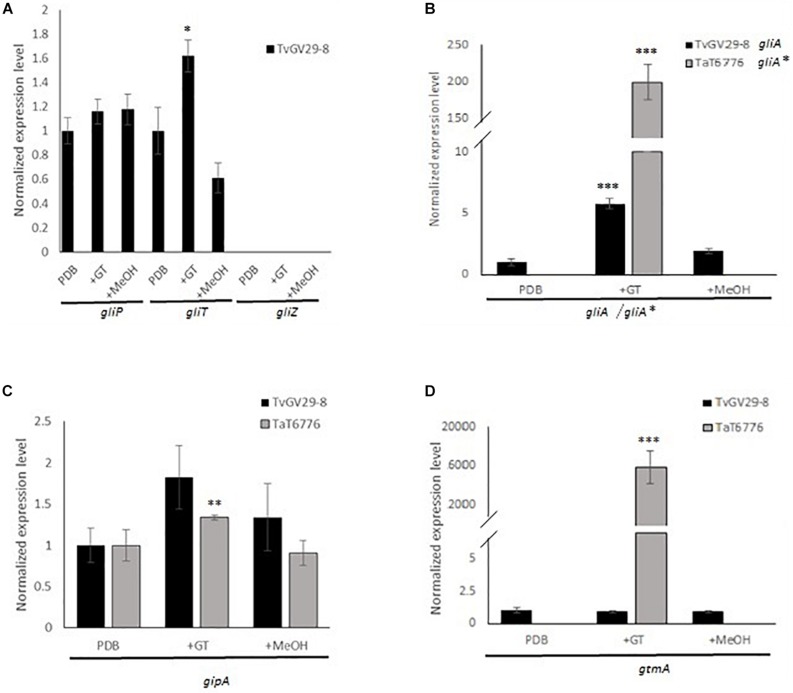
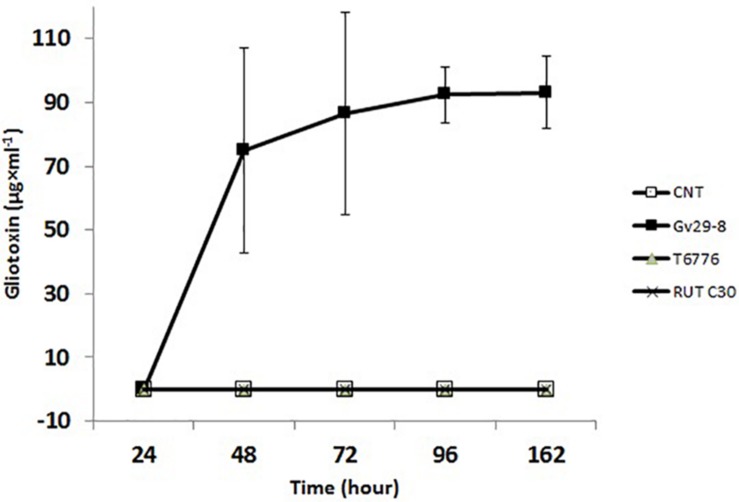
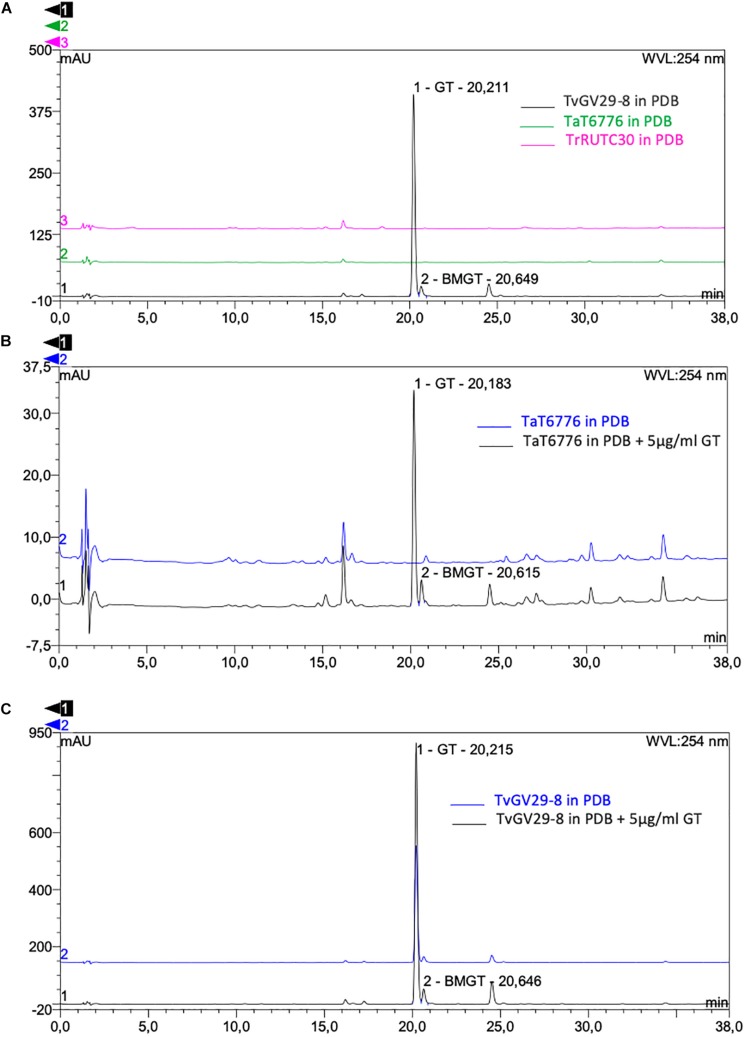
Gliotoxin (GT) is a dual fungal secondary metabolite (SM). It displays pleiotropic activities and possesses medicinal properties and biocontrol abilities but, unfortunately, has toxic properties in humans. Various species are used as fungal biological control agents (BCAs), as a sustainable alternative for crop protection worldwide. Among them is , a GT-producing fungus. Since no information was available on the genetically coded prerequisites for the production of GT in other spp., genome analyses were carried out in 10 spp. genomes. Moreover, a real-time PCR assay setup and high-performance liquid chromatography (HPLC) analyses were employed to understand the GT-producing biological systems in GV29-8 (TvGv29-8) and T6776 (TaT6776), two relevant biocontrol fungi. The structure of the GT biosynthesis genes (GT-BG) is polymorphic, with two distinct types associated with the ability to produce GT. GliH, a key protein for GT synthesis, is absent in most of the GT biosynthetic pathways, which may be the reason for their inability to produce GT. The GT-BG are expressed in TvGv29-8 as expected, while they are silent in TaT6776. Interestingly, in the GT-non-producing TaT6776, only (putative GT transporter) and (putative GT -methyltransferase) were induced by exogenous GT, underlining the ability of this strain to reduce the deleterious effect of the toxin. This ability is confirmed by growth assays and by the detection of the bis-thiomethylated form of GT catalyzed by GtmA in the culture medium supplemented with GT. To the best of our knowledge, this is the first general description of the GT biological system in different spp. as far as the GT-BG content and organization is concerned and a preliminary insight into their functionality.
Gliotoxin (GT)是一种双重真菌次生代谢产物(SM)。它具有多种活性,具备药用特性和生物防治能力,但不幸的是,对人类具有毒性。多种物种被用作真菌生物防治剂(BCAs),作为全球作物保护的可持续替代方案。其中,是一种产生GT的真菌。由于其他 spp.中关于GT产生的遗传编码前提条件尚无信息,因此对10个 spp.基因组进行了基因组分析。此外,采用实时PCR检测设置和高效液相色谱(HPLC)分析来了解GV29-8 (TvGv29-8)和T6776 (TaT6776)这两种相关生物防治真菌中产生GT的生物系统。GT生物合成基因(GT-BG)的结构具有多态性,有两种不同类型与产生GT的能力相关。GliH是GT合成的关键蛋白,在大多数GT生物合成途径中不存在,这可能是它们无法产生GT的原因。GT-BG在TvGv29-8中如预期那样表达,而在TaT6776中则沉默。有趣的是,在不产生GT的TaT6776中,只有(假定的GT转运蛋白)和(假定的GT -甲基转移酶)被外源性GT诱导,这突出了该菌株降低毒素有害作用的能力。通过生长试验以及在添加GT的培养基中检测由GtmA催化的GT双硫甲基化形式,证实了这种能力。据我们所知,就GT-BG的含量和组织而言,这是对不同 spp.中GT生物系统的首次一般性描述,也是对其功能的初步洞察。