Smith Elizabeth B, Dolan Stephen K, Fitzpatrick David A, Doyle Sean, Jones Gary W
Department of Biology, Maynooth University, Maynooth, County Kildare, Ireland.
Microb Cell. 2016 Feb 19;3(3):120-125. doi: 10.15698/mic2016.03.485.
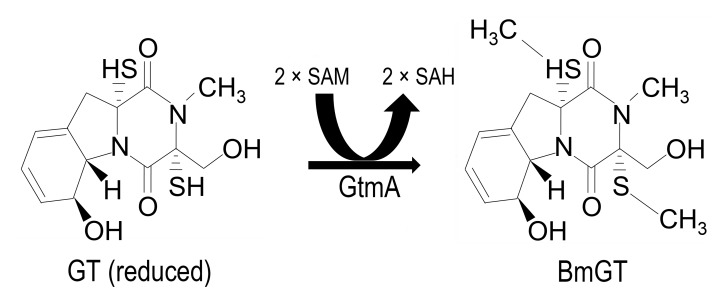
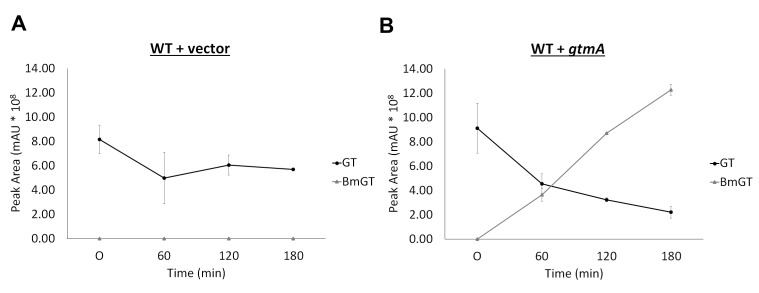
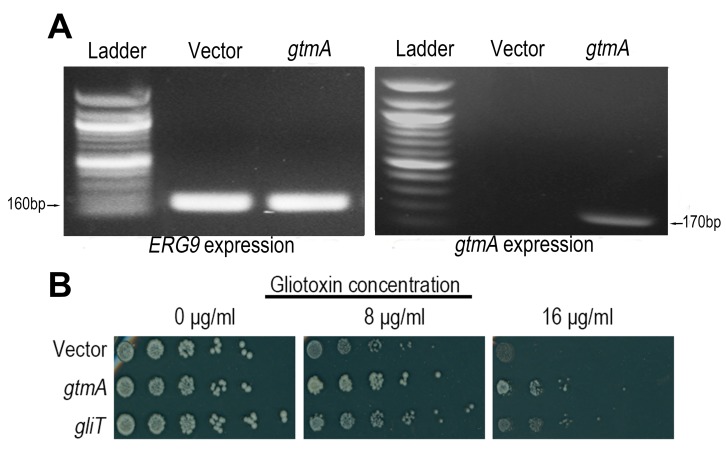
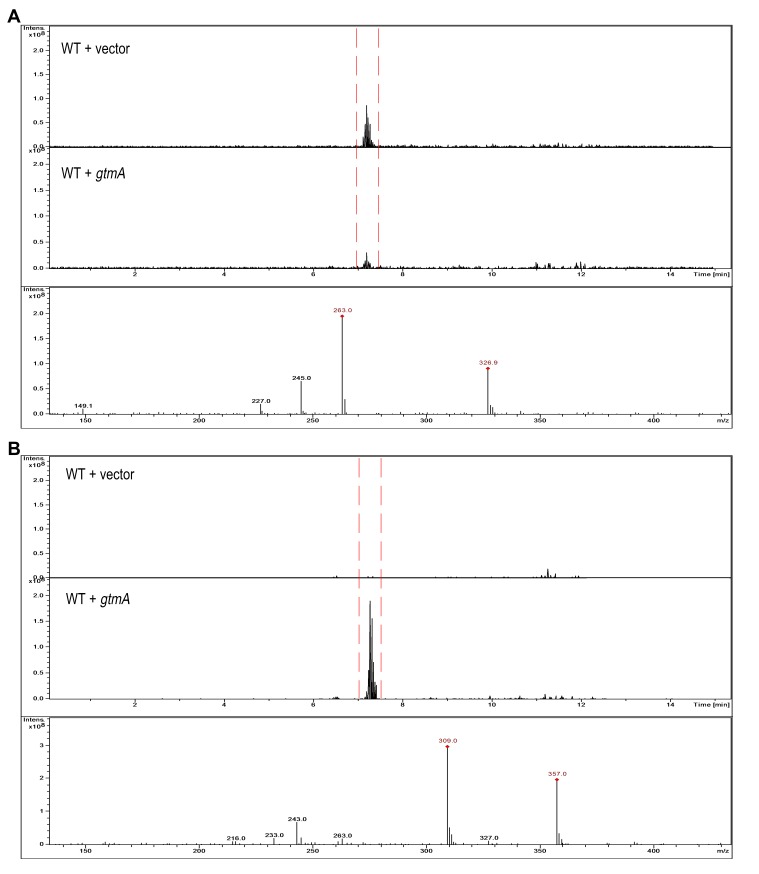
Gliotoxin (GT) is a mycotoxin produced by some species of ascomycete fungi including the opportunistic human pathogen . In order to produce GT the host organism needs to have evolved a self-protection mechanism. GT contains a redox-cycling disulfide bridge that is important in mediating toxicity. Recently is has been demonstrated that possesses a novel thiomethyltransferase protein called GtmA that has the ability to thiomethylate GT , which aids the organism in regulating GT biosynthesis. It has been suggested that thiomethylation of GT and similar sulfur-containing toxins may play a role in providing self-protection in host organisms. In this work we have engineered , a GT-naïve organism, to express GtmA. We demonstrate that GtmA can readily thiomethylate GT in yeast, which results in protection of the organism from exogenous GT. Our work has implications for understanding the evolution of GT self-protection mechanisms in organisms that are GT producers and non-producers.
Gliotoxin (GT) 是一种由某些子囊菌真菌产生的霉菌毒素,包括机会性人类病原体。为了产生GT,宿主生物体需要进化出一种自我保护机制。GT含有一个氧化还原循环二硫键,这在介导毒性方面很重要。最近已证明,(此处原文有缺失)拥有一种名为GtmA的新型硫甲基转移酶蛋白,该蛋白能够将GT硫甲基化,这有助于生物体调节GT生物合成。有人提出,GT和类似含硫毒素的硫甲基化可能在宿主生物体提供自我保护方面发挥作用。在这项工作中,我们对一种原本不含GT的生物体进行了基因改造,使其表达GtmA。我们证明,GtmA可以在酵母中轻易地将GT硫甲基化,这使得生物体免受外源性GT的侵害。我们的工作对于理解GT生产者和非生产者生物体中GT自我保护机制的进化具有重要意义。