Xie Qiqi, Ou-Yang Wen, Zhang Mingwei, Wang Huimei, Yue Qiuyuan
Department of Orthopaedics, Second Hospital of Lanzhou University, Lanzhou, Gansu, 730030, People's Republic of China.
Morning Star Academic Cooperation, Shanghai.
J Cancer. 2020 Feb 21;11(10):2852-2863. doi: 10.7150/jca.34640. eCollection 2020.
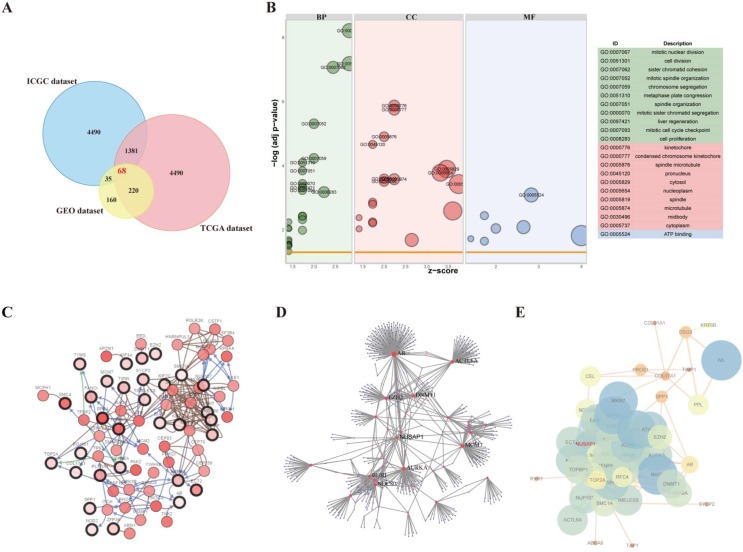
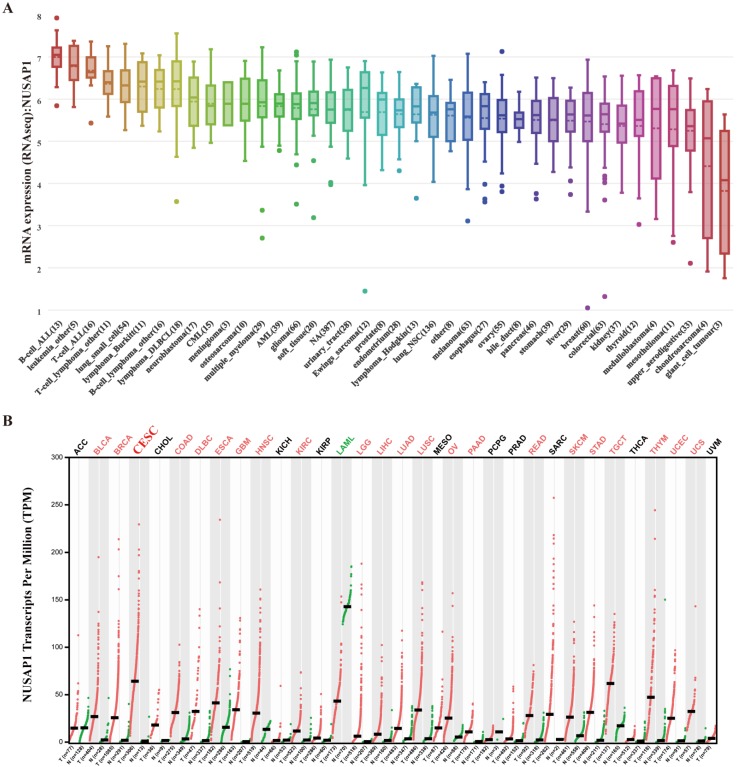
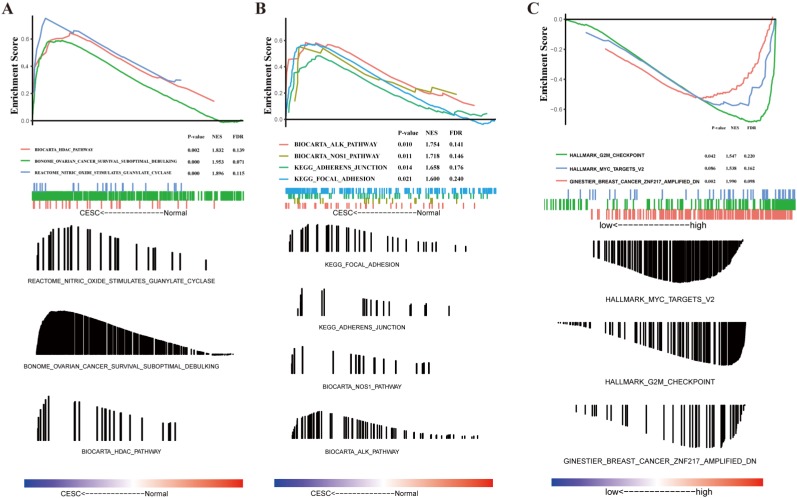
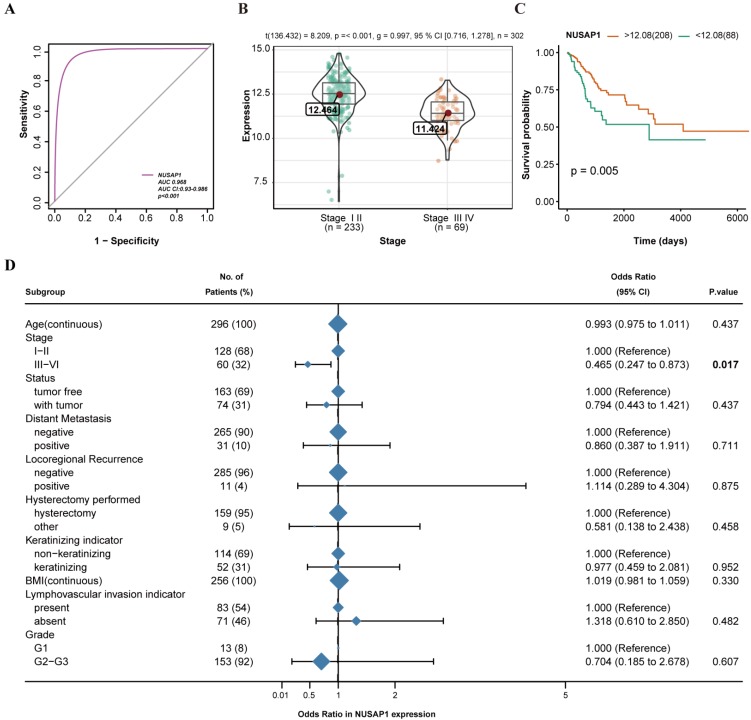
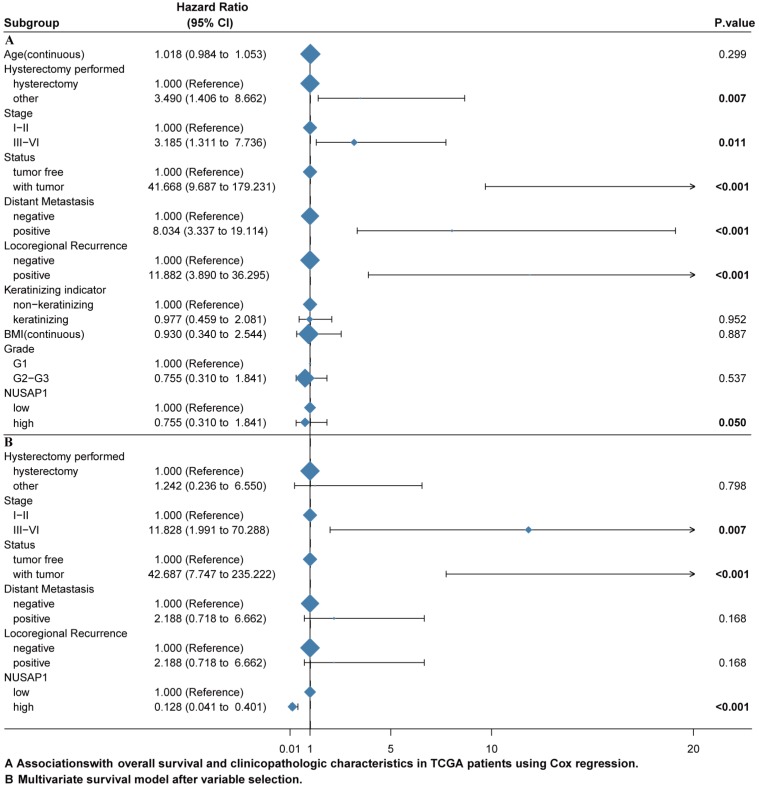
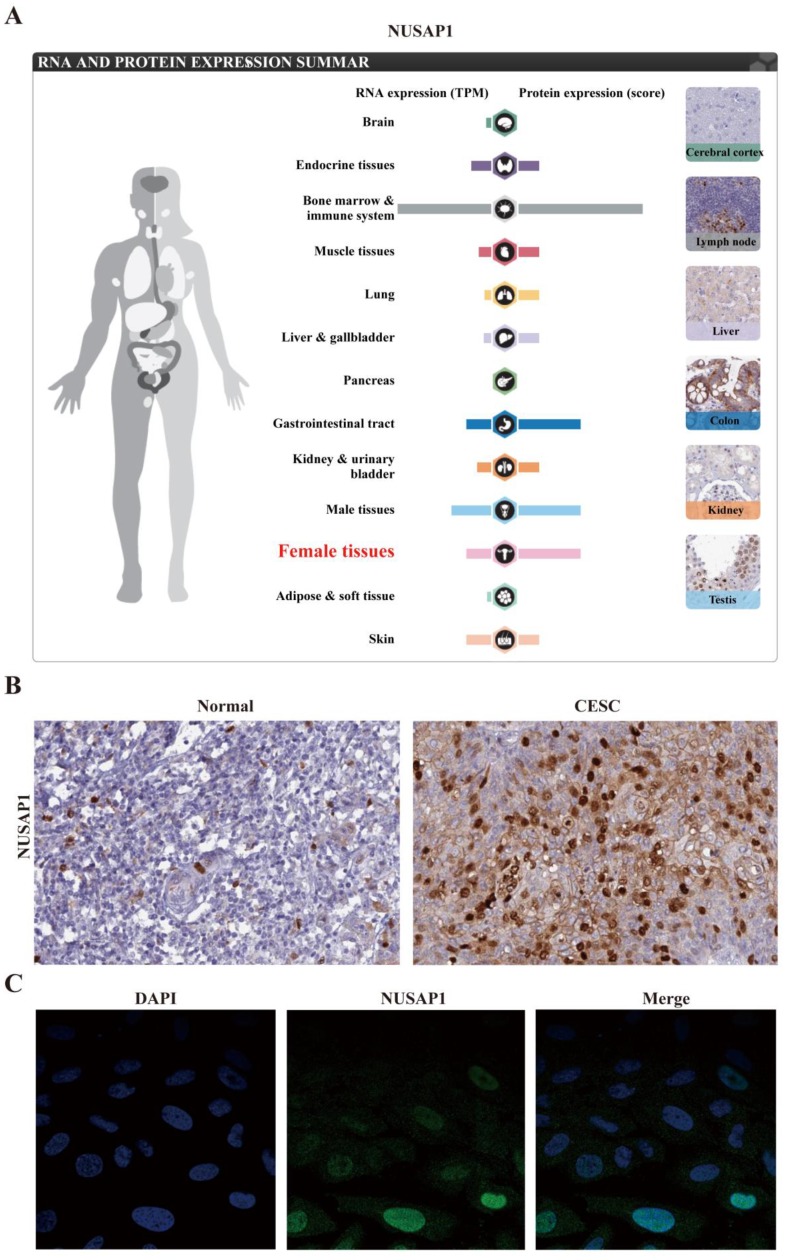
Nucleolar and spindle-associated protein 1 (NUSAP1) was previously reported to be associated with poor prognosis in multiple cancers. In the present study, we comprehensively investigated the clinicopathological features and potential prognostic value of NUSAP1 in cervical squamous cell carcinoma and endocervical adenocarcinoma (CESC). The expression profiles of the genes were extracted from Gene Expression Omnibus (GEO), The Cancer Genome Atlas (TCGA), International Cancer Genome Consortium (ICGC), Cancer Cell Line Encyclopedia (CCLE), Gene Expression Profiling Interactive Analysis (GEPIA), and The Human Protein Atlas databases. The association between clinicopathological characteristics and NUSAP1 was analyzed using logistic regression in TCGA patients and receiver operating characteristic (ROC) curve analysis for GSE7803, GSE9750, and GSE63514 datasets. The prognostic value of NUSAP1 in TCGA patients was evaluated using the Kaplan-Meier method and Cox regression. Gene set enrichment analysis (GSEA) was conducted using TCGA dataset. A total of 68 differentially expressed genes (DEGs) were identified in CESC. ROC analysis of NUSAP1 suggested that the area under the ROC curve was 0.968. Kaplan-Meier survival analysis indicated that CESC with low expression of NUSAP1 has a worse prognosis than CESC with high NUSAP1 expression (P = 0.005). The logistic regression revealed that low NUSAP1 expression in CESC was related to advanced tumor stage in TCGA database. Moreover, Cox regression analysis showed that NUSAP1 expression correlated significantly with prognosis in the case of patients in TCGA database. GSEA demonstrated that CESC patients with high expression of NUSAP1 were enriched in the G2M checkpoint, MYC targets, and breast cancer ZNF217. The results suggest that identification of DEGs might enhance our understanding of the causes and molecular mechanisms underlying the development of CESC. Moreover, NUSAP1 may play an important role in CESC progression and prognosis and may serve as a valuable indicator of poor survival in CESC.
核仁与纺锤体相关蛋白1(NUSAP1)此前被报道与多种癌症的不良预后相关。在本研究中,我们全面调查了NUSAP1在宫颈鳞状细胞癌和宫颈内膜腺癌(CESC)中的临床病理特征及潜在预后价值。基因表达谱从基因表达综合数据库(GEO)、癌症基因组图谱(TCGA)、国际癌症基因组联盟(ICGC)、癌细胞系百科全书(CCLE)、基因表达谱交互分析(GEPIA)和人类蛋白质图谱数据库中提取。使用逻辑回归分析TCGA患者的临床病理特征与NUSAP1之间的关联,并对GSE7803、GSE9750和GSE63514数据集进行受试者工作特征(ROC)曲线分析。使用Kaplan-Meier法和Cox回归评估NUSAP1在TCGA患者中的预后价值。使用TCGA数据集进行基因集富集分析(GSEA)。在CESC中总共鉴定出68个差异表达基因(DEG)。NUSAP1的ROC分析表明,ROC曲线下面积为0.968。Kaplan-Meier生存分析表明,NUSAP1低表达的CESC比NUSAP1高表达的CESC预后更差(P = 0.005)。逻辑回归显示,CESC中NUSAP1低表达与TCGA数据库中的肿瘤晚期相关。此外,Cox回归分析表明,在TCGA数据库的患者中,NUSAP1表达与预后显著相关。GSEA表明,NUSAP1高表达的CESC患者在G2M检查点、MYC靶标和乳腺癌ZNF217中富集。结果表明,鉴定DEG可能会增强我们对CESC发生原因和分子机制的理解。此外,NUSAP1可能在CESC进展和预后中起重要作用,并可能作为CESC患者生存不良的有价值指标。