Vyas Priyanka, Tsoh Janice Y, Gildengorin Ginny, Stewart Susan L, Yu Edgar, Guan Alice, Pham Amber, Burke Nancy J, McPhee Steven J
Center for Tobacco Control Research and Education, University of California, San Francisco, United States.
Department of Psychiatry, University of California, San Francisco, CA, United States.
Prev Med Rep. 2020 Feb 11;18:101064. doi: 10.1016/j.pmedr.2020.101064. eCollection 2020 Jun.
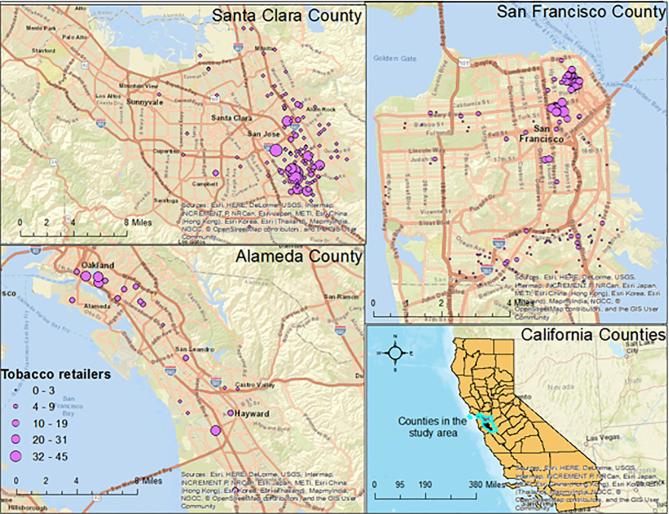
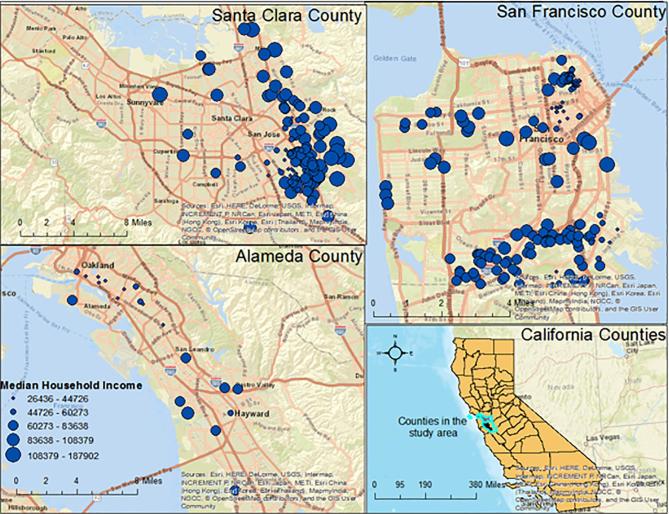
Numerous studies have assessed individual-level factors associated with intention to quit smoking. However, fewer studies have assessed how neighborhood and built environment also contribute towards individual-level behavior. We used baseline data of 340 Chinese and Vietnamese male daily smokers from August 2015 to November 2017 living in the San Francisco Bay Area, who enrolled in a lifestyle intervention trial. The outcome variable was intention to quit in 30 days. To understand the role of contextual factors participants' residential addresses were geocoded, and neighborhood median income, ethnic composition, and tobacco retail density were computed. Individual level analysis suggested that Vietnamese American men had greater intention to quit smoking (OR = 2.90 CI = 1.59, 5.26) in comparison to Chinese Americans. However, after adding neighborhood level factors to the model, no ethnic group difference was observed. Neighborhood household median income (OR = 0.74, CI = 0.64, 0.86) and tobacco retail counts (OR = 0.79, CI = 0.67, 0.94) were negatively associated with intention to quit. Years lived in the U.S. was the only individual level factor associated with intention to quit. By comparing two Asian American groups that live in heterogeneous neighborhoods, we identify key environmental and policy drivers that are associated with quit intention. Future studies aimed at influencing individual-level behavior should take into consideration the neighborhood context and built environment characteristics.
众多研究评估了与戒烟意愿相关的个体层面因素。然而,较少有研究评估邻里环境和建成环境如何也对个体层面的行为产生影响。我们使用了2015年8月至2017年11月居住在旧金山湾区的340名中国和越南男性每日吸烟者的基线数据,这些参与者参加了一项生活方式干预试验。结果变量是30天内的戒烟意愿。为了解背景因素的作用,对参与者的居住地址进行了地理编码,并计算了邻里中位数收入、种族构成和烟草零售密度。个体层面分析表明,与华裔美国人相比,越南裔美国男性有更强的戒烟意愿(OR = 2.90,CI = 1.59,5.26)。然而,在模型中加入邻里层面因素后,未观察到种族差异。邻里家庭中位数收入(OR = 0.74,CI = 0.64,0.86)和烟草零售数量(OR = 0.79,CI = 0.67,0.94)与戒烟意愿呈负相关。在美国居住的年限是与戒烟意愿相关的唯一个体层面因素。通过比较生活在不同邻里环境中的两个亚裔美国人群体,我们确定了与戒烟意愿相关的关键环境和政策驱动因素。未来旨在影响个体层面行为的研究应考虑邻里环境和建成环境特征。