Department of Biotechnology and Plant Breeding, Faculty of Agriculture, Ferdowsi University of Mashhad, P.O. Box 91775-1163, Mashhad, Iran.
School of Medicine, Shahroud University of Medical Sciences, Shahroud, Iran.
BMC Biotechnol. 2020 Mar 30;20(1):19. doi: 10.1186/s12896-020-00612-3.
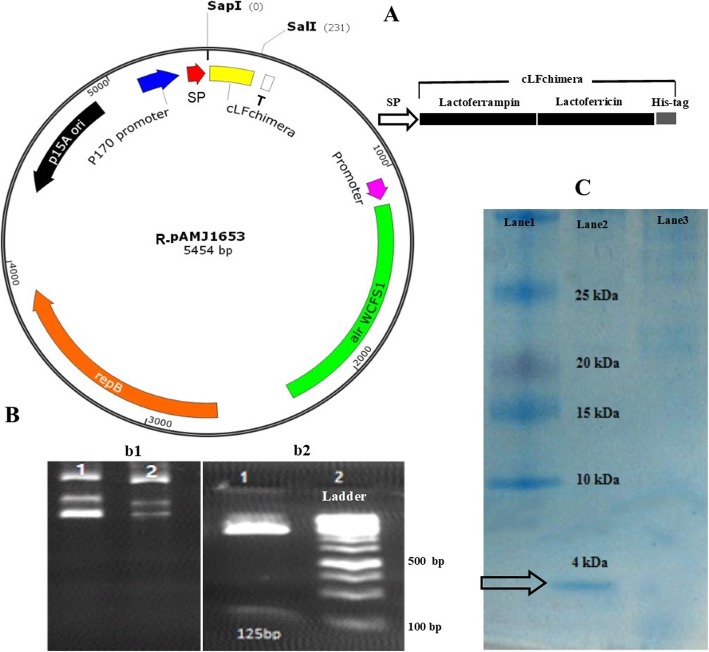
Foodborne pathogens and their biofilms are considered as one of the most serious problems in human health and food industry. Moreover, safety of foods is a main global concern because of the increasing use of chemical food additives. Ensuring food safety enhances interest in discovery of new alternative compounds such as antimicrobial peptides (AMPs), which can be used as bio-preservatives in the food industry. In this study, the most important antimicrobial peptides of camel milk lactoferrin (lactoferrampin and lactoferricin) were recombinantly expressed in the form of chimeric peptide (cLFchimera) in a food-grade L. lactis strain. P170 expression system was used to express secreted cLFchimera using pAMJ1653 expression vector which harbors a safe (non-antibiotic) selectable marker.
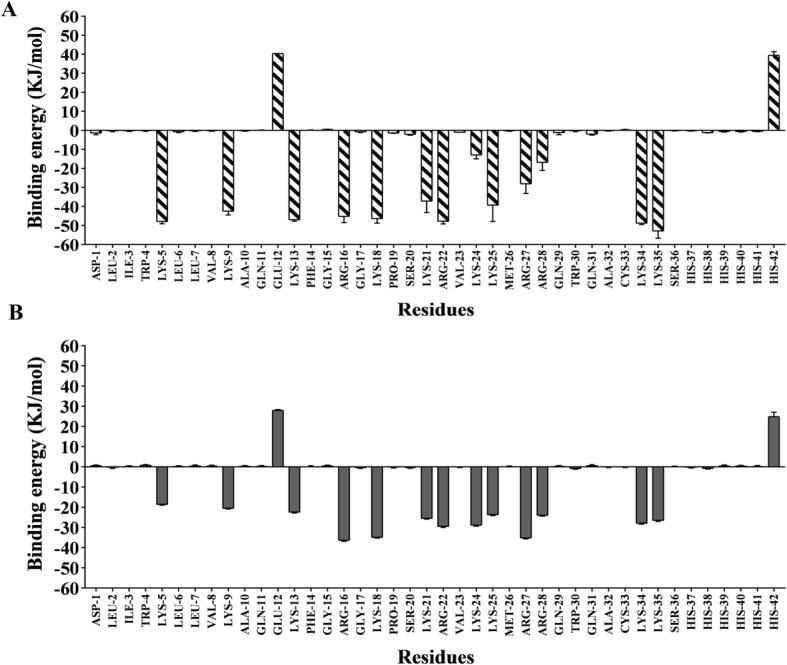
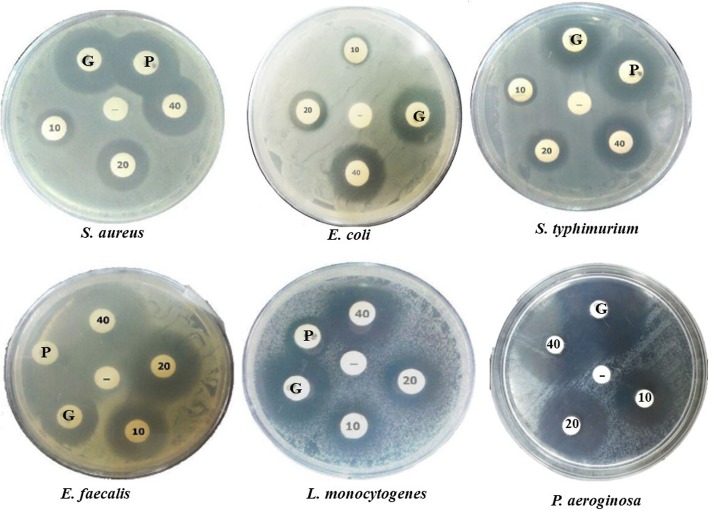
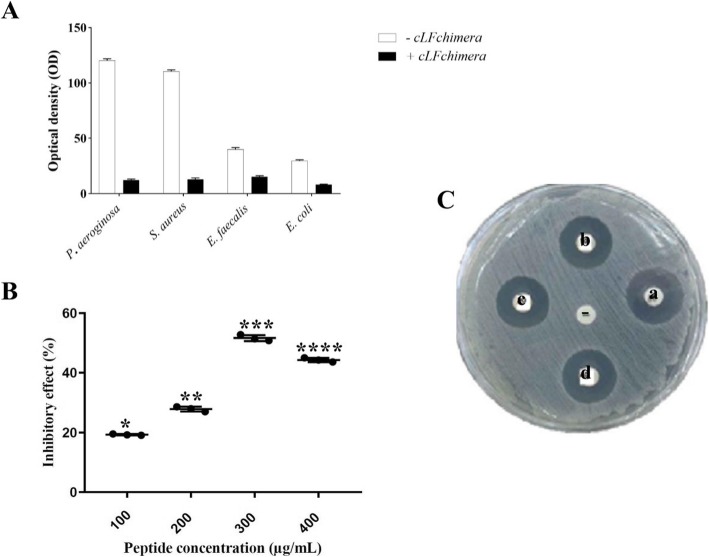
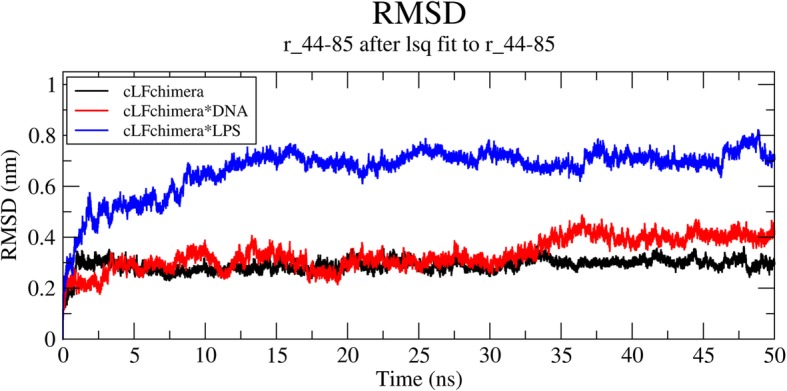
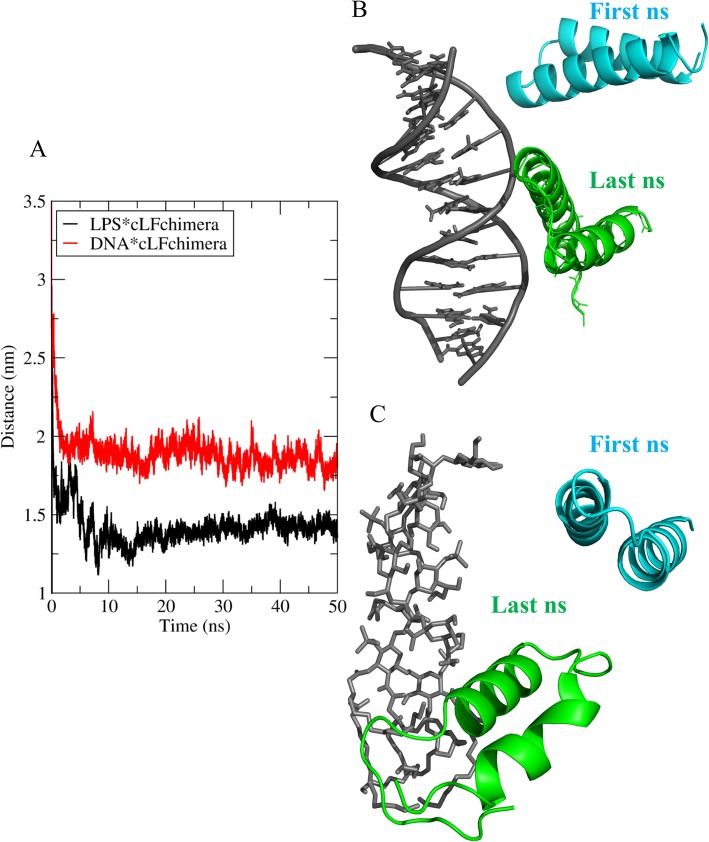
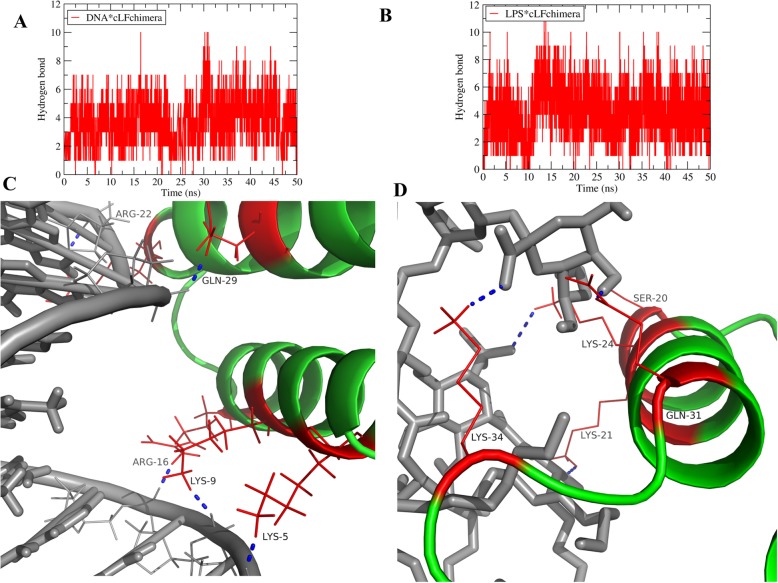
Peptide purification was carried out using Ni-NTA agarose column from culture medium with concentration of 0.13 mg/mL. The results of disk diffusion test revealed that cLFchimera had considerable antimicrobial activity against a number of major foodborne bacteria. Furthermore, this chimeric peptide showed strong and weak inhibitory effect on biofilm formation against P. aeruginosa, S. aureus E. faecalis, and E. coli, respectively. Antioxidant activity and thermal stability of the chimeric peptide was determined. The results showed that cLFchimera had antioxidant activity (IC: 310 μ/mL) and its activity was not affected after 40 min of boiling. Finally, we evaluated the interaction of the peptide with LPS and DNA in bacteria using molecular dynamic simulation as two main intra and extra cellular targets for AMPs, respectively. Our in silico analysis showed that cLFchimera had strong affinity to both of these targets by positive charged residues after 50 ns molecular dynamic simulation.
Overall, the engineered food-grade L. lactis generated in the present study successfully expressed a secreted chimeric peptide with antimicrobial properties and could be considered as a promising bio-preservative in the food industry.
食源性病原体及其生物膜被认为是人类健康和食品工业面临的最严重问题之一。此外,由于化学食品添加剂的使用日益增加,食品安全是一个主要的全球关注点。确保食品安全增强了人们对发现新替代化合物的兴趣,例如抗菌肽(AMPs),它们可以用作食品工业中的生物防腐剂。在这项研究中,以嵌合肽(cLFchimera)的形式在食品级乳链菌(Lactococcus lactis)菌株中重组表达了骆驼乳乳铁蛋白的最重要的抗菌肽(lactoferrampin 和 lactoferricin)。使用 pAMJ1653 表达载体(携带安全(非抗生素)选择标记)的 P170 表达系统表达分泌型 cLFchimera。
使用 Ni-NTA 琼脂糖柱从培养基中以 0.13mg/mL 的浓度纯化肽。圆盘扩散试验的结果表明,cLFchimera 对多种主要食源性病原体具有相当的抗菌活性。此外,这种嵌合肽对铜绿假单胞菌、金黄色葡萄球菌、粪肠球菌和大肠杆菌的生物膜形成表现出强抑制和弱抑制作用。测定了嵌合肽的抗氧化活性和热稳定性。结果表明,cLFchimera 具有抗氧化活性(IC:310μ/mL),煮沸 40 分钟后其活性不受影响。最后,我们使用分子动力学模拟评估了肽与细菌中 LPS 和 DNA 的相互作用,分别作为 AMPs 的两个主要胞内和胞外靶标。我们的计算机分析表明,在 50ns 分子动力学模拟后,cLFchimera 通过正电荷残基与这两个靶标具有很强的亲和力。
总之,本研究中生成的工程化食品级乳链菌成功表达了具有抗菌特性的分泌型嵌合肽,可被视为食品工业中一种有前途的生物防腐剂。