School of Media and Communications, RMIT University, Building 9, 124 La Trobe Street, Melbourne, VIC, 3004, Australia.
Department of Nutrition, Dietetics and Food, Monash University, Level 1, 264 Ferntree Gully Road, Notting Hill, VIC, 3168, Australia.
Int J Behav Nutr Phys Act. 2020 Mar 30;17(1):44. doi: 10.1186/s12966-020-00946-3.
Poor dietary choices are a risk factor for non-communicable diseases. Young adults have low levels of engagement towards their health and may not see the importance in the adoption of healthy eating behaviours at this stage in their lives. Here we utilise social marketing principles, digital ethnography and online conversations to gain insights into young adults' attitudes and sentiments towards healthy eating.
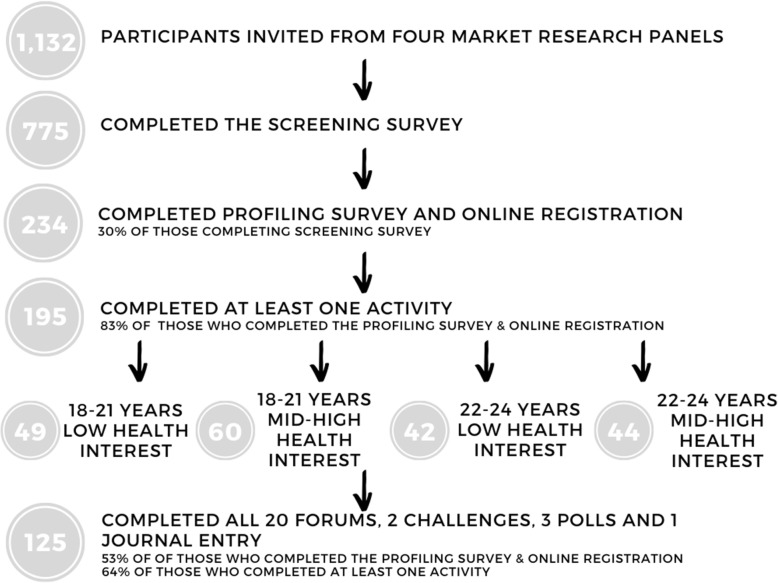
Young Australian adults who use social media at least twice a day were recruited by a commercial field house. Using a mixture of methods, combining online polls, forums and conversations, participants (n = 195, 18-24 years old) engaged in facilitated discussions over an extended 4 week period about health and eating-related topics. Data were analysed using thematic analysis constant comparison approach. A post-hoc conceptual framework related to religion was theorised and used as a metaphor to describe the results.
Findings demonstrate that different segments of young adults with varying attitudes and interest towards healthy eating exist. We developed a conceptual framework based on consumer segmentation which adopted religious metaphors as a typology of 'consumers'. Some young adults practice and believe in the message of healthy eating (saints), whilst some oppose these messages and are not motivated to make any change (sinners), another segment are both aware of and interested in the issues but do not put healthy eating behaviours as a current priority (person in the pew).
Consumer segmentation and social marketing techniques assist health professionals to understand their target audience and tailor specific messages to different segments. Segmentation provides insights on which groups may be most easily influenced to adopt the desired behaviours. The typology presented may be a useful tool for health professionals and social marketers to design strategies to engage young adults in healthy eating, particularly those in the pew who are contemplating a change but lacking the motivation. The utilisation of marketing segmentation in health promotion has the potential to enhance health messaging by tailoring messages to specific segments based on their needs, beliefs and intentions and therefore drive the efficient use of resources towards those most likely to change.
不良的饮食选择是导致非传染性疾病的一个风险因素。年轻人对自己的健康关注度较低,可能在生命中的这个阶段还没有意识到养成健康饮食习惯的重要性。在这里,我们利用社会营销原则、数字民族志和在线对话来深入了解年轻人对健康饮食的态度和感受。
通过一家商业调查公司,招募每天至少使用两次社交媒体的澳大利亚年轻成年人。参与者(n=195,年龄在 18-24 岁之间)通过混合使用在线投票、论坛和对话等方法,在 4 周的时间里围绕健康和饮食相关话题进行了深入讨论。使用主题分析的恒定比较方法对数据进行分析。随后提出了一个与宗教有关的概念框架,并将其作为一个隐喻来描述结果。
研究结果表明,不同年龄段、对健康饮食持有不同态度和兴趣的年轻人群体是存在的。我们根据消费者细分制定了一个概念框架,采用宗教隐喻作为“消费者”的分类法。一些年轻人实践并相信健康饮食的信息(圣徒),而另一些则反对这些信息,并且没有动力做出任何改变(罪人),还有一部分人既意识到这些问题,也有兴趣了解,但目前不会将健康饮食行为作为优先事项(教堂长椅上的人)。
消费者细分和社会营销技术可以帮助健康专业人士了解目标受众,并针对不同群体定制特定的信息。细分可以深入了解哪些群体最容易受到影响,从而采取期望的行为。所提出的分类法可能是健康专业人士和社会营销人员设计策略以吸引年轻人关注健康饮食的有用工具,特别是那些正在考虑改变但缺乏动力的教堂长椅上的人。在健康促进中使用营销细分具有根据特定群体的需求、信念和意图定制信息的潜力,从而可以更有效地将资源用于最有可能改变的人群,从而提高健康信息的效率。