Allegra Alessandro, Musolino Caterina, Tonacci Alessandro, Pioggia Giovanni, Gangemi Sebastiano
Division of Haematology, Department of Human Pathology in Adulthood and Childhood "Gaetano Barresi", University of Messina, 98125 Messina, Italy.
Clinical Physiology Institute, National Research Council of Italy (IFC-CNR), 56124 Pisa, Italy.
Cancers (Basel). 2020 Mar 27;12(4):805. doi: 10.3390/cancers12040805.
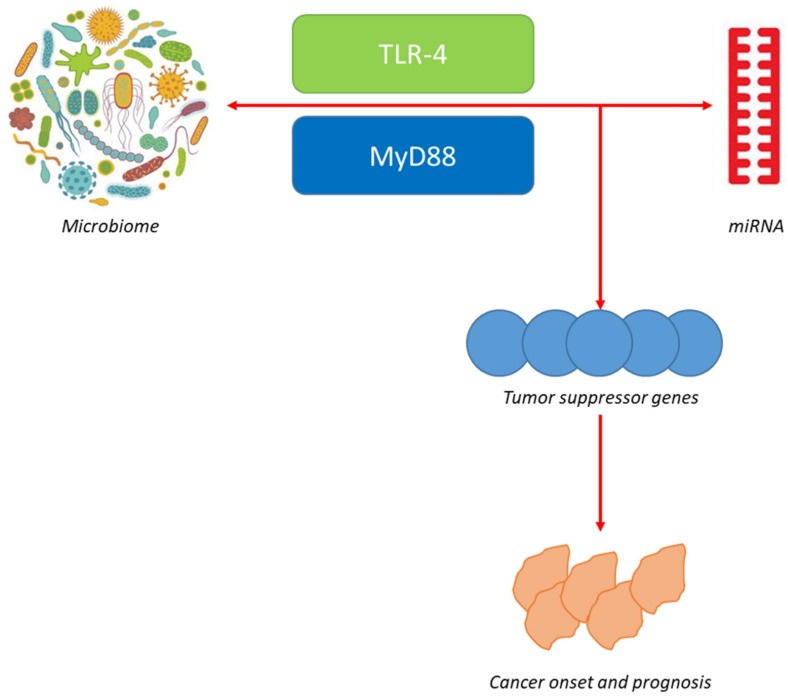
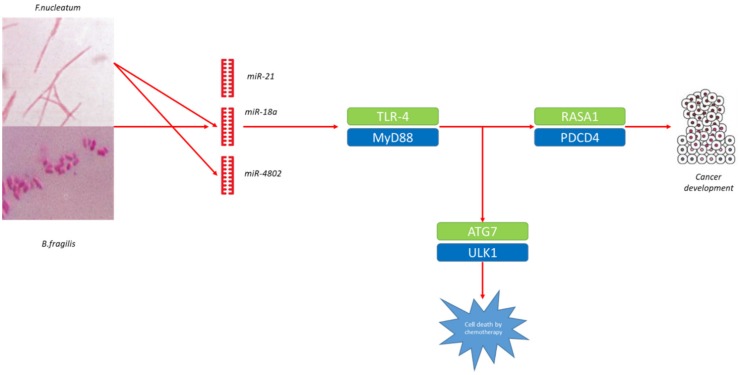
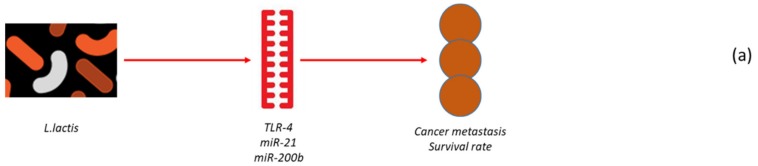
The human microbiota is made up of the fungi, bacteria, protozoa and viruses cohabiting within the human body. An altered microbiota can provoke diseases such as cancer. The mechanisms by which a modified microbiota can intervene in the onset and progression of neoplastic diseases are manifold. For instance, these include the effects on the immune system and the onset of obesity. A different mechanism seems to be constituted by the continuous and bidirectional relationships existing between microbiota and miRNAs. MiRNAs emerged as a novel group of small endogenous non-coding RNAs from that control gene expression. Several works seem to confirm the presence of a close connection between microbiota and miRNAs. Although the main literature data concern the correlations between microbiota, miRNAs and colon cancer, several researches have revealed the presence of connections with other types of tumour, including the ovarian tumour, cervical carcinoma, hepatic carcinoma, neoplastic pathologies of the central nervous system and the possible implication of the microbiota-miRNAs system on the response to the treatment of neoplastic pathologies. In this review, we summarise the physiological and pathological functions of the microbiota on cancer onset by governing miRNA production. A better knowledge of the bidirectional relationships existing between microbiota and miRNAs could provide new markers for the diagnosis, staging and monitoring of cancer and seems to be a promising approach for antagomir-guided approaches as therapeutic agents.
人类微生物群由共同栖息在人体内的真菌、细菌、原生动物和病毒组成。微生物群的改变会引发癌症等疾病。经过改变的微生物群干预肿瘤性疾病发生和发展的机制是多方面的。例如,这些机制包括对免疫系统的影响以及肥胖症的发生。一种不同的机制似乎是由微生物群与微小RNA(miRNA)之间存在的持续双向关系构成的。微小RNA是一类新的小型内源性非编码RNA,可调控基因表达。多项研究似乎证实了微生物群与微小RNA之间存在密切联系。尽管主要的文献数据涉及微生物群、微小RNA与结肠癌之间的相关性,但多项研究已经揭示了它们与其他类型肿瘤的联系,包括卵巢肿瘤、宫颈癌、肝癌、中枢神经系统肿瘤性病变,以及微生物群 - 微小RNA系统对肿瘤性病变治疗反应的可能影响。在本综述中,我们总结了微生物群通过调控微小RNA产生对癌症发生的生理和病理功能。更好地了解微生物群与微小RNA之间存在的双向关系可为癌症的诊断、分期和监测提供新的标志物,并且似乎是一种有前景的以反义寡核苷酸引导的治疗方法。