Institute of Traditional Medicine & Bioscience, Daejeon University, Daejeon 34520, Korea.
Department of Herbology, College of Korean Medicine, Sangji University, 83 Sangjidae-gil, Wonju, Gangwon-do 26339, Korea.
Nutrients. 2020 Mar 27;12(4):926. doi: 10.3390/nu12040926.
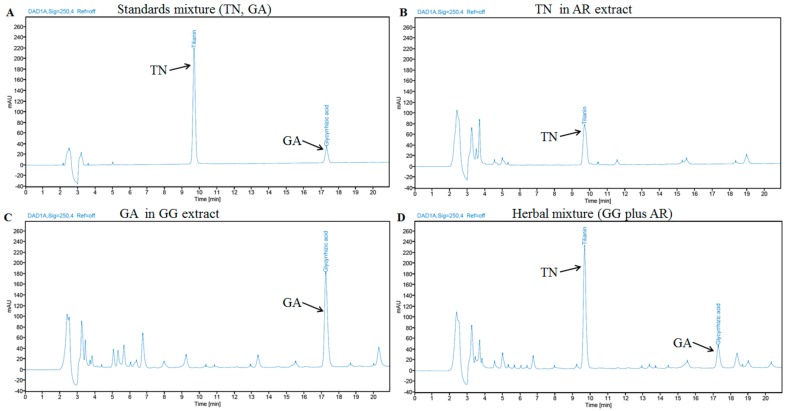
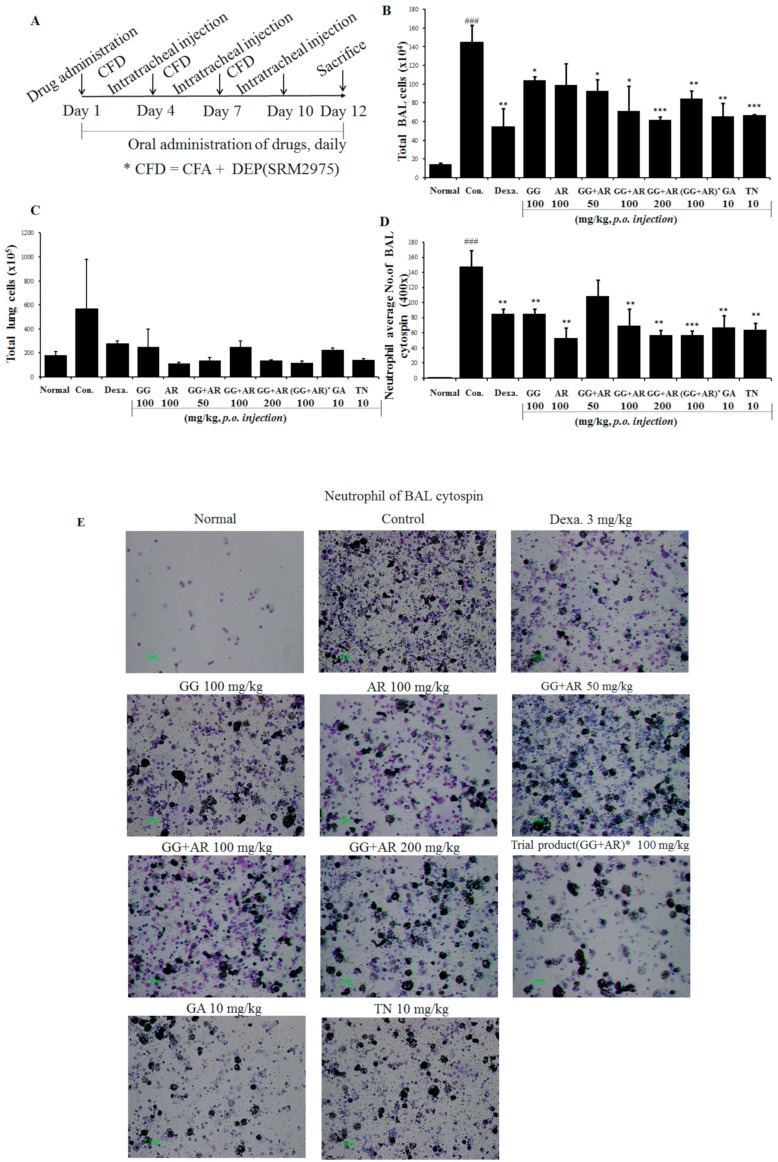
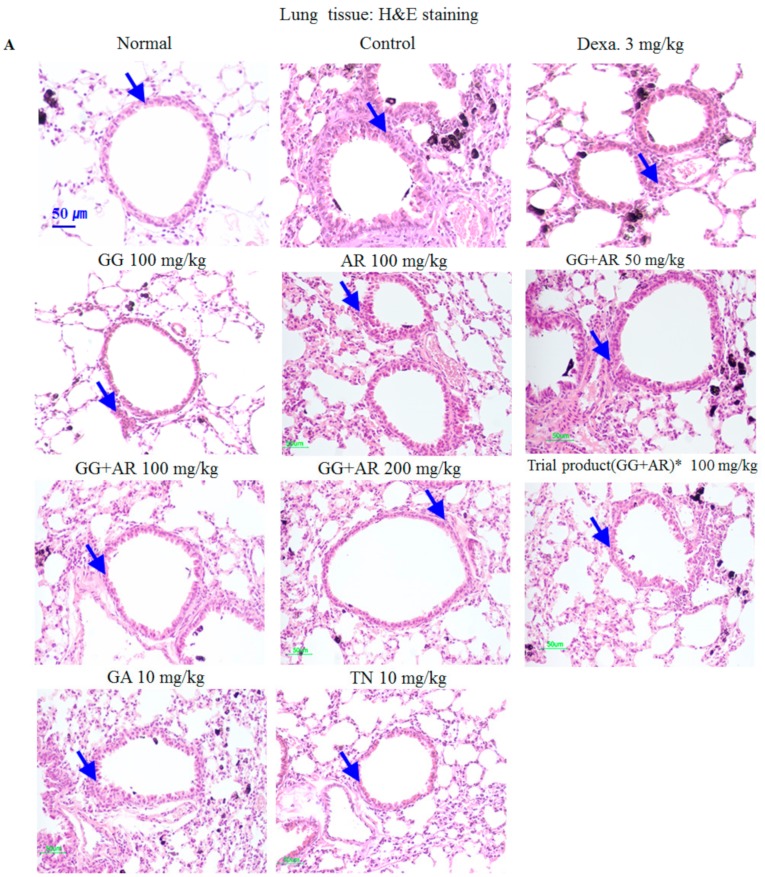
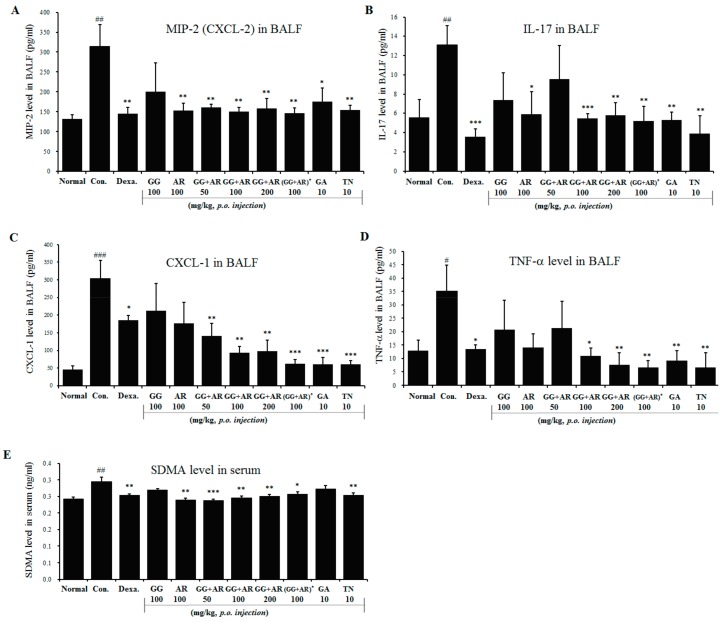
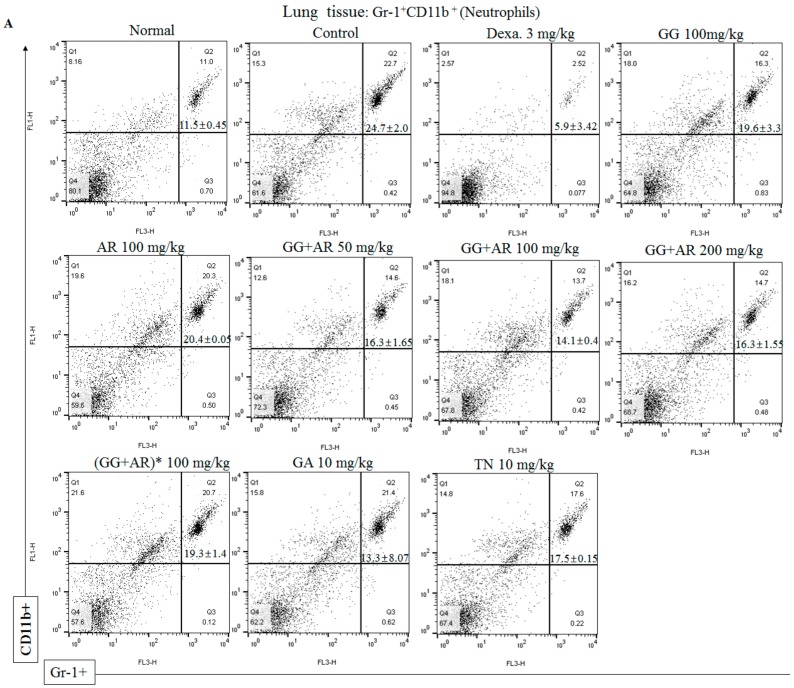
Chronic obstructive pulmonary disease (COPD) is caused by exposure to toxic particles, such as coal fly ash (CFA), diesel-exhaust particle (DEP), and cigarette smoke (CS), leading to chronic bronchitis, mucus production, and a subsequent lung dysfunction. This study, using a mouse model of COPD, aimed to evaluate the effect of herbal combinational medication of (GG), (AR) containing glycyrrhizic acid (GA), and tilianin (TN) as active ingredients. GA, a major active component of GG, possesses a range of pharmacological and biological activities including anti-inflammatory, anti-allergic, anti-oxidative. TN is a major flavonoid that is present in AR. It has been reported to have anti-inflammatory effects of potential utility as an anti-COPD agent. The COPD in the mice model was induced by a challenge with CFA and DEP. BALB/c mice received CFA and DEP alternately three times for 2 weeks to induce COPD. The herbal mixture of GG, AR, and TN significantly decreased the number of neutrophils in the lungs and bronchoalveolar lavage (BAL) fluid. It also significantly reduced the production of C-X-C motif chemokine ligand 2 (CXCL-2), IL-17A, CXCL-1, TNF-α, symmetric dimethylarginine (SDMA) in BALF and CXCL-2, IL-17A, CXCL-1, MUC5AC, transient receptor potential vanilloid-1 (TRPV1), IL-6, COX-2, NOS-II, and TNF-α mRNA expression in the lung tissue. Notably, a combination of GG and AR was more effective at regulating such therapeutic targets than GG or AR alone. The histolopathological lung injury was alleviated by treatment with the herbal mixture and their active ingredients (especially TN). In this study, the herbal combinational mixture more effectively inhibited neutrophilic airway inflammation by regulating the expression of inflammatory cytokines and CXCL-2 by blocking the IL-17/STAT3 pathway. Therefore, a herbal mixture of GG and AR may be a potential therapeutic agent to treat COPD.
慢性阻塞性肺疾病(COPD)是由接触有毒颗粒引起的,如煤飞灰(CFA)、柴油废气颗粒(DEP)和香烟烟雾(CS),导致慢性支气管炎、黏液产生和随后的肺功能障碍。本研究使用 COPD 小鼠模型,旨在评估含有甘草酸(GA)和京尼平苷(TN)作为活性成分的草药组合药物 GG、AR 的效果。GA 是 GG 的主要活性成分之一,具有一系列药理学和生物学活性,包括抗炎、抗过敏、抗氧化。TN 是 AR 中的一种主要类黄酮,据报道具有抗炎作用,可能是一种治疗 COPD 的药物。在 CFA 和 DEP 挑战下诱导小鼠模型发生 COPD。BALB/c 小鼠接受 CFA 和 DEP 交替 3 次,共 2 周,诱导 COPD。GG、AR 和 TN 的草药混合物显著减少了肺部和支气管肺泡灌洗液(BAL)中的中性粒细胞数量。它还显著降低了 BALF 中 C-X-C 基序趋化因子配体 2(CXCL-2)、白细胞介素 17A(IL-17A)、CXCL-1、肿瘤坏死因子-α(TNF-α)、对称二甲基精氨酸(SDMA)和 CXCL-2、IL-17A、CXCL-1、MUC5AC、瞬时受体电位香草酸-1(TRPV1)、白细胞介素 6(IL-6)、环氧化酶-2(COX-2)、一氧化氮合酶-II(NOS-II)和 TNF-α在肺组织中的 mRNA 表达。值得注意的是,与 GG 或 AR 单独使用相比,GG 和 AR 的组合更有效地调节了这些治疗靶点。草药混合物及其活性成分(尤其是 TN)可缓解肺组织损伤。在这项研究中,草药混合物通过阻断 IL-17/STAT3 通路来调节炎症细胞因子和 CXCL-2 的表达,更有效地抑制了中性粒细胞气道炎症。因此,GG 和 AR 的草药混合物可能是治疗 COPD 的一种潜在治疗药物。