• 文献检索
  • 文档翻译
  • 深度研究
  • 学术资讯
  • Suppr Zotero 插件Zotero 插件
  • 邀请有礼
  • 套餐&价格
  • 历史记录
应用&插件
Suppr Zotero 插件Zotero 插件浏览器插件Mac 客户端Windows 客户端微信小程序
定价
高级版会员购买积分包购买API积分包
服务
文献检索文档翻译深度研究API 文档MCP 服务
关于我们
关于 Suppr公司介绍联系我们用户协议隐私条款
关注我们

Suppr 超能文献

核心技术专利:CN118964589B侵权必究
粤ICP备2023148730 号-1Suppr @ 2026

文献检索

告别复杂PubMed语法,用中文像聊天一样搜索,搜遍4000万医学文献。AI智能推荐,让科研检索更轻松。

立即免费搜索

文件翻译

保留排版,准确专业,支持PDF/Word/PPT等文件格式,支持 12+语言互译。

免费翻译文档

深度研究

AI帮你快速写综述,25分钟生成高质量综述,智能提取关键信息,辅助科研写作。

立即免费体验

文化遗产的创新技术。纹身传感器和人工智能:文化资产的新生命。

Innovative Technologies for Cultural Heritage. Tattoo Sensors and AI: The New Life of Cultural Assets.

机构信息

INUIT Foundation, Tor Vergata University of Rome, via dell'Archiginnasio snc, 00133 Rome, Italy.

Sciences and Chemical Technologies Department, Tor Vergata University of Rome, via della Ricerca Scientifica 1, 00133 Rome, Italy.

出版信息

Sensors (Basel). 2020 Mar 30;20(7):1909. doi: 10.3390/s20071909.

DOI:10.3390/s20071909
PMID:32235461
原文链接:https://pmc.ncbi.nlm.nih.gov/articles/PMC7180608/
Abstract

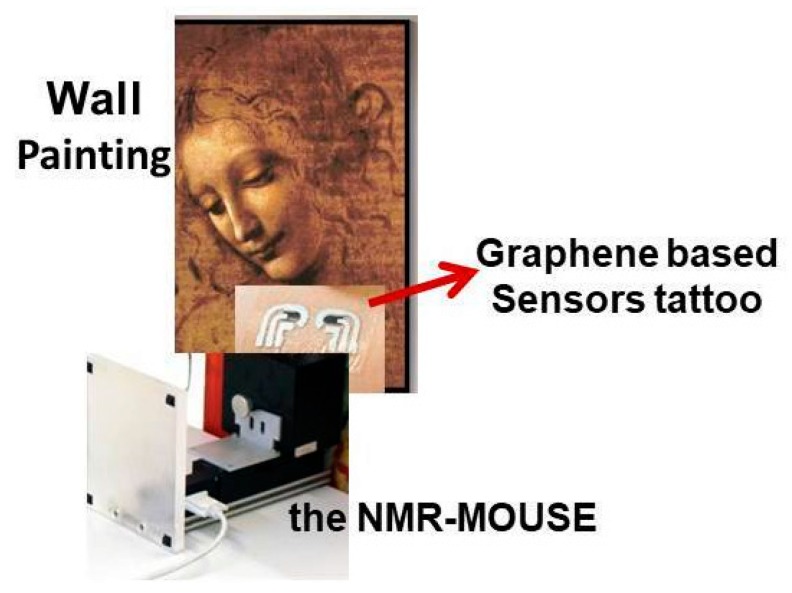
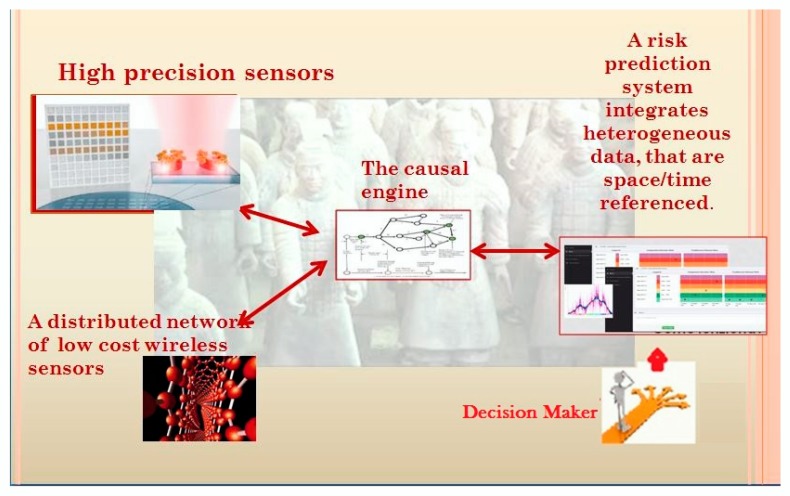
Conservation and restoration of cultural heritage is something more than a simple process of maintaining the existing. It is an integral part of the improvement of the cultural asset. The social context around the restoration shapes the specific actions. Today, preservation, restoration, enhancement of cultural heritage are increasingly a multidisciplinary science, meeting point of researchers coming from heterogeneous study areas. Data scientists and Information technology (IT) specialists are increasingly important. In this context, networks of a new generation of smart sensors integrated with data mining and artificial intelligence play a crucial role and aim to become the new skin of cultural assets.

摘要

文化遗产的保护和修复不仅仅是维护现有文化遗产的简单过程。它是文化资产改善的一个组成部分。修复过程所处的社会背景决定了具体的修复行动。今天,文化遗产的保护、修复和增强越来越成为一门多学科的科学,是来自不同研究领域的研究人员的交汇点。数据科学家和信息技术(IT)专家的作用越来越重要。在这种情况下,新一代智能传感器网络与数据挖掘和人工智能相结合,发挥着至关重要的作用,并有望成为文化资产的“新皮肤”。
https://cdn.ncbi.nlm.nih.gov/pmc/blobs/454a/7180608/99ff48099e2e/sensors-20-01909-g016.jpg
https://cdn.ncbi.nlm.nih.gov/pmc/blobs/454a/7180608/c0a699231e78/sensors-20-01909-g001.jpg
https://cdn.ncbi.nlm.nih.gov/pmc/blobs/454a/7180608/ccf075b42008/sensors-20-01909-g002.jpg
https://cdn.ncbi.nlm.nih.gov/pmc/blobs/454a/7180608/ca4d4cf9eaa1/sensors-20-01909-g003.jpg
https://cdn.ncbi.nlm.nih.gov/pmc/blobs/454a/7180608/fce0bc2026d3/sensors-20-01909-g004.jpg
https://cdn.ncbi.nlm.nih.gov/pmc/blobs/454a/7180608/13f74cd7e00a/sensors-20-01909-g005.jpg
https://cdn.ncbi.nlm.nih.gov/pmc/blobs/454a/7180608/c5c40445f0c3/sensors-20-01909-g006.jpg
https://cdn.ncbi.nlm.nih.gov/pmc/blobs/454a/7180608/7739d5b098ca/sensors-20-01909-g007.jpg
https://cdn.ncbi.nlm.nih.gov/pmc/blobs/454a/7180608/926ab067ac9f/sensors-20-01909-g008.jpg
https://cdn.ncbi.nlm.nih.gov/pmc/blobs/454a/7180608/0a82b0c37f9c/sensors-20-01909-g009.jpg
https://cdn.ncbi.nlm.nih.gov/pmc/blobs/454a/7180608/021682aa6ef8/sensors-20-01909-g010.jpg
https://cdn.ncbi.nlm.nih.gov/pmc/blobs/454a/7180608/69f9baa0fb31/sensors-20-01909-g011.jpg
https://cdn.ncbi.nlm.nih.gov/pmc/blobs/454a/7180608/b863f2c3629e/sensors-20-01909-g012.jpg
https://cdn.ncbi.nlm.nih.gov/pmc/blobs/454a/7180608/7bb2ab916643/sensors-20-01909-g013.jpg
https://cdn.ncbi.nlm.nih.gov/pmc/blobs/454a/7180608/a693bc325d96/sensors-20-01909-g014.jpg
https://cdn.ncbi.nlm.nih.gov/pmc/blobs/454a/7180608/5e6f3370440e/sensors-20-01909-g015.jpg
https://cdn.ncbi.nlm.nih.gov/pmc/blobs/454a/7180608/99ff48099e2e/sensors-20-01909-g016.jpg
https://cdn.ncbi.nlm.nih.gov/pmc/blobs/454a/7180608/c0a699231e78/sensors-20-01909-g001.jpg
https://cdn.ncbi.nlm.nih.gov/pmc/blobs/454a/7180608/ccf075b42008/sensors-20-01909-g002.jpg
https://cdn.ncbi.nlm.nih.gov/pmc/blobs/454a/7180608/ca4d4cf9eaa1/sensors-20-01909-g003.jpg
https://cdn.ncbi.nlm.nih.gov/pmc/blobs/454a/7180608/fce0bc2026d3/sensors-20-01909-g004.jpg
https://cdn.ncbi.nlm.nih.gov/pmc/blobs/454a/7180608/13f74cd7e00a/sensors-20-01909-g005.jpg
https://cdn.ncbi.nlm.nih.gov/pmc/blobs/454a/7180608/c5c40445f0c3/sensors-20-01909-g006.jpg
https://cdn.ncbi.nlm.nih.gov/pmc/blobs/454a/7180608/7739d5b098ca/sensors-20-01909-g007.jpg
https://cdn.ncbi.nlm.nih.gov/pmc/blobs/454a/7180608/926ab067ac9f/sensors-20-01909-g008.jpg
https://cdn.ncbi.nlm.nih.gov/pmc/blobs/454a/7180608/0a82b0c37f9c/sensors-20-01909-g009.jpg
https://cdn.ncbi.nlm.nih.gov/pmc/blobs/454a/7180608/021682aa6ef8/sensors-20-01909-g010.jpg
https://cdn.ncbi.nlm.nih.gov/pmc/blobs/454a/7180608/69f9baa0fb31/sensors-20-01909-g011.jpg
https://cdn.ncbi.nlm.nih.gov/pmc/blobs/454a/7180608/b863f2c3629e/sensors-20-01909-g012.jpg
https://cdn.ncbi.nlm.nih.gov/pmc/blobs/454a/7180608/7bb2ab916643/sensors-20-01909-g013.jpg
https://cdn.ncbi.nlm.nih.gov/pmc/blobs/454a/7180608/a693bc325d96/sensors-20-01909-g014.jpg
https://cdn.ncbi.nlm.nih.gov/pmc/blobs/454a/7180608/5e6f3370440e/sensors-20-01909-g015.jpg
https://cdn.ncbi.nlm.nih.gov/pmc/blobs/454a/7180608/99ff48099e2e/sensors-20-01909-g016.jpg

相似文献

1
Innovative Technologies for Cultural Heritage. Tattoo Sensors and AI: The New Life of Cultural Assets.文化遗产的创新技术。纹身传感器和人工智能:文化资产的新生命。
Sensors (Basel). 2020 Mar 30;20(7):1909. doi: 10.3390/s20071909.
2
Smart Portable Devices Suitable for Cultural Heritage: A Review.适用于文化遗产的智能便携设备:综述。
Sensors (Basel). 2018 Jul 26;18(8):2434. doi: 10.3390/s18082434.
3
Can AI-generated art stimulate the sustainability of intangible cultural heritage? A quantitative research on cultural and creative products of New Year Prints generated by AI.人工智能生成的艺术能否促进非物质文化遗产的可持续发展?关于人工智能生成的年画文创产品的定量研究。
Heliyon. 2023 Sep 27;9(10):e20477. doi: 10.1016/j.heliyon.2023.e20477. eCollection 2023 Oct.
4
AI-Enhanced Tools and Strategies for Airborne Disease Prevention in Cultural Heritage Sites.用于文化遗产地空气传播疾病预防的人工智能增强工具与策略。
Epidemiologia (Basel). 2024 Jun 6;5(2):267-274. doi: 10.3390/epidemiologia5020018.
5
Acoustic Sensor Data Flow for Cultural Heritage Monitoring and Safeguarding.声传感器数据流在文化遗产监测和保护中的应用。
Sensors (Basel). 2019 Apr 5;19(7):1629. doi: 10.3390/s19071629.
6
An Ontology-Based Chatbot to Enhance Experiential Learning in a Cultural Heritage Scenario.一种基于本体的聊天机器人,用于增强文化遗产场景中的体验式学习。
Front Artif Intell. 2022 Apr 25;5:808281. doi: 10.3389/frai.2022.808281. eCollection 2022.
7
Three-Dimensional Reconstruction of National Traditional Sports Cultural Heritage Based on Feature Clustering and Artificial Intelligence.基于特征聚类和人工智能的民族传统体育文化遗产三维重建。
Comput Intell Neurosci. 2022 Sep 8;2022:8159045. doi: 10.1155/2022/8159045. eCollection 2022.
8
Design of a hybrid (wired/wireless) acquisition data system for monitoring of cultural heritage physical parameters in Smart Cities.用于智慧城市文化遗产物理参数监测的混合(有线/无线)采集数据系统设计。
Sensors (Basel). 2015 Mar 25;15(4):7246-66. doi: 10.3390/s150407246.
9
3D technologies for intangible cultural heritage preservation-literature review for selected databases.用于非物质文化遗产保护的3D技术——选定数据库的文献综述
Herit Sci. 2022;10(1):3. doi: 10.1186/s40494-021-00633-x. Epub 2022 Jan 4.
10
A Methodology for Semantic Enrichment of Cultural Heritage Images Using Artificial Intelligence Technologies.一种使用人工智能技术对文化遗产图像进行语义丰富的方法。
J Imaging. 2021 Jul 22;7(8):121. doi: 10.3390/jimaging7080121.

引用本文的文献

1
Skin-interfaced electronics: A promising and intelligent paradigm for personalized healthcare.皮肤界面电子学:个性化医疗保健的有前途和智能范例。
Biomaterials. 2023 May;296:122075. doi: 10.1016/j.biomaterials.2023.122075. Epub 2023 Mar 7.

本文引用的文献

1
Neutrons for Cultural Heritage-Techniques, Sensors, and Detection.用于文化遗产的中子技术、传感器和探测。
Sensors (Basel). 2020 Jan 16;20(2):502. doi: 10.3390/s20020502.
2
Nanomaterial-Enabled Flexible and Stretchable Sensing Systems: Processing, Integration, and Applications.纳米材料助力的柔韧可拉伸传感系统:加工、集成与应用。
Adv Mater. 2020 Apr;32(15):e1902343. doi: 10.1002/adma.201902343. Epub 2019 Aug 29.
3
Dermal Tattoo Biosensors for Colorimetric Metabolite Detection.用于比色代谢物检测的皮肤纹身生物传感器。
Angew Chem Int Ed Engl. 2019 Jul 29;58(31):10506-10513. doi: 10.1002/anie.201904416. Epub 2019 Jul 3.
4
Electrically-Transduced Chemical Sensors Based on Two-Dimensional Nanomaterials.基于二维纳米材料的电转导化学传感器。
Chem Rev. 2019 Jan 9;119(1):478-598. doi: 10.1021/acs.chemrev.8b00311. Epub 2019 Jan 3.
5
Smart Portable Devices Suitable for Cultural Heritage: A Review.适用于文化遗产的智能便携设备:综述。
Sensors (Basel). 2018 Jul 26;18(8):2434. doi: 10.3390/s18082434.
6
Skin-Attachable, Stretchable Electrochemical Sweat Sensor for Glucose and pH Detection.皮肤附着、可拉伸电化学汗液传感器,用于葡萄糖和 pH 值检测。
ACS Appl Mater Interfaces. 2018 Apr 25;10(16):13729-13740. doi: 10.1021/acsami.8b03342. Epub 2018 Apr 11.
7
Cultural Heritage Studies with Mobile NMR.移动核磁共振技术在文化遗产研究中的应用
Angew Chem Int Ed Engl. 2018 Jun 18;57(25):7304-7312. doi: 10.1002/anie.201713009. Epub 2018 May 3.
8
Node-to-node field calibration of wireless distributed air pollution sensor network.无线分布式空气污染传感器网络的节点到节点现场校准。
Environ Pollut. 2018 Feb;233:900-909. doi: 10.1016/j.envpol.2017.09.042. Epub 2017 Sep 23.
9
Graphene Electronic Tattoo Sensors.石墨烯电子纹身传感器。
ACS Nano. 2017 Aug 22;11(8):7634-7641. doi: 10.1021/acsnano.7b02182. Epub 2017 Jul 27.
10
Beyond the cardiovascular risk charts: the new way of hybrid profiles.超越心血管风险图表:混合概况的新方式。
J Cardiovasc Med (Hagerstown). 2016 Dec;17(12):851-854. doi: 10.2459/JCM.0000000000000405.