Walczak Marek, Żmudzki Jacek, Mazur-Panasiuk Natalia, Juszkiewicz Małgorzata, Woźniakowski Grzegorz
Department of Swine Diseases, National Veterinary Research Institute, Partyzantów 57 Avenue, 24-100 Puławy, Poland.
Pathogens. 2020 Mar 22;9(3):237. doi: 10.3390/pathogens9030237.
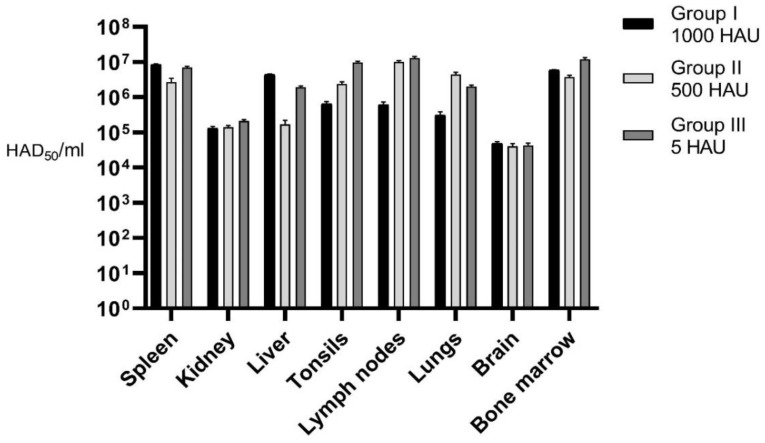
This paper was aimed to characterize clinical signs and pathomorphological lesions in twenty-two pigs, infected intranasally by different doses of African swine fever virus (Pol18_28298_O111), isolated during the outbreak in a pig farm that occurred in Eastern Poland throughout 2018. This article also attempts to indicate risk, related to virus load and shedding, and present possible difficulties with proper disease recognition at the farm level. The results revealed that even a very low dose (5 HAU) may initiate the infection. Various forms of the disease (acute, subacute, and chronic), mainly with prodromal clinical signs like fever, apathy, and reduced feed intake were observed. The most frequently observed lesions (82%) were: hyperemia and enlargement of lymph nodes and splenomegaly. The minimal incubation period was estimated at five days post-infection (dpi). Mortality ranged from 80-100%. Two pigs survived the infection. Some viremic animals presented delayed fever. In some cases, the fever was not detectable. Shortly after viremia, the virus was secreted ion the urine, feces, and saliva. The highest levels of virus were found in the internal organs and blood; however in the case of one pig (chronic form), viral DNA was not detected in the spleen, liver, bone marrow, and brain. Veterinary diagnosis may be difficult, and the final results should always be based on laboratory investigations.
本文旨在描述22头猪的临床症状和病理形态学病变,这些猪于2018年在波兰东部一个养猪场爆发疫情期间经鼻内感染不同剂量的非洲猪瘟病毒(Pol18_28298_O111)。本文还试图指出与病毒载量和排毒相关的风险,并介绍在农场层面正确识别疾病可能存在的困难。结果显示,即使是非常低的剂量(5个血凝素单位)也可能引发感染。观察到了各种形式的疾病(急性、亚急性和慢性),主要伴有发热、冷漠和采食量减少等前驱临床症状。最常观察到的病变(82%)为:淋巴结充血和肿大以及脾肿大。最短潜伏期估计为感染后5天(dpi)。死亡率在80%至100%之间。两头猪在感染后存活。一些病毒血症动物出现延迟发热。在某些情况下,无法检测到发热。病毒血症后不久,病毒在尿液、粪便和唾液中分泌。在内脏和血液中发现了最高水平的病毒;然而,在一头猪(慢性形式)的情况下,在脾脏、肝脏、骨髓和大脑中未检测到病毒DNA。兽医诊断可能很困难,最终结果应始终基于实验室调查。