Department of Gastroenterology and Hepatology, University Medical Center Groningen, University of Groningen, 9713 GZ Groningen, The Netherlands.
Department of Biomedical Sciences of Cells and Systems, section Molecular Cell Biology, University Medical Center Groningen, University of Groningen, 9713 GZ Groningen, The Netherlands.
Cells. 2020 Mar 22;9(3):775. doi: 10.3390/cells9030775.
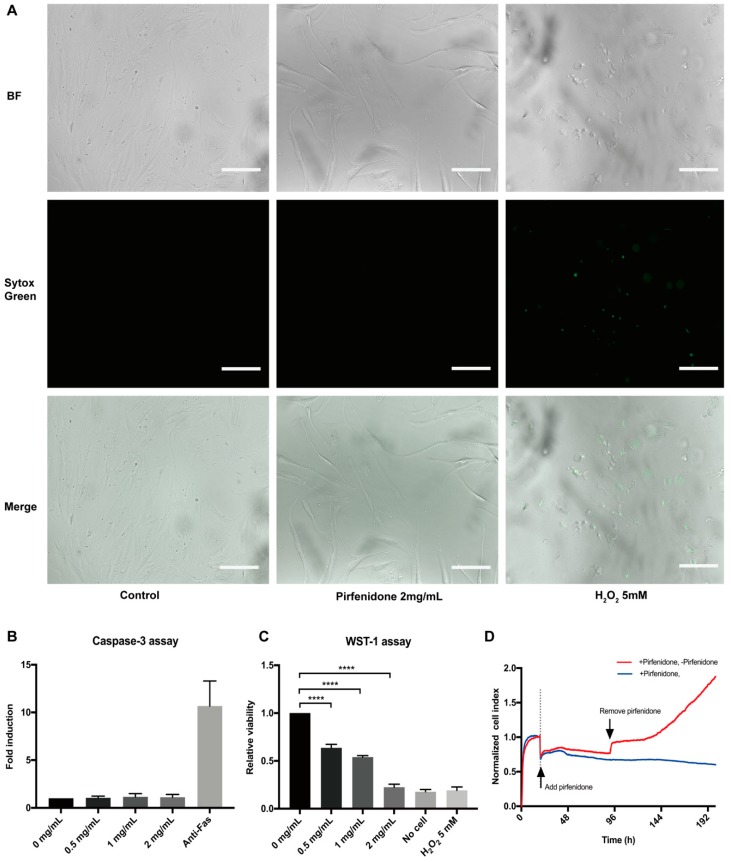
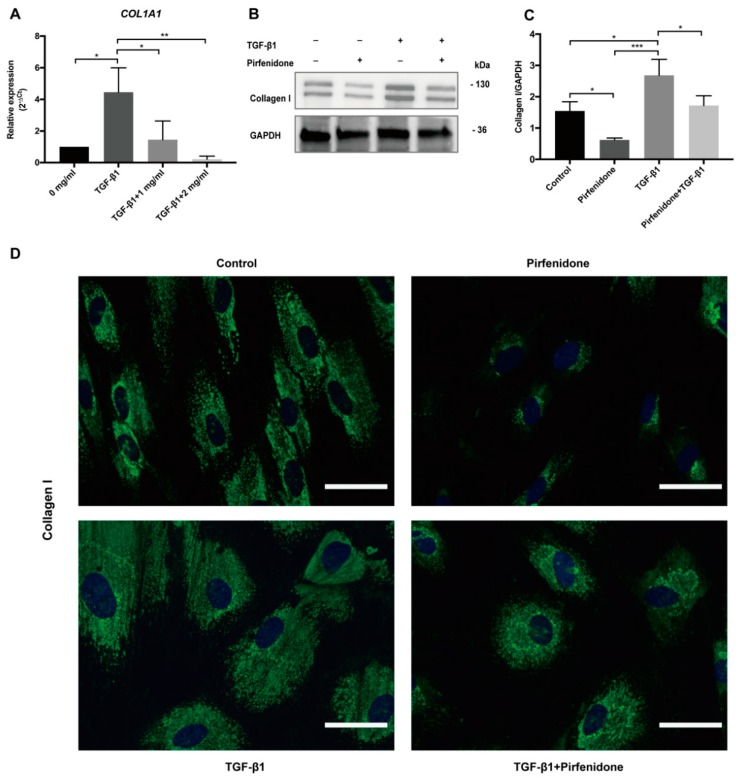
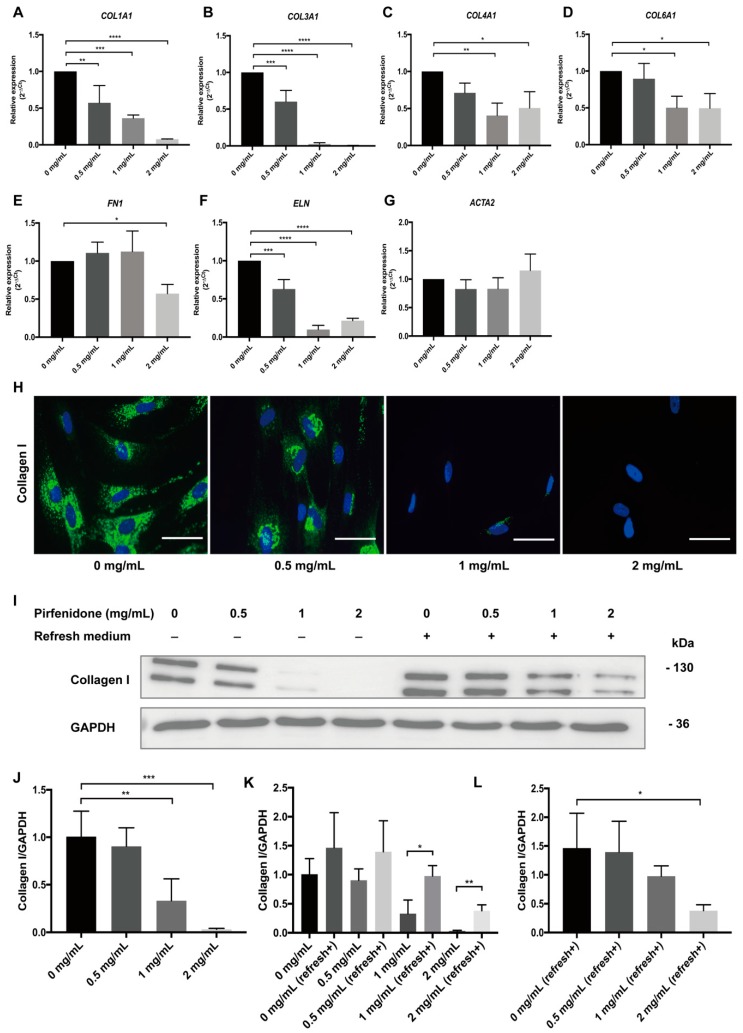
Intestinal fibrosis is a common complication of inflammatory bowel disease. So far, there is no safe and effective drug for intestinal fibrosis. Pirfenidone is an anti-fibrotic compound available for the treatment of idiopathic pulmonary fibrosis. Here, we explored the anti-proliferative and anti-fibrotic properties of pirfenidone on primary human intestinal fibroblasts (p-hIFs). p-hIFs were cultured in the absence and presence of pirfenidone. Cell proliferation was measured by a real-time cell analyzer (xCELLigence) and BrdU incorporation. Cell motility was monitored by live cell imaging. Cytotoxicity and cell viability were analyzed by Sytox green, Caspase-3 and Water Soluble Tetrazolium Salt-1 (WST-1) assays. Gene expression of fibrosis markers was determined by quantitative reverse transcription PCR (RT-qPCR). The mammalian target of rapamycin (mTOR) signaling was analyzed by Western blotting and type I collagen protein expression additionally by immunofluorescence microscopy. Pirfenidone dose-dependently inhibited p-hIF proliferation and motility, without inducing cell death. Pirfenidone suppressed mRNA levels of genes that contribute to extracellular matrix production, as well as basal and TGF-β1-induced collagen I protein production, which was associated with inhibition of the rapamycin-sensitive mTOR/p70S6K pathway in p-hIFs. Thus, pirfenidone inhibits the proliferation of intestinal fibroblasts and suppresses collagen I production through the TGF-β1/mTOR/p70S6K signaling pathway, which might be a novel and safe anti-fibrotic strategy to treat intestinal fibrosis.
肠道纤维化是炎症性肠病的常见并发症。目前,尚无安全有效的肠道纤维化治疗药物。吡非尼酮是一种抗纤维化化合物,可用于治疗特发性肺纤维化。在这里,我们探讨了吡非尼酮对原代人肠道成纤维细胞(p-hIFs)的抗增殖和抗纤维化特性。p-hIFs 在有无吡非尼酮的情况下进行培养。通过实时细胞分析(xCELLigence)和 BrdU 掺入来测量细胞增殖。通过活细胞成像监测细胞迁移。通过 Sytox 绿、Caspase-3 和水溶性四唑盐-1(WST-1)测定分析细胞毒性和细胞活力。通过定量逆转录 PCR(RT-qPCR)测定纤维化标记物的基因表达。通过 Western blot 分析哺乳动物雷帕霉素靶蛋白(mTOR)信号通路,另外通过免疫荧光显微镜分析 I 型胶原蛋白表达。吡非尼酮呈剂量依赖性抑制 p-hIF 增殖和迁移,而不诱导细胞死亡。吡非尼酮抑制参与细胞外基质产生的基因的 mRNA 水平,以及基础和 TGF-β1 诱导的胶原 I 蛋白产生,这与 p-hIFs 中雷帕霉素敏感的 mTOR/p70S6K 通路的抑制有关。因此,吡非尼酮通过 TGF-β1/mTOR/p70S6K 信号通路抑制肠道成纤维细胞的增殖并抑制胶原 I 产生,这可能是治疗肠道纤维化的一种新的安全的抗纤维化策略。