Behaviour and Health Research Unit, Institute of Public Health, University of Cambridge, Forvie Site, Cambridge, CB2 0SR, UK.
Tobacco and Alcohol Research Group, University of Bristol, School of Psychological Science, Bristol, BS8 1TU, UK.
BMC Public Health. 2020 Apr 2;20(1):376. doi: 10.1186/s12889-020-8403-8.
Health warning labels (HWLs) using images and text to depict the negative health consequences of tobacco consumption are effective and acceptable for changing smoking-related outcomes. There is currently limited evidence concerning their potential use for reducing consumption of alcoholic drinks and energy-dense foods. The aim of this research was to describe the potential effectiveness and acceptability of image-and-text (also known as pictorial or graphic) HWLs applied to: i. alcoholic drinks and ii. energy-dense snack foods.
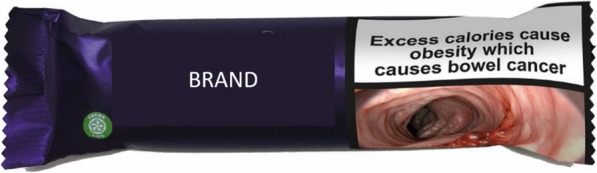
Two online studies were conducted using between-subjects designs with general population samples. Participants rated one of 21 image-and-text HWLs on alcoholic drinks (n = 5528), or one of 18 image-and-text HWLs on energy-dense snacks (n = 4618). HWLs comprised a graphic image with explanatory text, depicting, respectively, seven diseases linked to excess alcohol consumption, and six diseases linked to excess energy intake. Diseases included heart disease and various cancers. Outcomes were negative emotional arousal, desire to consume the labelled product, and acceptability of the label. Free-text comments relating to HWLs were content analysed.
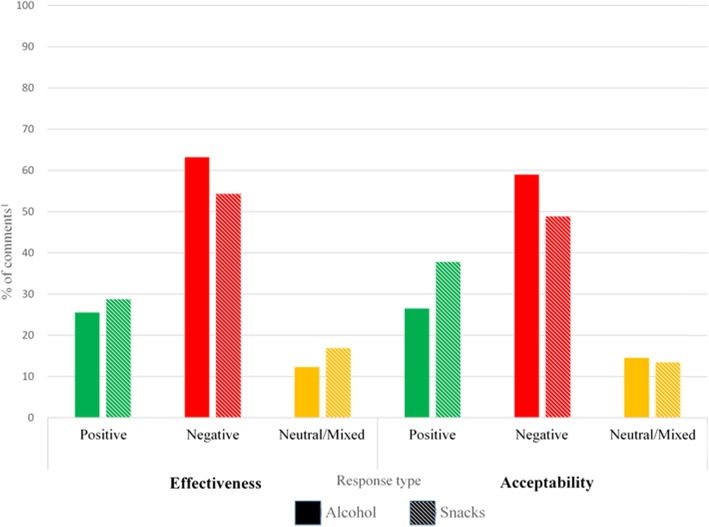
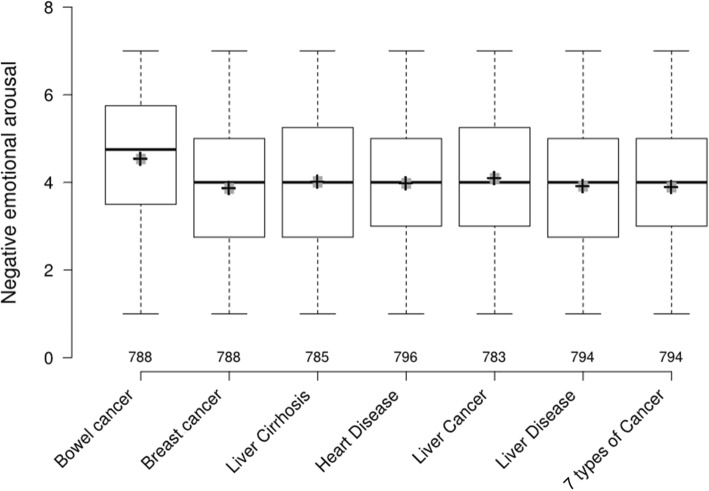
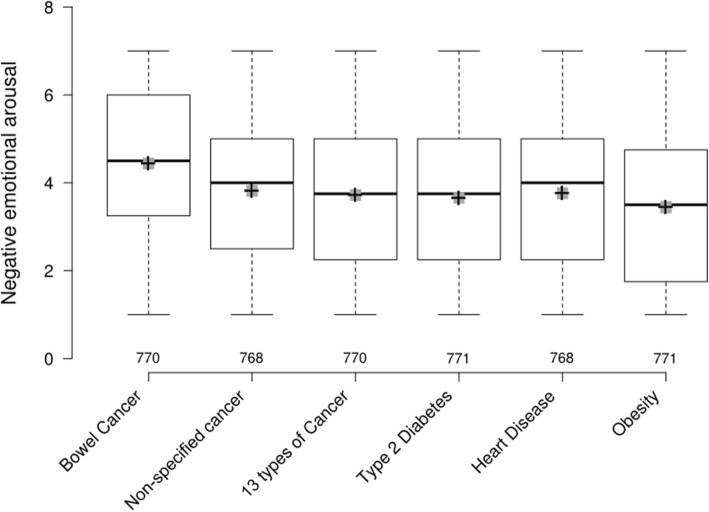
For both alcoholic drinks and energy-dense snacks, HWLs depicting bowel cancer generated the highest levels of negative emotional arousal and lowest desire to consume the product, but were the least acceptable. Acceptability was generally low for HWLs applied to alcohol, with 3 of 21 rated as acceptable, and was generally high for snacks, with 13 of 18 rated as acceptable. The majority of free-text comments expressed negative reactions to HWLs on alcohol or energy-dense snacks.
Image-and-text health warning labels depicting bowel cancer showed greatest potential for reducing selection and consumption of alcoholic drinks and energy-dense snacks, although they were the least acceptable. Laboratory and field studies are needed to assess their impact on selection and consumption.
使用图像和文字来描述烟草消费对健康的负面影响的健康警示标签(HWL)对于改变与吸烟相关的结果是有效且可接受的。目前,关于它们在减少酒精饮料和高能量食品消费方面的潜在用途的证据有限。本研究的目的是描述图像和文字(也称为图示或图形)HWL 应用于以下方面的潜在效果和可接受性:i. 酒精饮料和 ii. 高能量零食。
使用基于人群样本的组间设计进行了两项在线研究。参与者对 21 种酒精饮料的图像和文字 HWL(n=5528)或 18 种高能量零食的图像和文字 HWL(n=4618)中的一种进行了评价。HWL 由一个带有说明性文字的图形图像组成,分别描绘了与过量饮酒相关的七种疾病和与过量能量摄入相关的六种疾病。这些疾病包括心脏病和各种癌症。结果是负面情绪唤起、消费标记产品的欲望和标签的可接受性。与 HWL 相关的自由文本评论进行了内容分析。
对于酒精饮料和高能量零食,HWL 中描绘结肠癌的标签产生了最高水平的负面情绪唤起和最低的消费欲望,但可接受性最低。HWL 应用于酒精的可接受性普遍较低,21 个中只有 3 个被评为可接受,而 HWL 应用于零食的可接受性普遍较高,18 个中只有 13 个被评为可接受。大多数自由文本评论对酒精或高能量零食的 HWL 表示负面反应。
图像和文字健康警示标签描绘结肠癌在减少对酒精饮料和高能量零食的选择和消费方面显示出最大的潜力,尽管它们的可接受性最低。需要进行实验室和现场研究来评估它们对选择和消费的影响。