Department of Radiology and Nuclear Medicine, Erasmus MC, Rotterdam, the Netherlands.
Department of Epidemiology, Erasmus MC, Rotterdam, the Netherlands.
Magn Reson Med. 2020 Oct;84(4):2048-2054. doi: 10.1002/mrm.28271. Epub 2020 Apr 2.
Pseudocontinuous arterial spin labeling (pCASL) allows for noninvasive measurement of regional cerebral blood flow (CBF), which has the potential to serve as biomarker for neurodegenerative and cardiovascular diseases. This work aimed to implement and validate pCASL on the dedicated MRI system within the population-based Rotterdam Study, which was installed in 2005 and for which software and hardware configurations have remained fixed.
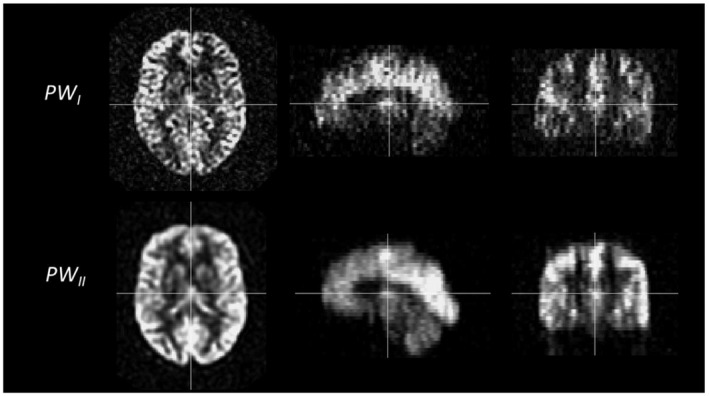
Imaging was performed on two 1.5T MRI systems (General Electric); (I) the Rotterdam Study system, and (II) a hospital-based system with a product pCASL sequence. An in-house implementation of pCASL was created on scanner I. A flow phantom and three healthy volunteers (<27 years) were scanned on both systems for validation purposes. The data of the first 30 participants (86 ± 4 years) of the Rotterdam Study undergoing pCASL scans on scanner I only were analyzed with and without partial volume correction for gray matter.
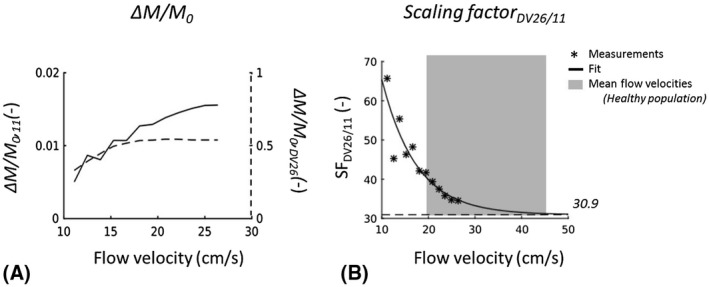
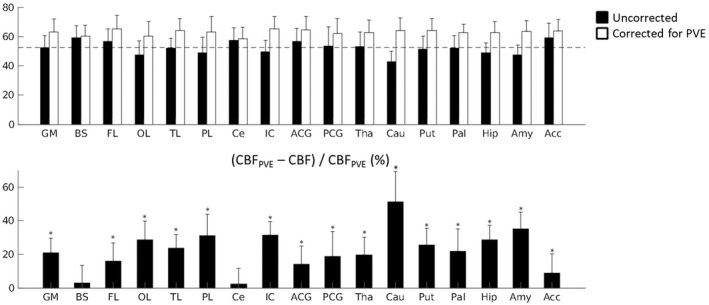
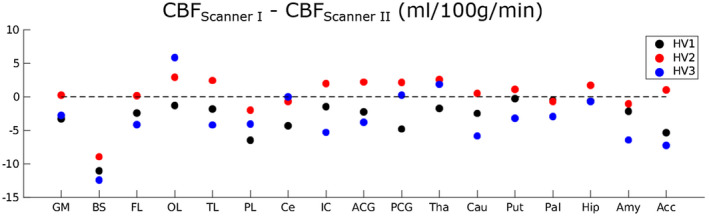
The validation study showed a difference in blood flow velocity, sensitivity, and spatial coefficient of variation of the perfusion-weighted signal between the two scanners, which was accounted for during post-processing. Gray matter CBF for the Rotterdam Study participants was 52.4 ± 8.2 ml/100 g/min, uncorrected for partial volume effects of gray matter. In this elderly cohort, partial volume correction for gray matter had a variable effect on measured CBF in a range of cortical and sub-cortical regions of interest.
Regional CBF measurements are now included to investigate novel biomarkers in the Rotterdam Study. This work highlights that when it is not feasible to purchase a novel ASL sequence, an in-house implementation is valuable.
伪连续动脉自旋标记(pCASL)允许对区域脑血流(CBF)进行非侵入性测量,这有可能成为神经退行性和心血管疾病的生物标志物。本研究旨在在基于人群的鹿特丹研究中使用专用 MRI 系统实施和验证 pCASL,该系统于 2005 年安装,其软件和硬件配置保持不变。
在两台 1.5T MRI 系统(通用电气)上进行成像:(I)鹿特丹研究系统,和(II)基于医院的系统,具有商品 pCASL 序列。在扫描仪 I 上创建了 pCASL 的内部实现。为了验证目的,在两台系统上对流量体模和 3 名健康志愿者(<27 岁)进行了扫描。仅对扫描仪 I 上接受 pCASL 扫描的鹿特丹研究的前 30 名参与者(86±4 岁)的数据进行了分析,包括和不包括灰质部分体积校正。
验证研究表明,两台扫描仪之间的血流速度、灵敏度和灌注加权信号的空间变异系数存在差异,在后期处理中进行了校正。鹿特丹研究参与者的灰质 CBF 为 52.4±8.2ml/100g/min,未校正灰质部分体积效应。在这个老年队列中,灰质部分体积校正对测量的 CBF 有不同的影响,在皮质和皮质下感兴趣区域的范围内。
现在已经包括区域 CBF 测量值来研究鹿特丹研究中的新生物标志物。这项工作强调,当无法购买新的 ASL 序列时,内部实现是有价值的。