The Russell H. Morgan Department of Radiology and Radiological Science, Johns Hopkins University, Baltimore, Maryland, USA.
F.M. Kirby Research Center for Functional Brain Imaging, Kennedy Krieger Institute, Baltimore, Maryland, USA.
Magn Reson Med. 2021 Sep;86(3):1360-1368. doi: 10.1002/mrm.28805. Epub 2021 May 2.
Benchmarking of flow and perfusion MR techniques on standardized phantoms can facilitate the use of advanced angiography and perfusion-mapping techniques across multiple sites, field strength, and vendors. Here, MRA and perfusion mapping by arterial spin labeling (ASL) using Fourier transform (FT)-based velocity-selective saturation and inversion pulse trains were evaluated on a commercial perfusion phantom.
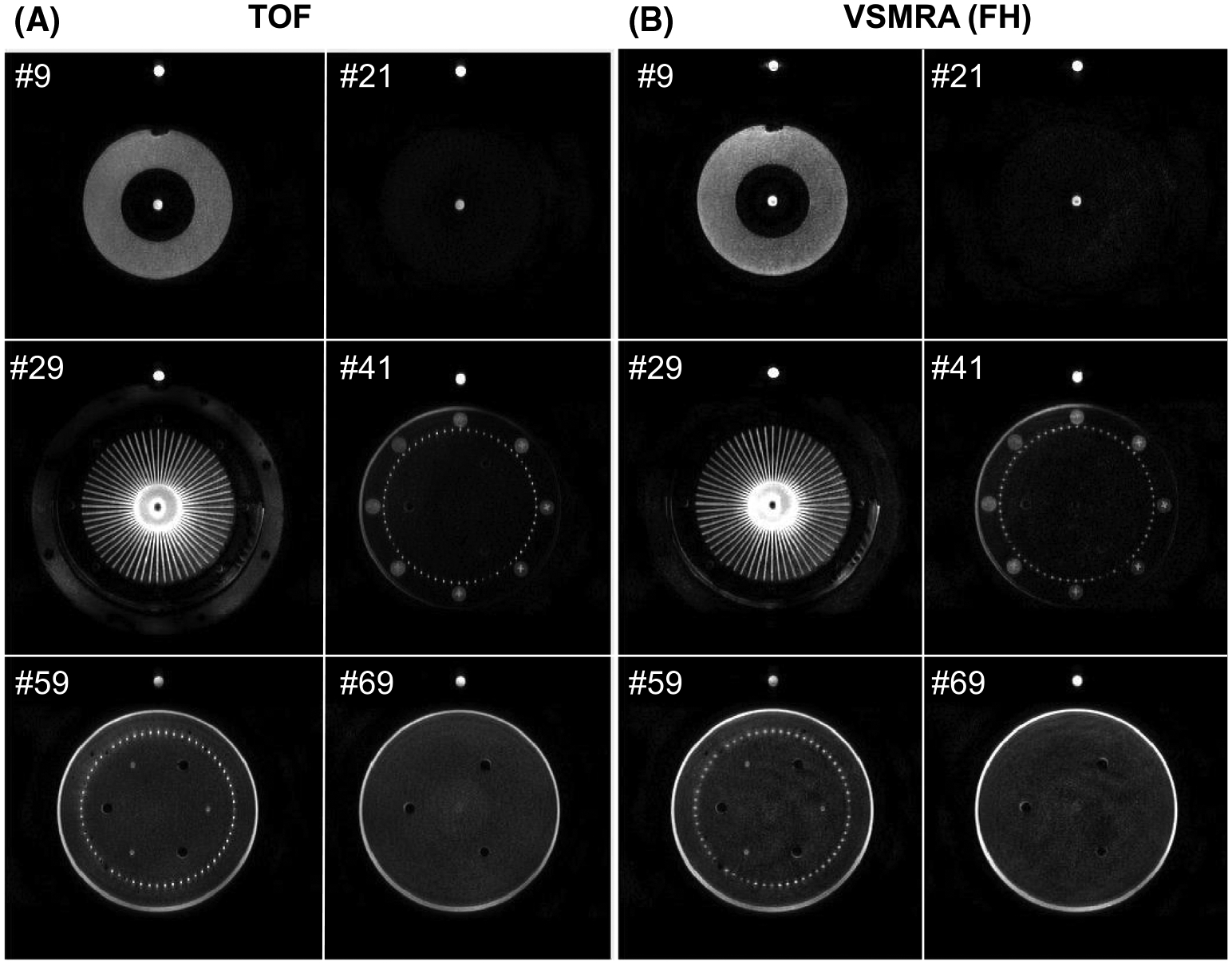
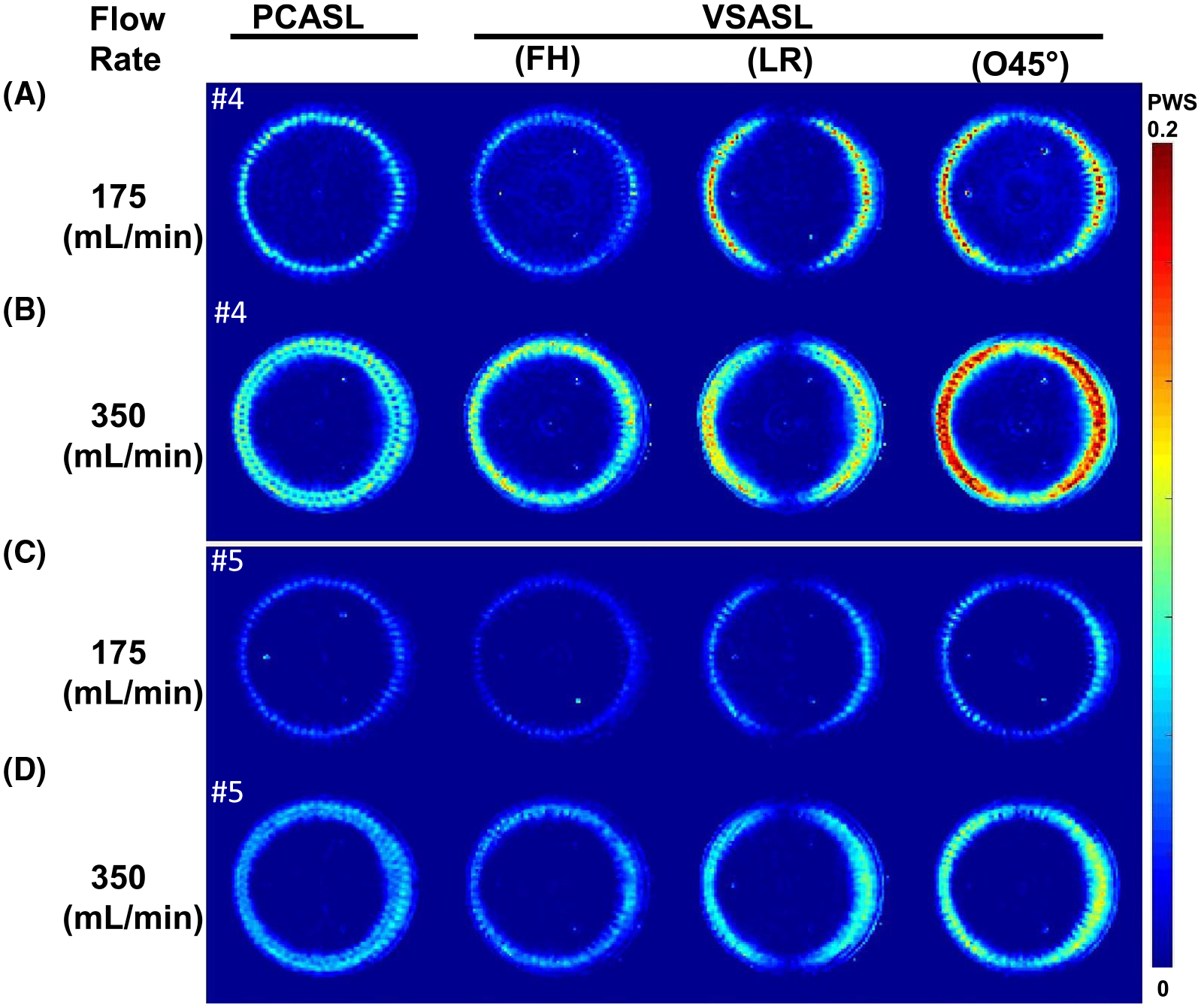
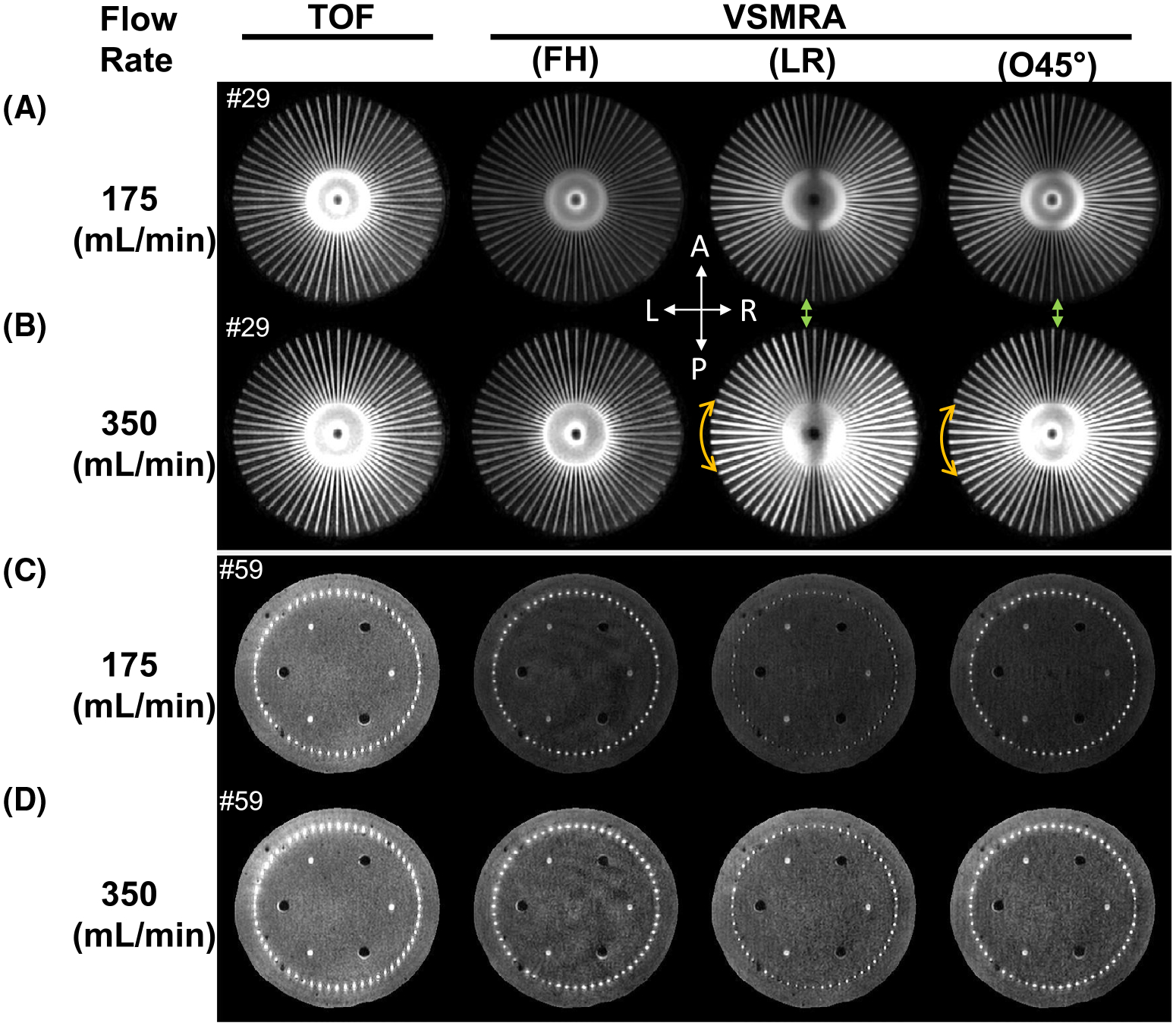
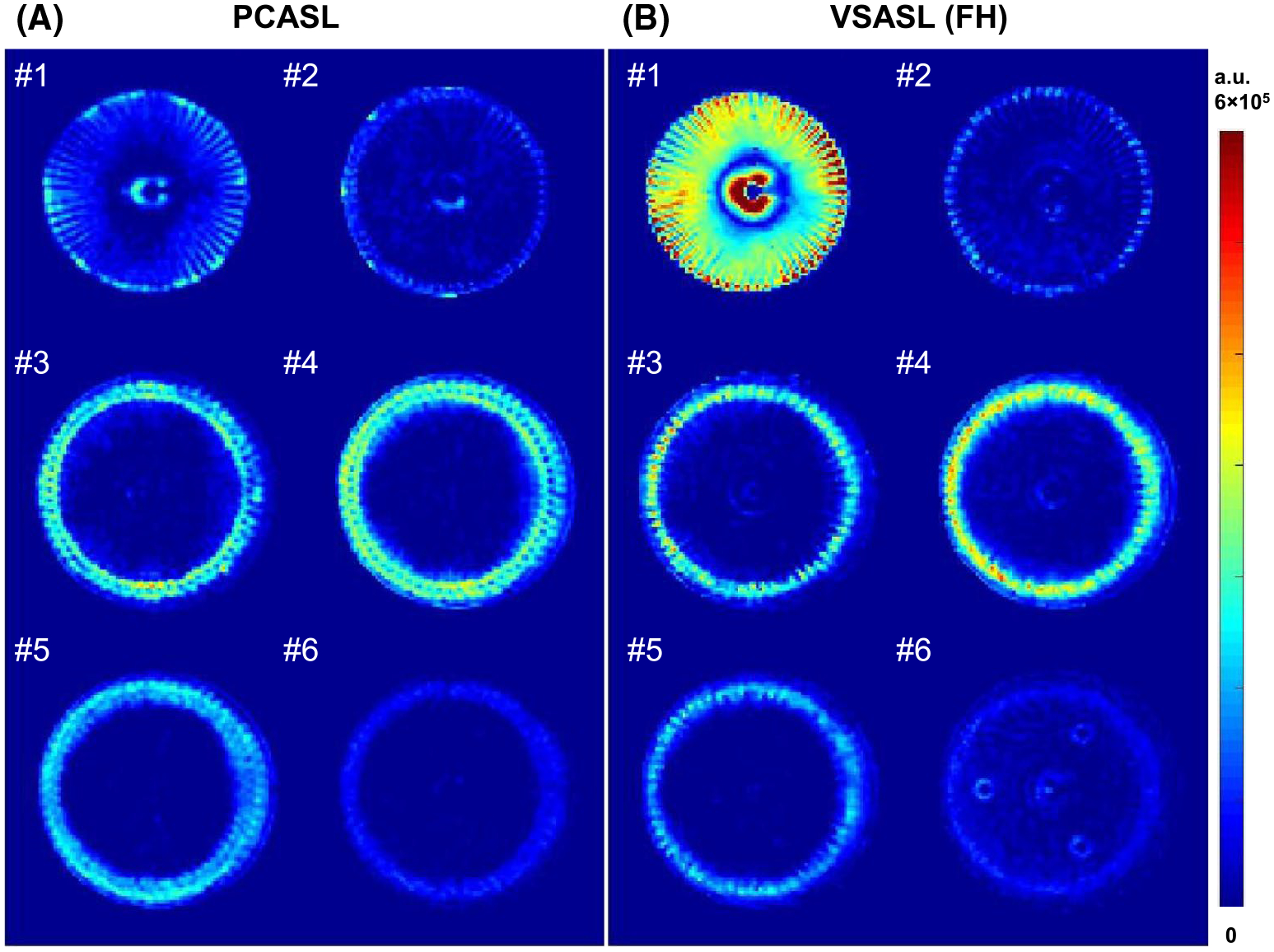
The FT velocity-selective saturation-based MRA and FT velocity-selective inversion-based ASL perfusion imaging were compared with time-of-flight and pseudo-continuous ASL at 3 T on the perfusion phantom at two controlled flow rates, 175 mL/min and 350 mL/min. Velocity-selective MRA (VSMRA) and velocity-selective ASL (VSASL) were each performed with three velocity-encoding directions: foot-head, left-right, and oblique 45°. The contrast-to-noise ratio for MRA scans and perfusion-weighted signal, as well as labeling efficiency for ASL methods, were quantified.
On this phantom with feeding tubes having only vertical and transverse flow directions, VSMRA and VSASL exhibited the dependence of velocity-encoding directions. The foot-head-encoded VSMRA and VSASL generated similar signal contrasts as time of flight and pseudo-continuous ASL for the two flow rates, respectively. The oblique 45°-encoded VSMRA yielded more uniform contrast-to-noise ratio across slices than foot-head and left-right-encoded VSMRA scans. The oblique 45°-encoded VSASL elevated labeling efficiency from 0.22-0.68 to 0.82-0.90 through more uniform labeling of the entire feeding tubes.
Both FT velocity-selective saturation-based VSMRA and FT velocity-selective inversion-based VSASL were characterized on a commercial perfusion phantom. Careful selection of velocity-encoding directions along the major vessels is recommended for their applications in various organs.
在标准化的体模上对血流和灌注磁共振技术进行基准测试,可以促进在多个地点、场强和供应商之间使用先进的血管造影和灌注映射技术。在此,在商业灌注体模上评估了基于傅里叶变换(FT)速度选择饱和和反转脉冲序列的动脉自旋标记(ASL)的 MRA 和灌注映射。
在灌注体模上,在两个受控流速(175 mL/min 和 350 mL/min)下,比较了 FT 速度选择饱和基 MRA 和 FT 速度选择反转基 ASL 灌注成像与时间飞跃和伪连续 ASL 的性能。速度选择 MRA(VSMRA)和速度选择 ASL(VSASL)分别在三个速度编码方向上进行:足到头、左到右和 45°斜向。量化了 MRA 扫描的对比噪声比和灌注加权信号,以及 ASL 方法的标记效率。
在这个只有垂直和横向流动方向的喂食管体模上,VSMRA 和 VSASL 表现出对速度编码方向的依赖性。对于这两个流速,头足向编码的 VSMRA 和 VSASL 产生了与时间飞跃和伪连续 ASL 相似的信号对比度。与头足向和左右向编码的 VSMRA 扫描相比,斜向 45°编码的 VSMRA 在切片之间产生了更均匀的对比噪声比。斜向 45°编码的 VSASL 通过更均匀地标记整个喂食管,将标记效率从 0.22-0.68 提高到 0.82-0.90。
在商业灌注体模上对基于 FT 速度选择饱和的 VSMRA 和基于 FT 速度选择反转的 VSASL 进行了特征描述。建议在各种器官中应用时,沿着主要血管仔细选择速度编码方向。