Núcleo de Telessaúde, Universidade Federal do Rio Grande do Sul, Porto Alegre, Rio Grande do Sul, Brazil.
Departamento de Oftalmologia e Ciências Visuais, Universidade Federal de São Paulo, São Paulo, São Paulo, Brazil.
PLoS One. 2020 Apr 2;15(4):e0231034. doi: 10.1371/journal.pone.0231034. eCollection 2020.
To determine whether teleophthalmology can help physicians in assessing and managing eye conditions and to ascertain which clinical conditions can be addressed by teleophthalmology in primary care setting.
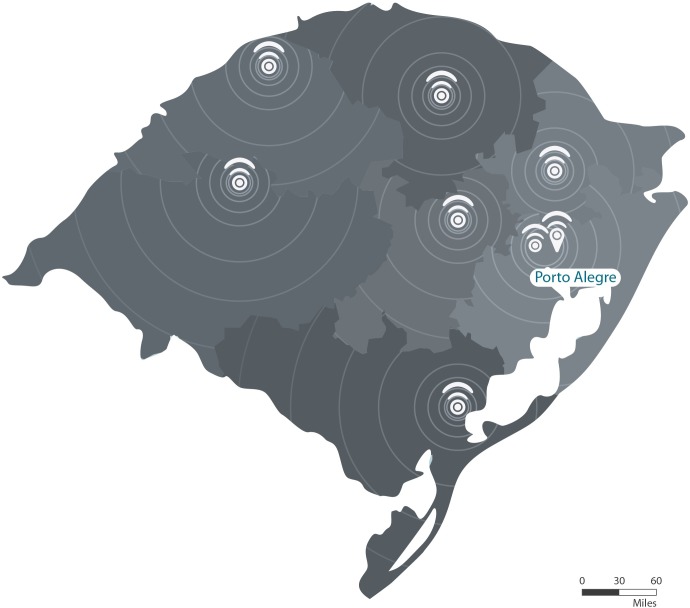
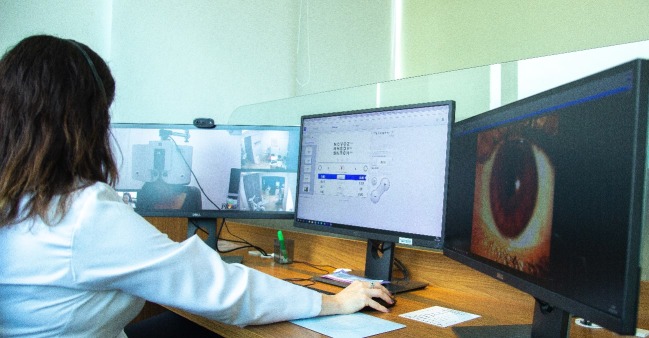
We evaluated the resolution capacity of TeleOftalmo, strategy implemented in the public health system of southern Brazil. Resolution capacity was defined as the ability to fully address patients' eye complaints in primary care with remote assistance from ophthalmologists. Data from tele-eye reports were collected over 14 months. Resolution capacity was compared across different age groups and different ocular conditions.
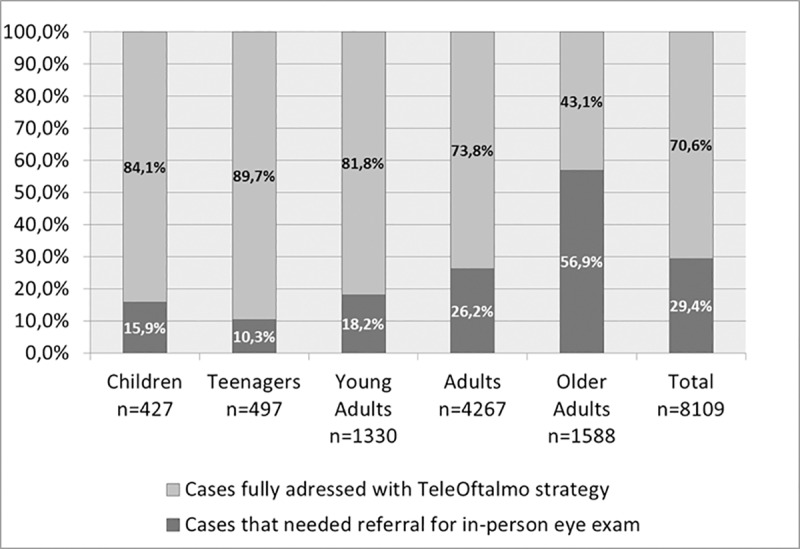
Overall, 8,142 patients had a tele-eye report issued in the study period. Resolution capacity was achieved in 5,748 (70.6%) patients. When stratified into age groups, the lowest capacity was 43.1% among subjects aged ≥65 years, while the highest was 89.7% among subjects aged 13-17 years (p<0.001). Refractive error (70.3%) and presbyopia (56.3%) were the most prevalent conditions followed by cataract (12.4%) and suspected glaucoma (7.6%). Resolution capacity was higher in cases of refractive error, presbyopia, spasm of accommodation and lid disorders than in patients diagnosed with other condition (p<0.001).
With telemedicine support, primary care physicians solved over two-thirds of patients' eye or vision complaints. Refractive errors had high case resolution rates, thus having a great impact on reducing the number of referrals to specialty care. Teleophthalmology adoption in primary-care settings as part of the workup of patients with eye or vision complaints promotes a more effective use of specialty centers and will hopefully reduce waiting times for specialty referral.
确定远程眼科是否有助于医生评估和管理眼部疾病,并确定远程眼科在初级保健环境中可以处理哪些临床病症。
我们评估了巴西南部公共卫生系统实施的 TeleOftalmo 的解决能力。解决能力被定义为通过远程眼科医生协助在初级保健中全面解决患者眼部疾病的能力。在 14 个月的时间里收集了远程眼科报告的数据。比较了不同年龄组和不同眼部疾病的解决能力。
在研究期间,共有 8142 名患者进行了远程眼科检查。5748 名(70.6%)患者的解决能力得到了实现。按年龄组分层,年龄≥65 岁的患者的最低能力为 43.1%,而年龄为 13-17 岁的患者的最高能力为 89.7%(p<0.001)。屈光不正(70.3%)和老视(56.3%)是最常见的病症,其次是白内障(12.4%)和疑似青光眼(7.6%)。屈光不正、老视、调节痉挛和眼睑疾病的解决能力高于其他病症的患者(p<0.001)。
在远程医疗的支持下,初级保健医生解决了超过三分之二的患者眼部或视力问题。屈光不正的病例解决率很高,因此对减少向专科治疗转诊的数量有很大影响。将远程眼科纳入初级保健机构,作为眼部或视力问题患者的检查的一部分,可以更有效地利用专科中心,并有望减少专科转诊的等待时间。