Department of Public Health Sciences, Clemson University, Clemson, SC, United States; Medical University of South Carolina, Hollings Cancer Center, Charleston, SC, United States.
Medical University of South Carolina, College of Health Professions, Charleston, SC, United States.
Adv Cancer Res. 2020;146:139-166. doi: 10.1016/bs.acr.2020.01.008. Epub 2020 Feb 24.
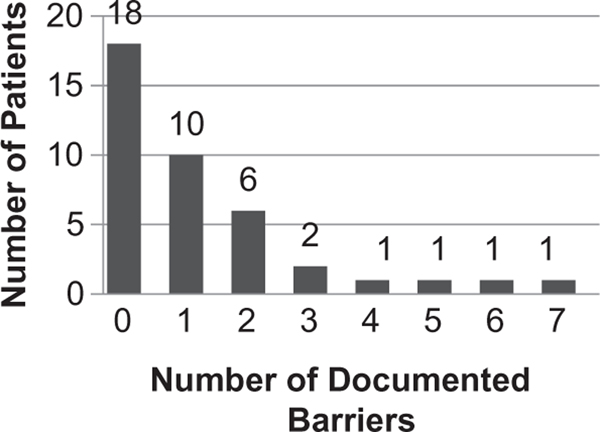
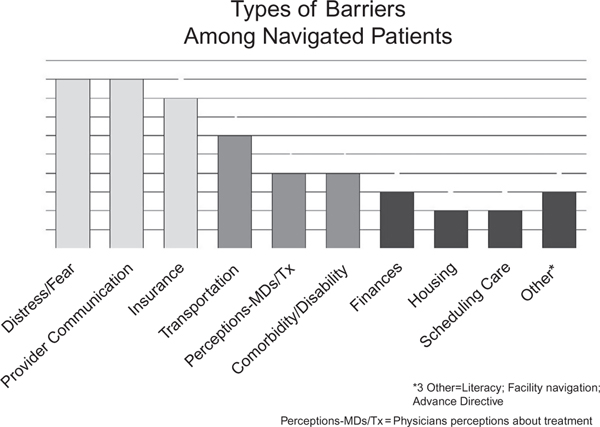
Clinical research is vital to the discovery of new cancer treatments that can enhance health and prolong life for cancer patients, but breakthroughs in cancer treatment are limited by challenges recruiting patients into cancer clinical trials (CT). Only 3-5% of cancer patients in the United States participate in a cancer CT and there are disparities in CT participation by age, race and gender. Strategies such as patient navigation, which is designed to provide patients with education and practical support, may help to overcome challenges of CT recruitment. The current study evaluated an intervention in which lay navigators were utilized to provide patient education and practical support for helping patients overcome barriers to CT participation and related clinical care. A patient barrier checklist was utilized to record patient barriers to CT participation and care, actions taken by navigators to assist patients with these barriers, and whether or not these barriers could be overcome. Forty patients received patient navigation services. The most common barriers faced by navigated patients were fear (n=9), issues communicating with medical personnel (n=9), insurance issues (n=8), transportation difficulties (n=6) and perceptions about providers and treatment (n=4). The most common activities undertaken by navigators were making referrals and contacts on behalf of patients (e.g., support services, family, clinicians; n=25). Navigators also made arrangement for transportation, financial, medication and equipment services for patients (n=11) and proactively navigated patients (n=8). Barriers that were not overcome for two or more patients included insurance issues, lack of temporary housing resources for patients in treatment and assistance with household bills. The wide array of patient barriers to CT participation and navigator assistance documented in this study supports the CT navigator role in facilitating quality care.
临床研究对于发现新的癌症治疗方法至关重要,这些方法可以提高癌症患者的健康水平并延长其寿命,但癌症治疗的突破受到招募癌症临床试验(CT)患者的挑战所限制。美国只有 3-5%的癌症患者参加癌症 CT,而且在年龄、种族和性别方面存在 CT 参与的差异。患者导航等策略旨在为患者提供教育和实际支持,可能有助于克服 CT 招募的挑战。本研究评估了一种干预措施,即利用非专业导航员为患者提供教育和实际支持,以帮助患者克服参与 CT 和相关临床护理的障碍。使用患者障碍检查表记录患者参与 CT 和护理的障碍、导航员为帮助患者克服这些障碍而采取的行动,以及这些障碍是否可以克服。有 40 名患者接受了患者导航服务。导航患者面临的最常见障碍是恐惧(n=9)、与医务人员沟通问题(n=9)、保险问题(n=8)、交通困难(n=6)和对提供者和治疗的看法(n=4)。导航员最常采取的活动是代表患者进行转介和联系(例如,支持服务、家庭、临床医生;n=25)。导航员还为患者安排交通、财务、药物和设备服务(n=11),并主动为患者提供导航服务(n=8)。有两个或更多患者无法克服的障碍包括保险问题、治疗期间患者临时住房资源的缺乏以及帮助支付家庭账单。本研究记录了广泛的患者参与 CT 的障碍和导航员的协助,支持 CT 导航员在促进高质量护理方面的作用。