Department of Pharmacology and Molecular Sciences, Johns Hopkins University School of Medicine, Baltimore, Maryland, United States of America.
Cullman Chemoprotection Center, Johns Hopkins University, Baltimore, Maryland, United States of America.
Sci Rep. 2020 Apr 2;10(1):5822. doi: 10.1038/s41598-020-62714-4.
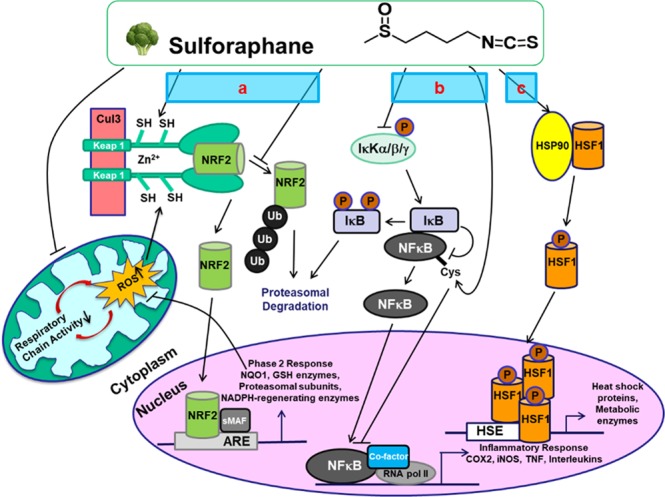
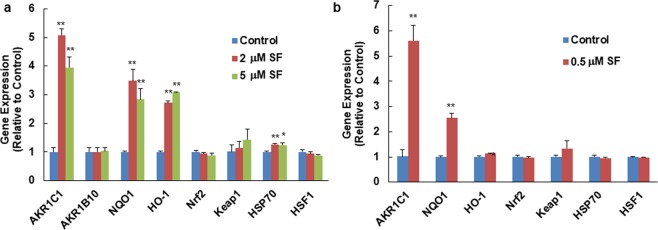
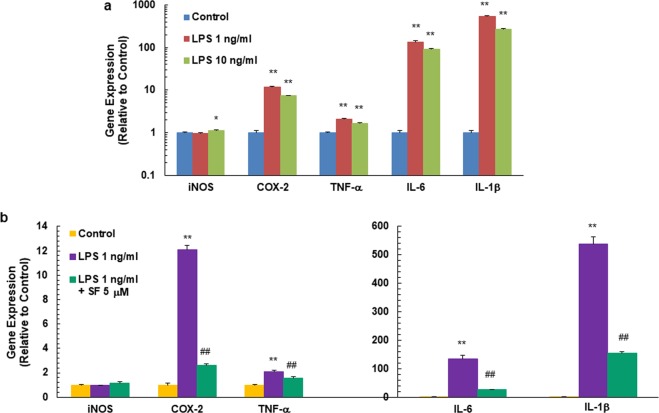
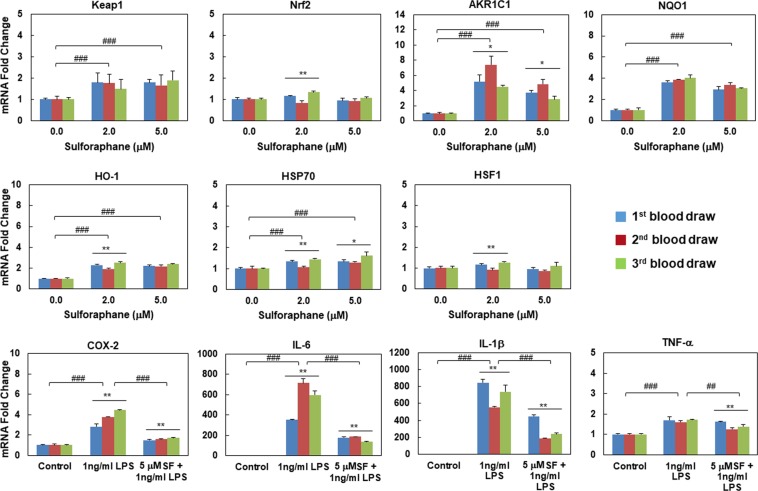
Autism Spectrum Disorder (ASD) is one of the most common neurodevelopmental disorders with no drugs treating the core symptoms and no validated biomarkers for clinical use. The multi-functional phytochemical sulforaphane affects many of the biochemical abnormalities associated with ASD. We investigated potential molecular markers from three ASD-associated physiological pathways that can be affected by sulforaphane: redox metabolism/oxidative stress; heat shock response; and immune dysregulation/inflammation, in peripheral blood mononuclear cells (PBMCs) from healthy donors and patients with ASD. We first analyzed the mRNA levels of selected molecular markers in response to sulforaphane ex vivo treatment in PBMCs from healthy donors by real-time quantitative PCR. All of the tested markers showed quantifiability, accuracy and reproducibility. We then compared the expression levels of those markers in PBMCs taken from ASD patients in response to orally-delivered sulforaphane. The mRNA levels of cytoprotective enzymes (NQO1, HO-1, AKR1C1), and heat shock proteins (HSP27 and HSP70), increased. Conversely, mRNA levels of pro-inflammatory markers (IL-6, IL-1β, COX-2 and TNF-α) decreased. Individually none is sufficiently specific or sensitive, but when grouped by function as two panels, these biomarkers show promise for monitoring pharmacodynamic responses to sulforaphane in both healthy and autistic humans, and providing guidance for biomedical interventions.
自闭症谱系障碍(ASD)是最常见的神经发育障碍之一,目前尚无药物可治疗其核心症状,也没有经过验证的生物标志物可用于临床。多功能植物化学物萝卜硫素会影响与 ASD 相关的许多生化异常。我们研究了来自三个与 ASD 相关的生理途径的潜在分子标记物,这些途径可能会受到萝卜硫素的影响:氧化还原代谢/氧化应激;热休克反应;免疫失调/炎症,来自健康供体和 ASD 患者的外周血单核细胞(PBMC)。我们首先通过实时定量 PCR 分析了健康供体 PBMC 中萝卜硫素体外处理后选定分子标记物的 mRNA 水平。所有测试的标记物都具有可量化性、准确性和可重复性。然后,我们比较了 ASD 患者 PBMC 中这些标记物在口服萝卜硫素后的表达水平。细胞保护酶(NQO1、HO-1、AKR1C1)和热休克蛋白(HSP27 和 HSP70)的 mRNA 水平增加。相反,促炎标志物(IL-6、IL-1β、COX-2 和 TNF-α)的 mRNA 水平下降。单独使用时,它们都不够特异或敏感,但按功能分组为两个面板时,这些生物标志物有望监测萝卜硫素对健康人群和自闭症人群的药效反应,并为生物医学干预提供指导。