Department of Biochemistry and Molecular Biology, University of Southern Denmark, Odense, Denmark.
Department of Biochemistry and Molecular Biology, University of Southern Denmark, Odense, Denmark; Interdisciplinary Centre for Clinical Research, University of Erlangen-Nuremberg, Erlangen, Germany.
Mol Metab. 2020 May;35:100962. doi: 10.1016/j.molmet.2020.02.005. Epub 2020 Feb 13.
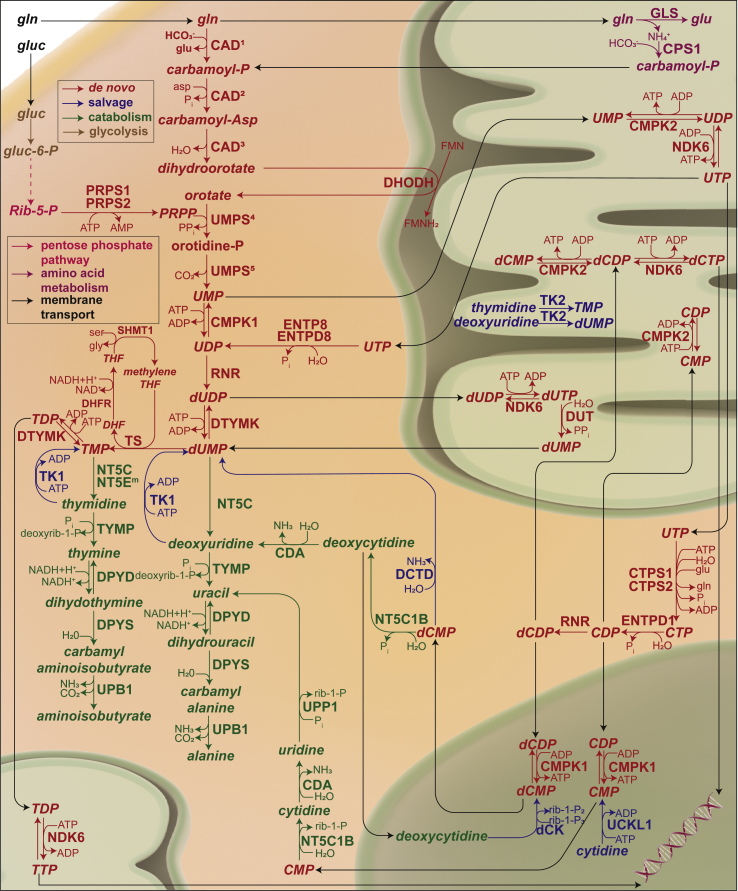
Nucleotide metabolism is a critical pathway that generates purine and pyrimidine molecules for DNA replication, RNA synthesis, and cellular bioenergetics. Increased nucleotide metabolism supports uncontrolled growth of tumors and is a hallmark of cancer. Agents inhibiting synthesis and incorporation of nucleotides in DNA are widely used as chemotherapeutics to reduce tumor growth, cause DNA damage, and induce cell death. Thus, the research on nucleotide metabolism in cancer is primarily focused on its role in cell proliferation. However, in addition to proliferation, the role of purine molecules is established as ligands for purinergic signals. However, so far, the role of the pyrimidines has not been discussed beyond cell growth.
In this review we present the key evidence from recent pivotal studies supporting the notion of a non-proliferative role for pyrimidine metabolism (PyM) in cancer, with a special focus on its effect on differentiation in cancers from different origins.
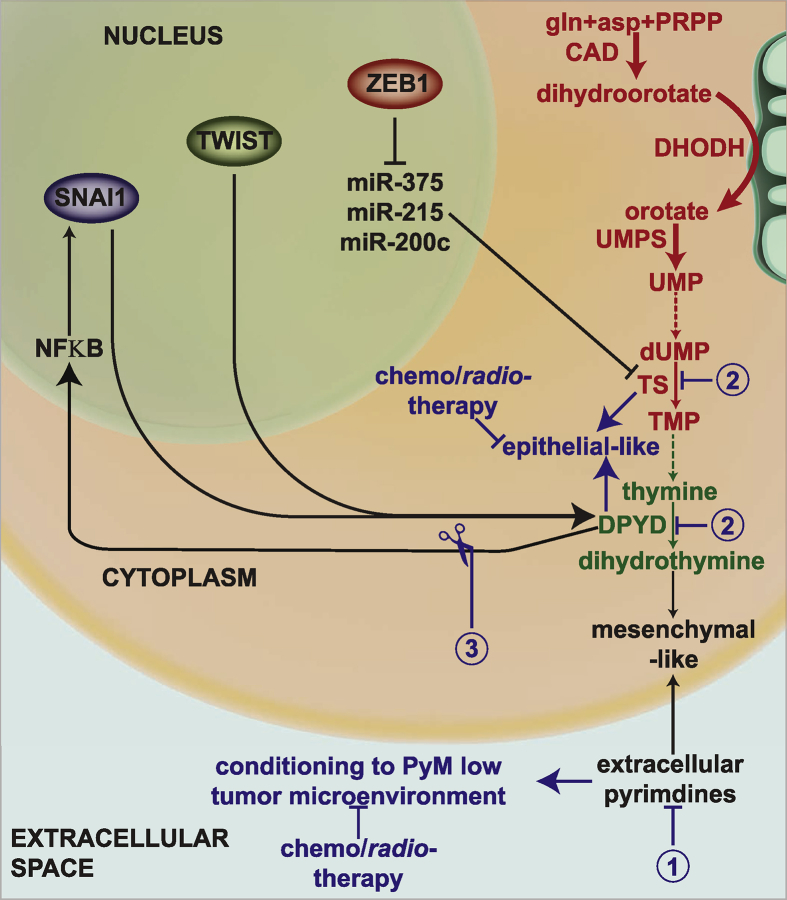
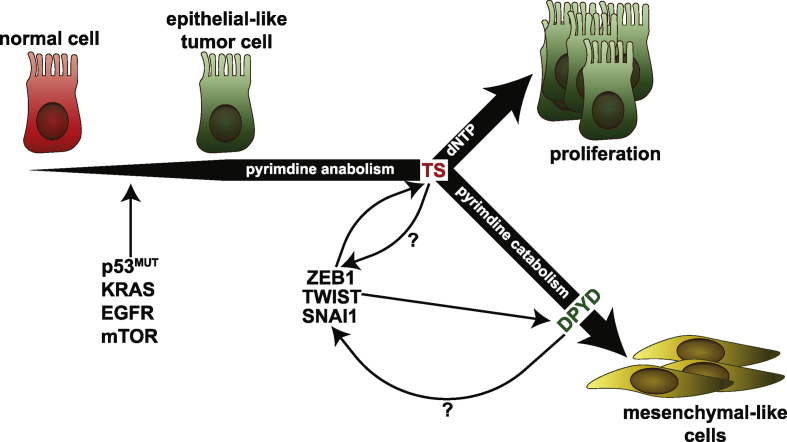
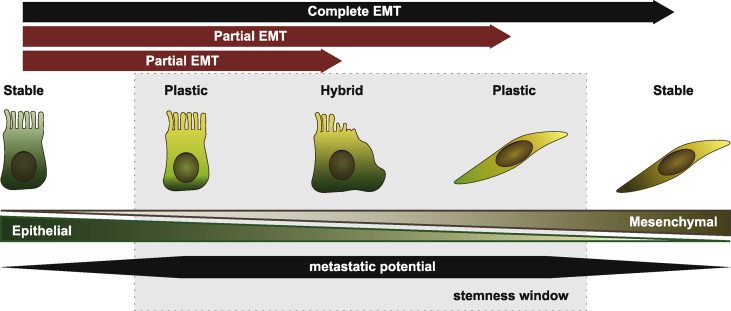
In leukemic cells, the pyrimidine catabolism induces terminal differentiation toward monocytic lineage to check the aberrant cell proliferation, whereas in some solid tumors (e.g., triple negative breast cancer and hepatocellular carcinoma), catalytic degradation of pyrimidines maintains the mesenchymal-like state driven by epithelial-to-mesenchymal transition (EMT). This review further broadens this concept to understand the effect of PyM on metastasis and, ultimately, delivers a rationale to investigate the involvement of the pyrimidine molecules as oncometabolites. Overall, understanding the non-proliferative role of PyM in cancer will lead to improvement of the existing antimetabolites and to development of new therapeutic options.
核苷酸代谢是一个关键途径,为 DNA 复制、RNA 合成和细胞生物能量生成嘌呤和嘧啶分子。核苷酸代谢的增加支持肿瘤的失控生长,是癌症的一个标志。抑制核苷酸在 DNA 中的合成和掺入的药物被广泛用作化疗药物,以减少肿瘤生长、引起 DNA 损伤和诱导细胞死亡。因此,对癌症核苷酸代谢的研究主要集中在其在细胞增殖中的作用。然而,除了增殖之外,嘌呤分子的作用已被确定为嘌呤能信号的配体。然而,到目前为止,嘧啶的作用除了细胞生长之外还没有被讨论过。
在这篇综述中,我们提出了最近的一些重要研究的关键证据,这些研究支持嘧啶代谢(PyM)在癌症中具有非增殖作用的观点,特别关注其对不同来源癌症分化的影响。
在白血病细胞中,嘧啶分解代谢诱导向单核细胞系的终末分化,以检查异常的细胞增殖,而在一些实体瘤(例如,三阴性乳腺癌和肝细胞癌)中,嘧啶的催化降解维持了上皮-间质转化(EMT)驱动的间充质样状态。这篇综述进一步扩展了这一概念,以了解 PyM 对转移的影响,并最终提供了一个理由来研究嘧啶分子作为致癌代谢物的参与。总的来说,了解 PyM 在癌症中的非增殖作用将导致改进现有的抗代谢物,并开发新的治疗选择。