Faheem Muhammad, Shabbir Sadaf, Zhao Jun, Kerr Philip G, Sultana Nasrin, Jia Zhongjun
State Key Laboratory of Soil and Sustainable Agriculture, Institute of Soil Science, Chinese Academy of Sciences, Nanjing 210008, China.
Department or Institute, University of Chinese Academy of Sciences, Beijing 100049, China.
Microorganisms. 2020 Apr 1;8(4):505. doi: 10.3390/microorganisms8040505.
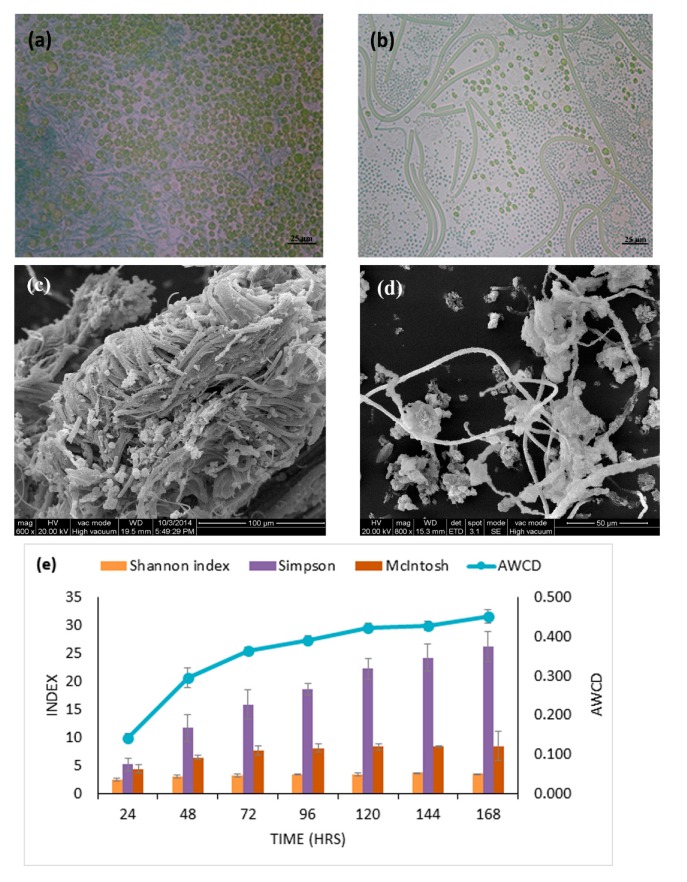
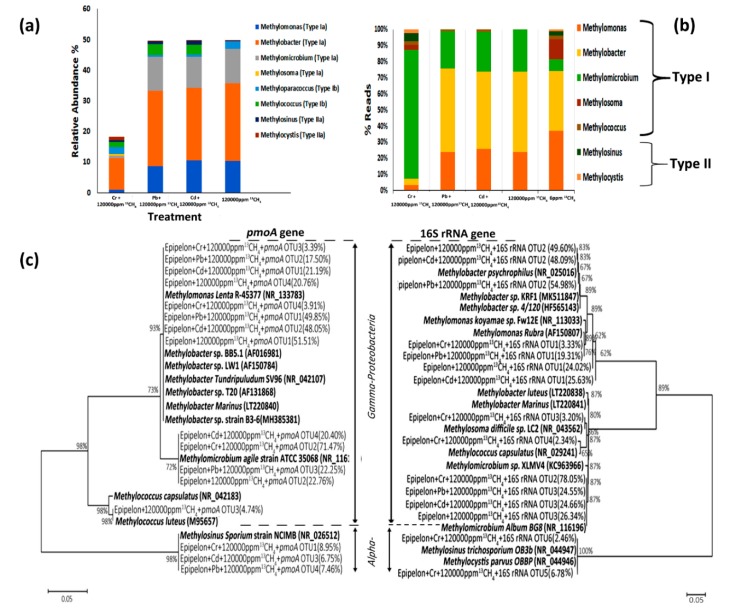
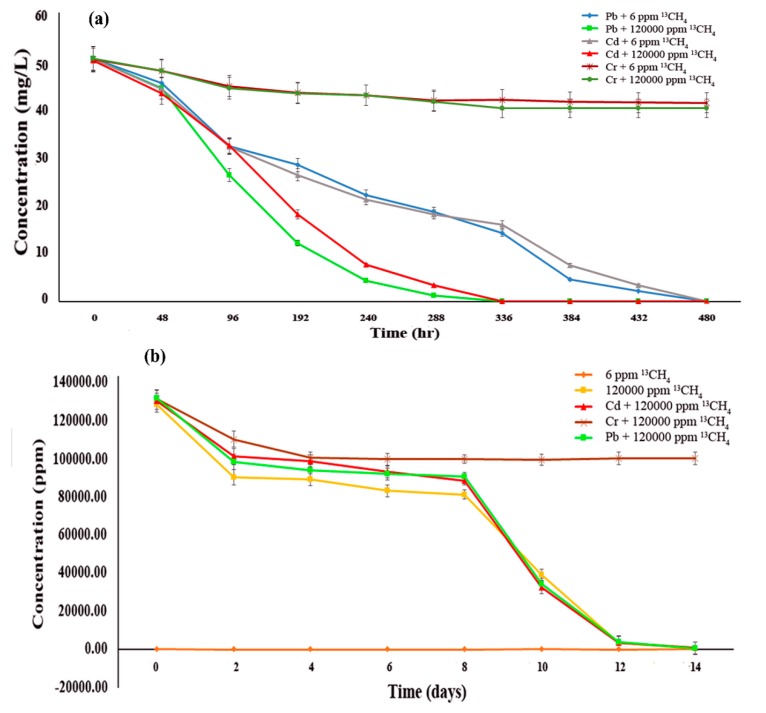
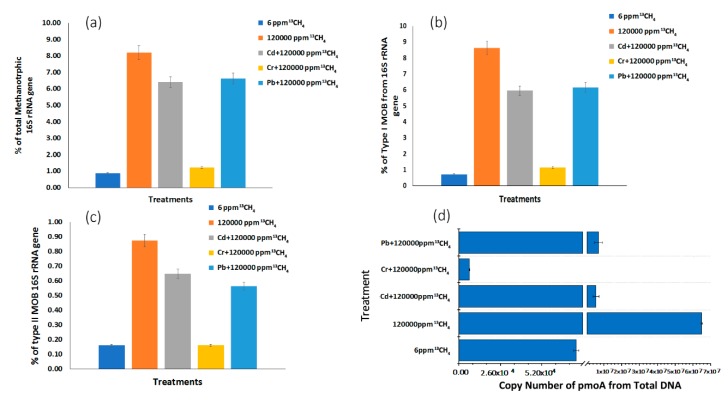
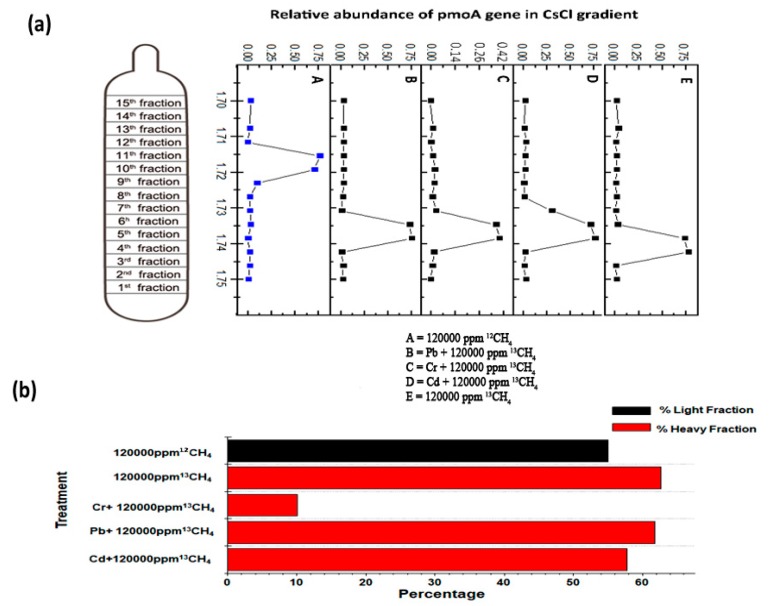
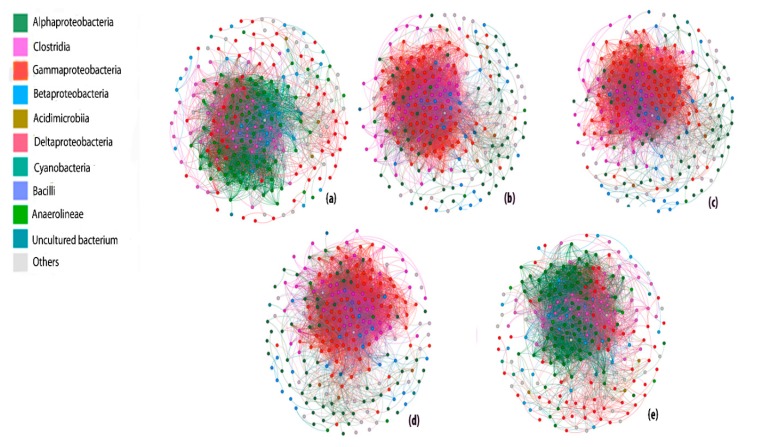
Cadmium (Cd), chromium (Cr) and lead (Pb) are heavy metals that have been classified as priority pollutants in aqueous environment while methane-oxidizing bacteria as a biofilter arguably consume up to 90% of the produced methane in the same aqueous environment before it escapes into the atmosphere. However, the underlying kinetics and active methane oxidizers are poorly understood for the hotspot of epipelon that provides a unique micro-ecosystem containing diversified guild of microorganisms including methane oxidizers for potential bioremediation of heavy metals. In the present study, the Pb, Cdand Cr bioremediation potential of epipelon biofilm was assessed under both high (120,000 ppm) and near-atmospheric (6 ppm) methane concentrations. Epipelon biofilm demonstrated a high methane oxidation activity following microcosm incubation amended with a high concentration of methane, accompanied by the complete removal of 50 mg L Pb and 50 mg L Cd (14 days) and partial (20%) removal of 50 mg L Cr after 20 days. High methane dose stimulated a faster (144 h earlier) heavy metal removal rate compared to near-atmospheric methane concentrations. DNA-based stable isotope probing (DNA-SIP) following CH microcosm incubation revealed the growth and activity of different phylotypes of methanotrophs during the methane oxidation and heavy metal removal process. High throughput sequencing of C-labelled particulate methane monooxygenase gene and 16S rRNA genes revealed that the prevalent active methane oxidizers were type I affiliated methanotrophs, i.e., . Type II methanotrophs including and were also labeled only under high methane concentrations. These results suggest that epipelon biofilm can serve as an important micro-environment to alleviate both methane emission and the heavy metal contamination in aqueous ecosystems with constant high methane fluxes.
镉(Cd)、铬(Cr)和铅(Pb)是已被列为水环境中优先污染物的重金属,而甲烷氧化细菌作为一种生物滤器,可以在相同的水环境中消耗高达90%产生的甲烷,使其不会逸入大气。然而,对于提供独特微生态系统的表生生物热点区域,其潜在的动力学和活跃的甲烷氧化菌仍知之甚少,该微生态系统包含多样化的微生物群落,包括用于重金属潜在生物修复的甲烷氧化菌。在本研究中,评估了在高(120,000 ppm)和近大气(6 ppm)甲烷浓度下,表生生物膜对铅、镉和铬的生物修复潜力。在用高浓度甲烷修正的微观培养后,表生生物膜表现出较高的甲烷氧化活性,同时在14天内完全去除了50 mg/L的铅和50 mg/L的镉,并在20天后部分(20%)去除了50 mg/L的铬。与近大气甲烷浓度相比,高甲烷剂量刺激了更快(早144小时)的重金属去除率。在甲烷微观培养后进行的基于DNA的稳定同位素探测(DNA-SIP)揭示了甲烷氧化和重金属去除过程中不同类型甲烷营养菌的生长和活性。对C标记的颗粒甲烷单加氧酶基因和16S rRNA基因的高通量测序表明,普遍活跃的甲烷氧化菌是I型甲烷营养菌,即。II型甲烷营养菌包括和也仅在高甲烷浓度下被标记。这些结果表明,表生生物膜可以作为一个重要的微环境,在恒定的高甲烷通量下减轻水生生态系统中的甲烷排放和重金属污染。