Martí Juan Manuel, Fernández-Cortés Mónica, Serrano-Sáenz Santiago, Zamudio-Martinez Esteban, Delgado-Bellido Daniel, Garcia-Diaz Angel, Oliver Francisco Javier
Instituto de Parasitología y Biomedicina López Neyra, CSIC and CIBERONC, Instituto de Salud Carlos III, 18016 Granada, Spain.
Cancers (Basel). 2020 Mar 20;12(3):739. doi: 10.3390/cancers12030739.
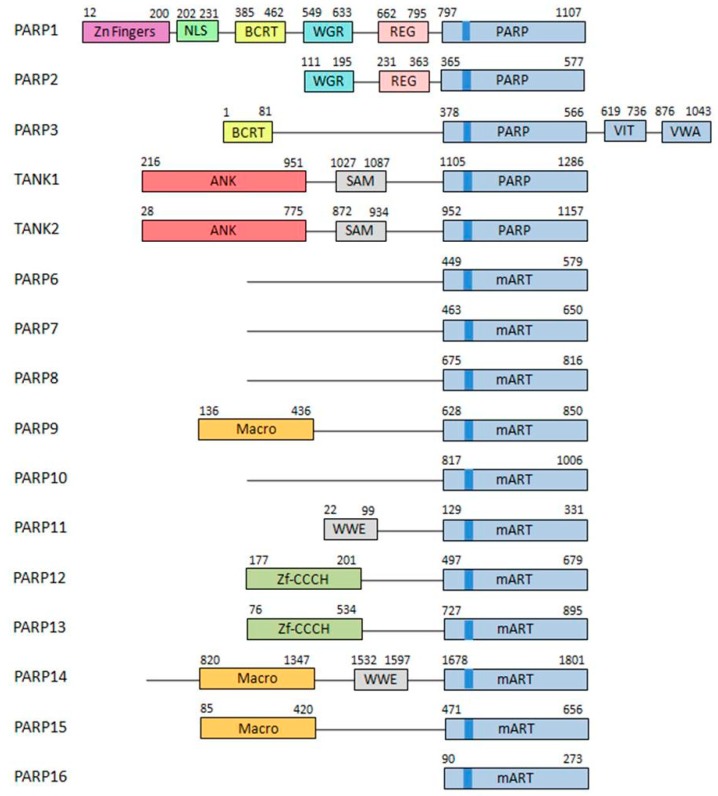
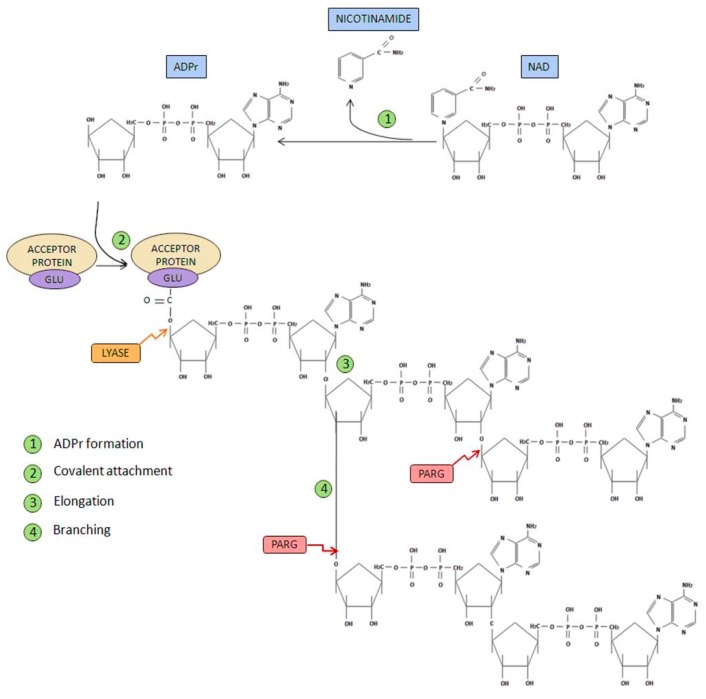
Poly(ADP-ribose) polymerases (PARPs), represent a family of 17 proteins implicated in a variety of cell functions; some of them possess the enzymatic ability to synthesize and attach poly (ADP-ribose) (also known as PAR) to different protein substrates by a post-translational modification; PARPs are key components in the cellular response to stress with consequences for different physiological and pathological events, especially during neoplasia. In recent years, using PARP inhibitors as antitumor agents has raised new challenges in understanding their role in tumor biology. Notably, the function of PARPs and PAR in the dynamic of tumor microenvironment is only starting to be understood. In this review, we summarized the conclusions arising from recent studies on the interaction between PARPs, PAR and key features of tumor microenvironment such as hypoxia, autophagy, tumor initiating cells, angiogenesis and cancer-associated immune response.
聚(ADP-核糖)聚合酶(PARP)是一个由17种蛋白质组成的家族,参与多种细胞功能;其中一些具有通过翻译后修饰合成聚(ADP-核糖)(也称为PAR)并将其连接到不同蛋白质底物上的酶促能力;PARP是细胞应激反应的关键组成部分,对不同的生理和病理事件有影响,尤其是在肿瘤形成过程中。近年来,使用PARP抑制剂作为抗肿瘤药物在理解它们在肿瘤生物学中的作用方面提出了新的挑战。值得注意的是,PARP和PAR在肿瘤微环境动态中的功能才刚刚开始被了解。在这篇综述中,我们总结了最近关于PARP、PAR与肿瘤微环境的关键特征(如缺氧、自噬、肿瘤起始细胞、血管生成和癌症相关免疫反应)之间相互作用的研究得出的结论。