Charité - Universitätsmedizin Berlin, corporate member of Freie Universität Berlin, Humboldt-Universität zu Berlin, and Berlin Institute of Health, Berlin, Germany.
Center for Digital Health, Berlin Institute of Health (BIH), Berlin, Germany.
EMBO J. 2020 May 18;39(10):e105114. doi: 10.15252/embj.20105114. Epub 2020 Apr 14.
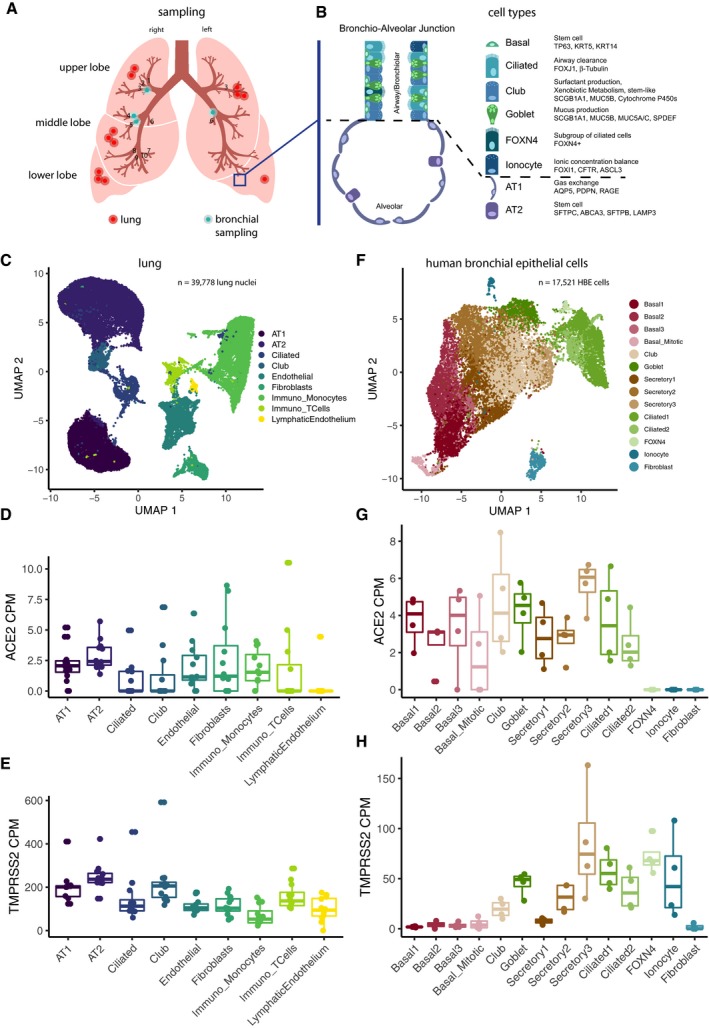
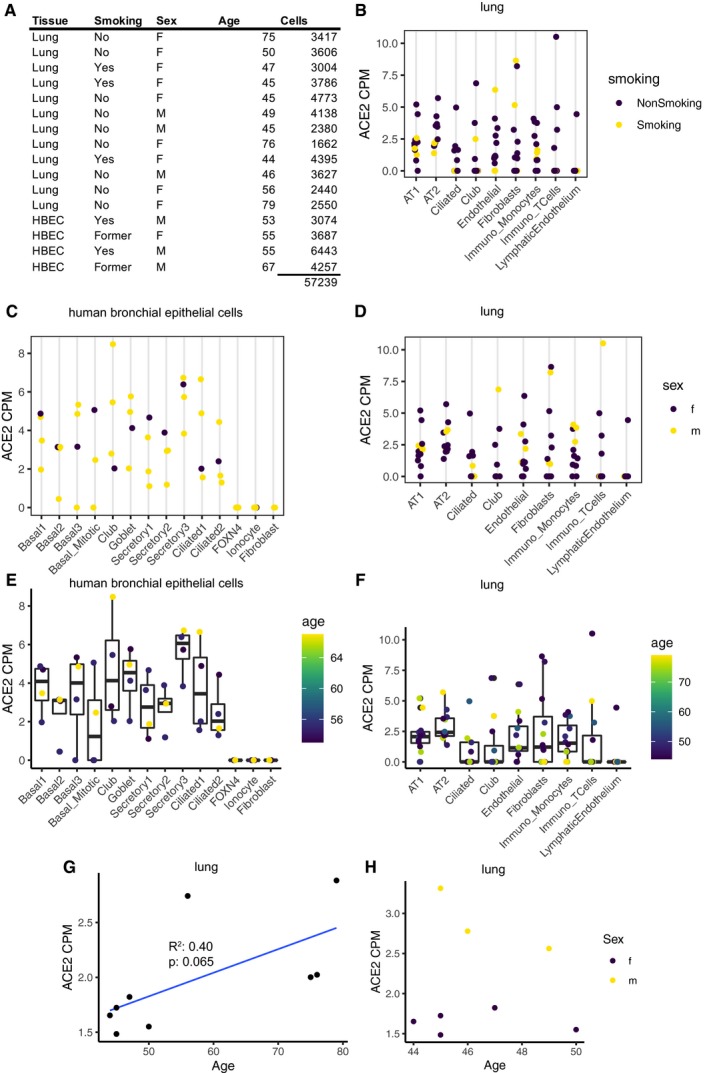
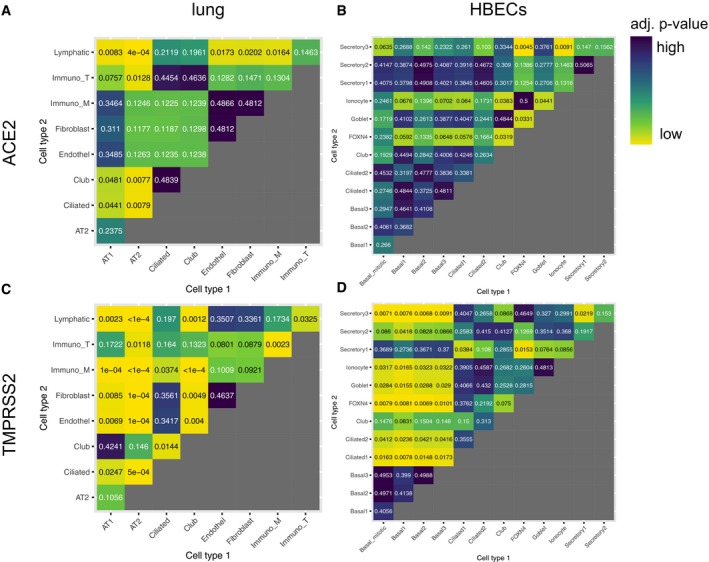
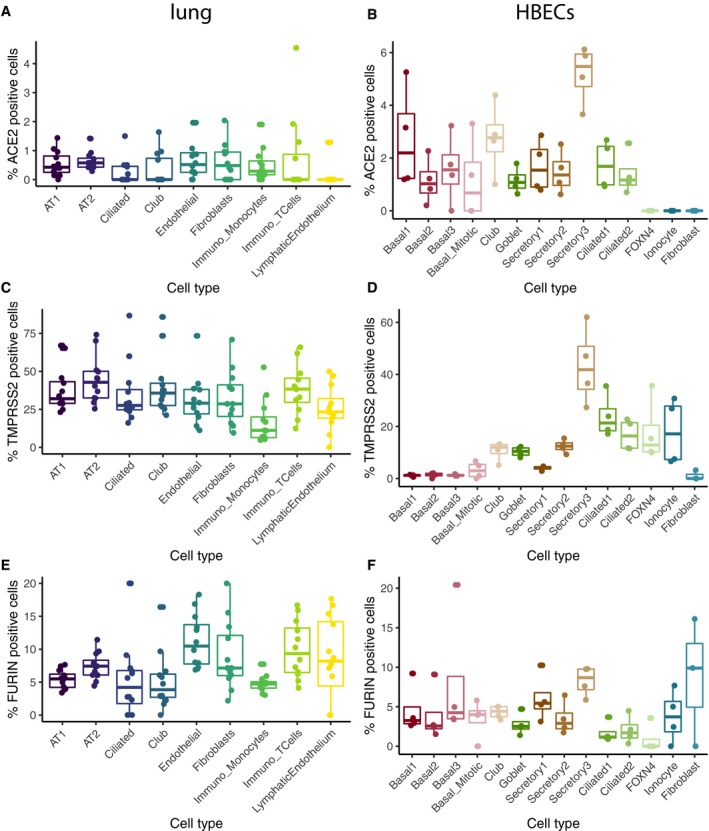
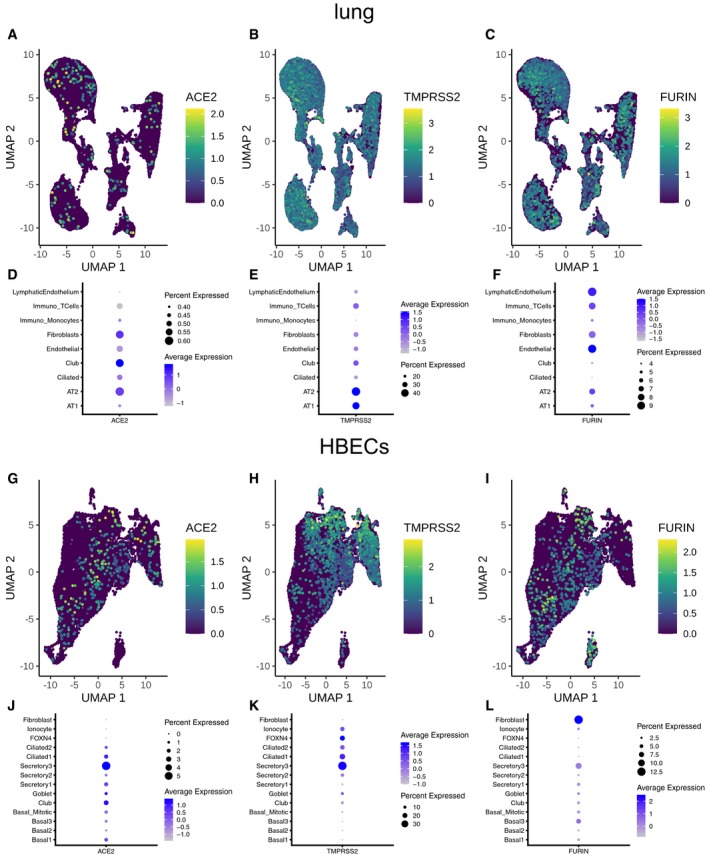
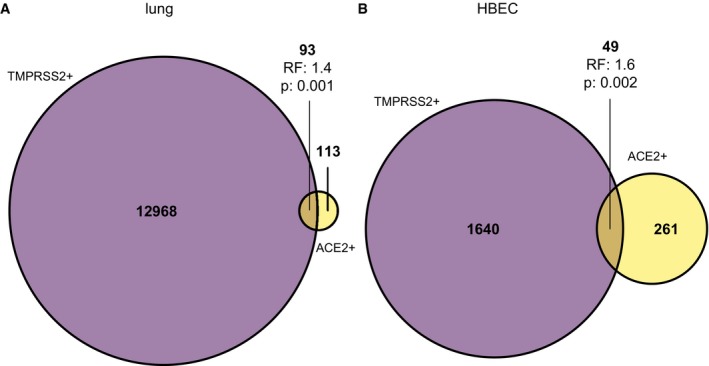
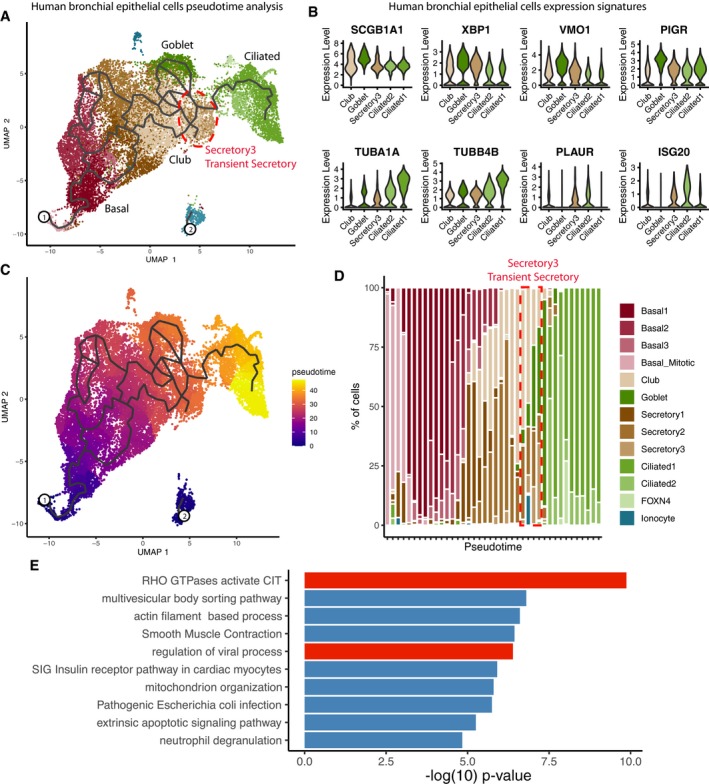
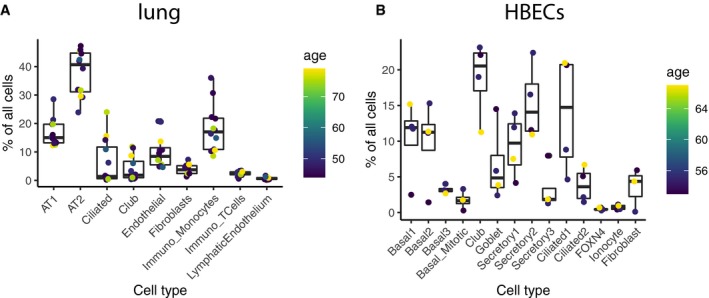
The SARS-CoV-2 pandemic affecting the human respiratory system severely challenges public health and urgently demands for increasing our understanding of COVID-19 pathogenesis, especially host factors facilitating virus infection and replication. SARS-CoV-2 was reported to enter cells via binding to ACE2, followed by its priming by TMPRSS2. Here, we investigate ACE2 and TMPRSS2 expression levels and their distribution across cell types in lung tissue (twelve donors, 39,778 cells) and in cells derived from subsegmental bronchial branches (four donors, 17,521 cells) by single nuclei and single cell RNA sequencing, respectively. While TMPRSS2 is strongly expressed in both tissues, in the subsegmental bronchial branches ACE2 is predominantly expressed in a transient secretory cell type. Interestingly, these transiently differentiating cells show an enrichment for pathways related to RHO GTPase function and viral processes suggesting increased vulnerability for SARS-CoV-2 infection. Our data provide a rich resource for future investigations of COVID-19 infection and pathogenesis.
严重影响人类呼吸系统的 SARS-CoV-2 大流行严重挑战着公共卫生,迫切需要我们加深对 COVID-19 发病机制的理解,尤其是宿主因素促进病毒感染和复制。据报道,SARS-CoV-2 通过与 ACE2 结合进入细胞,然后被 TMPRSS2 进行初步修饰。在这里,我们通过单核 RNA 测序分别研究了肺组织(12 个供体,39778 个细胞)和源自亚节段支气管分支的细胞(4 个供体,17521 个细胞)中 ACE2 和 TMPRSS2 的表达水平及其在细胞类型中的分布。虽然 TMPRSS2 在两种组织中均强烈表达,但在亚节段支气管分支中 ACE2 主要在短暂分泌细胞类型中表达。有趣的是,这些短暂分化的细胞富集了与 RHO GTPase 功能和病毒过程相关的途径,表明它们对 SARS-CoV-2 感染的易感性增加。我们的数据为未来 COVID-19 感染和发病机制的研究提供了丰富的资源。