Li Yi-Ming, Li Zhuo-Lun, Chen Fei, Liu Qi, Peng Yong, Chen Mao
Department of Cardiology, West China Hospital, Sichuan University, 37 Guoxue Street, Chengdu, 610041, China.
Department of Computer Science and Engineering, Tandon School of Engineering, New York University, New York, USA.
J Transl Med. 2020 Apr 6;18(1):157. doi: 10.1186/s12967-020-02319-7.
The formal risk assessment is essential in the management of acute coronary syndrome (ACS). In this study, we develop a risk model for the prediction of 3-year mortality for Chinese ACS patients with machine learning algorithms.
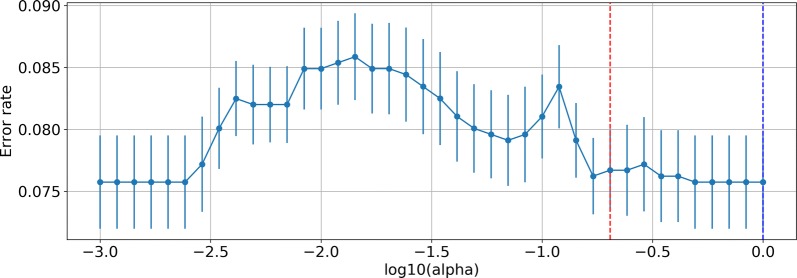
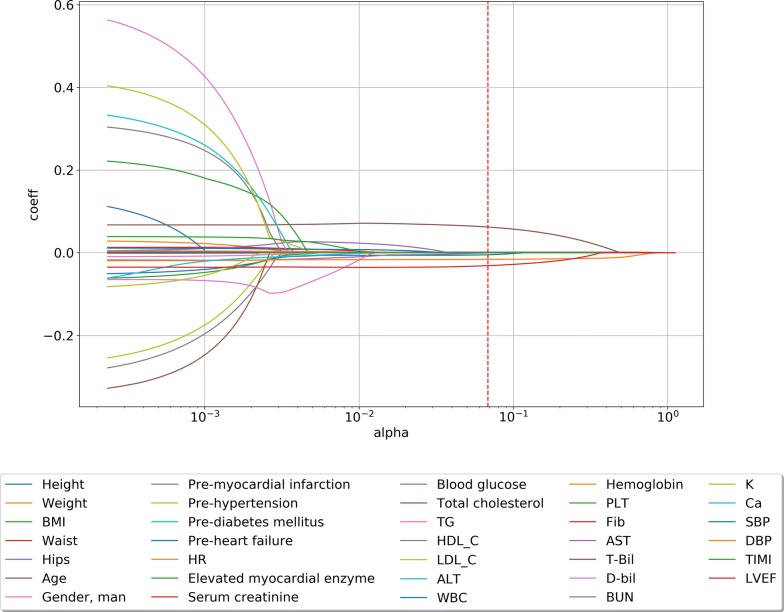
A total of 2174 consecutive patients who underwent angiography with ACS were enrolled. The missing data among baseline characteristics were imputed using the MissForest algorithm based on random forest method. In model development, a least absolute shrinkage and selection operator (LASSO) derived Cox regression with internal tenfold cross-validation was used to identify the predictors for 3-year mortality. The clinical performance was assessed with decision curve analysis.
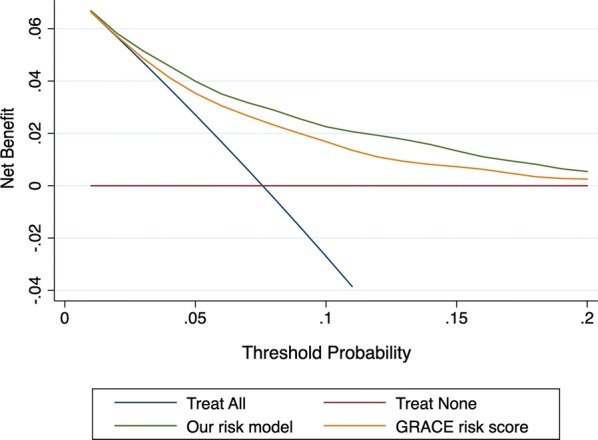
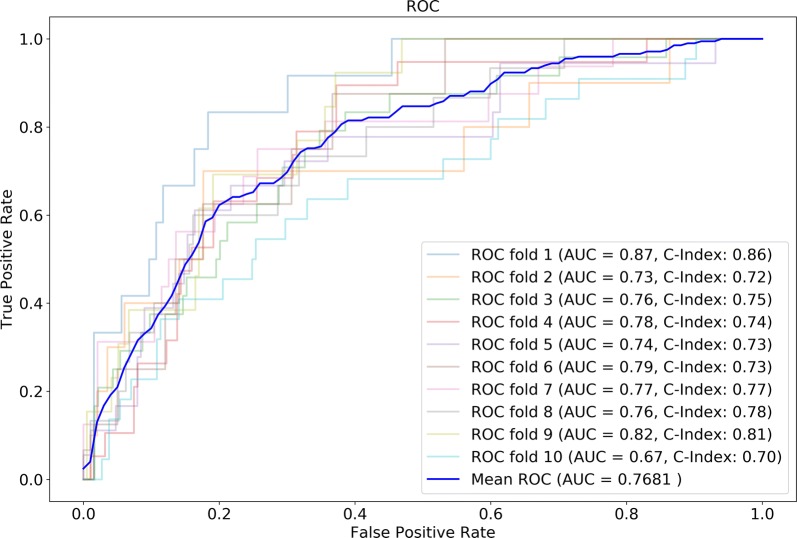
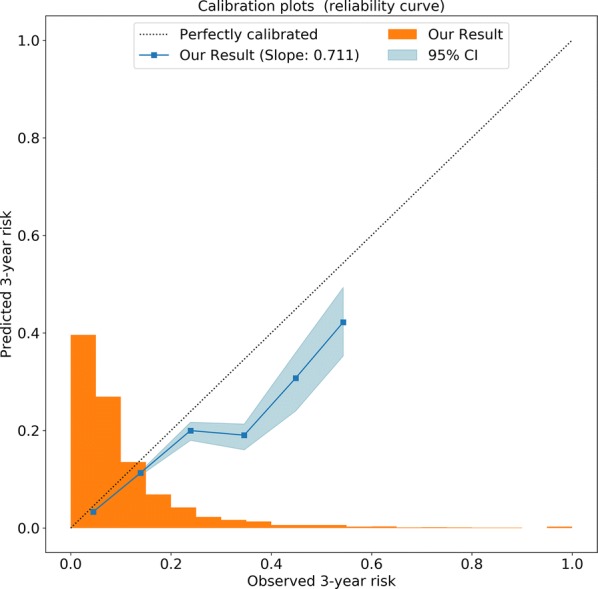
The average follow-up period was 27.82 ± 13.73 months; during the 3 years of follow up, 193 patients died (mortality rate 8.88%). The Kaplan-Meier estimate of 3-year mortality was 0.91 (95% confidence interval (CI): 0.890.92). After feature selection, 6 predictors were identified: Age," "Creatinine," "Hemoglobin," "Platelets," "aspartate transaminase (AST)" and "left ventricular ejection fraction (LVEF)". At tenfold internal validation, our risk model performed well in both discrimination (area under curve (AUC) of receiver operating characteristic (ROC) analysis was 0.768) and calibration (calibration slope was approximately 0.711). As a comparison, the AUC and calibration slope were 0.701 and 0.203 in Global Registry of Acute Coronary Events (GRACE) risk score, respectively. Additionally, the highest net benefit of our model within the entire range of threshold probability for clinical intervention by decision curve analysis demonstrated the superiority of it in daily practice.
Our study developed a prediction model for 3-year morality in Chinese ACS patients. The methods of missing data imputation and model derivation base on machine learning algorithms improved the ability of prediction. . Trial registration ChiCTR, ChiCTR-OOC-17010433. Registered 17 February 2017-Retrospectively registered.
正式的风险评估在急性冠状动脉综合征(ACS)的管理中至关重要。在本研究中,我们使用机器学习算法开发了一个预测中国ACS患者3年死亡率的风险模型。
共纳入2174例连续接受ACS血管造影的患者。基于随机森林方法,使用MissForest算法对基线特征中的缺失数据进行插补。在模型开发中,使用具有内部十折交叉验证的最小绝对收缩和选择算子(LASSO)推导的Cox回归来识别3年死亡率的预测因素。通过决策曲线分析评估临床性能。
平均随访期为27.82±13.73个月;在3年的随访期间,193例患者死亡(死亡率8.88%)。3年死亡率的Kaplan-Meier估计值为0.91(95%置信区间(CI):0.89-0.92)。经过特征选择,确定了6个预测因素:年龄、肌酐、血红蛋白、血小板、天冬氨酸转氨酶(AST)和左心室射血分数(LVEF)。在十折内部验证中,我们的风险模型在区分能力(受试者操作特征(ROC)分析的曲线下面积(AUC)为0.768)和校准(校准斜率约为0.711)方面均表现良好。作为比较,急性冠状动脉事件全球注册研究(GRACE)风险评分的AUC和校准斜率分别为0.701和0.203。此外,通过决策曲线分析,我们的模型在临床干预阈值概率的整个范围内具有最高的净效益,证明了其在日常实践中的优越性。
我们的研究开发了一个预测中国ACS患者3年死亡率的模型。基于机器学习算法的缺失数据插补和模型推导方法提高了预测能力。试验注册:中国临床试验注册中心,ChiCTR-OOC-17010433。2017年2月17日注册——回顾性注册。