Department of Biological, Chemical and Pharmaceutical Sciences and Technologies (STEBICEF), University of Palermo, Viale delle Scienze, Palermo 90128, Italy.
Council for Agricultural Research and Economics (CREA), Research Centre for Plant Protection and Certification (CREA-DC), Bagheria, Italy.
Oxid Med Cell Longev. 2020 Mar 18;2020:3818196. doi: 10.1155/2020/3818196. eCollection 2020.
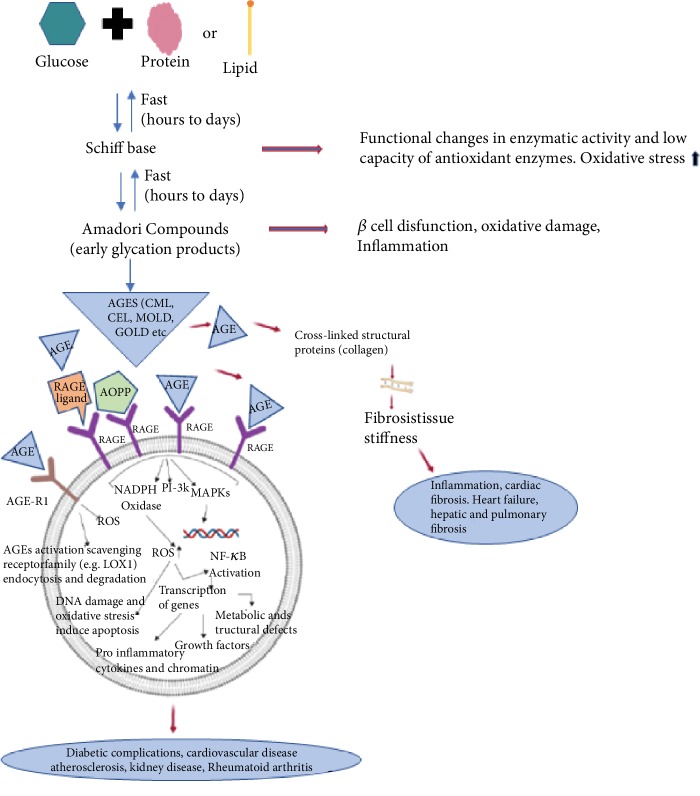
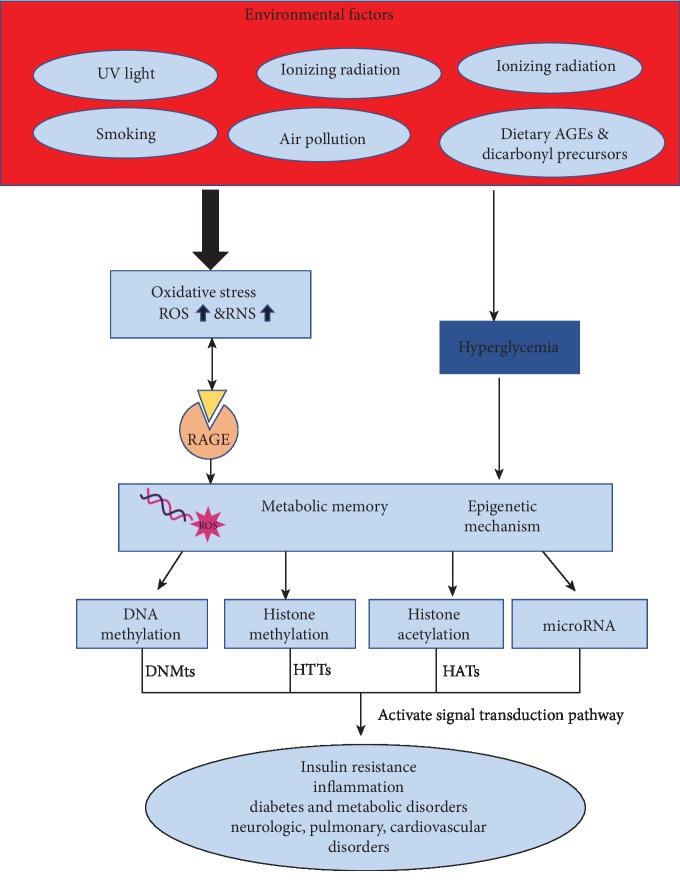
The advanced glycation end products (AGEs) are organic molecules formed in any living organisms with a great variety of structural and functional properties. They are considered organic markers of the glycation process. Due to their great heterogeneity, there is no specific test for their operational measurement. In this review, we have updated the most common chromatographic, colorimetric, spectroscopic, mass spectrometric, and serological methods, typically used for the determination of AGEs in biological samples. We have described their signaling and signal transduction mechanisms and cell epigenetic effects. Although mass spectrometric analysis is not widespread in the detection of AGEs at the clinical level, this technique is highly promising for the early diagnosis and therapeutics of diseases caused by AGEs. Protocols are available for high-resolution mass spectrometry of glycated proteins although they are characterized by complex machine management. Simpler procedures are available although much less precise than mass spectrometry. Among them, immunochemical tests are very common since they are able to detect AGEs in a simple and immediate way. In these years, new methodologies have been developed using an novel and noninvasive spectroscopic methods. These methods are based on the measurement of autofluorescence of AGEs. Another method consists of detecting AGEs in the human skin to detect chronic exposure, without the inconvenience of invasive methods. The aim of this review is to compare the different approaches of measuring AGEs at a clinical perspective due to their strict association with oxidative stress and inflammation.
糖基化终产物 (AGEs) 是在任何具有多种结构和功能特性的生物体中形成的有机分子。它们被认为是糖基化过程的有机标志物。由于其高度异质性,没有用于操作测量的特定测试。在这篇综述中,我们更新了最常见的色谱、比色、光谱、质谱和血清学方法,这些方法通常用于测定生物样品中的 AGEs。我们描述了它们的信号转导机制和细胞表观遗传效应。尽管质谱分析在临床水平上检测 AGEs 并不广泛,但该技术对于由 AGEs 引起的疾病的早期诊断和治疗具有很高的前景。尽管高分辨率质谱分析的仪器管理复杂,但已经有用于糖化蛋白的高分辨率质谱分析的方案。尽管不如质谱分析精确,但也有更简单的程序。其中,免疫化学测试非常常见,因为它们能够以简单和直接的方式检测 AGEs。近年来,已经开发了使用新型非侵入性光谱方法的新方法。这些方法基于 AGEs 自体荧光的测量。另一种方法是检测人体皮肤中的 AGEs,以检测慢性暴露,而无需进行侵入性方法的不便。本综述的目的是比较在临床角度测量 AGEs 的不同方法,因为它们与氧化应激和炎症密切相关。