El-Akabawy Nadia, Rodriguez Martin, Ramamurthy Ritu, Rabah Andrew, Trevisan Brady, Morsi Alshaimaa, George Sunil, Shields Jordan, Meares Diane, Farland Andrew, Atala Anthony, Doering Christopher B, Spencer H Trent, Porada Christopher D, Almeida-Porada Graça
Wake Forest Institute for Regenerative Medicine, Fetal Research and Therapy Program, Wake Forest School of Medicine, Winston-Salem, NC 27101, USA.
Zagazig University Faculty of Medicine, Zagazig, Egypt.
Mol Ther Methods Clin Dev. 2020 Mar 14;17:465-477. doi: 10.1016/j.omtm.2020.03.001. eCollection 2020 Jun 12.
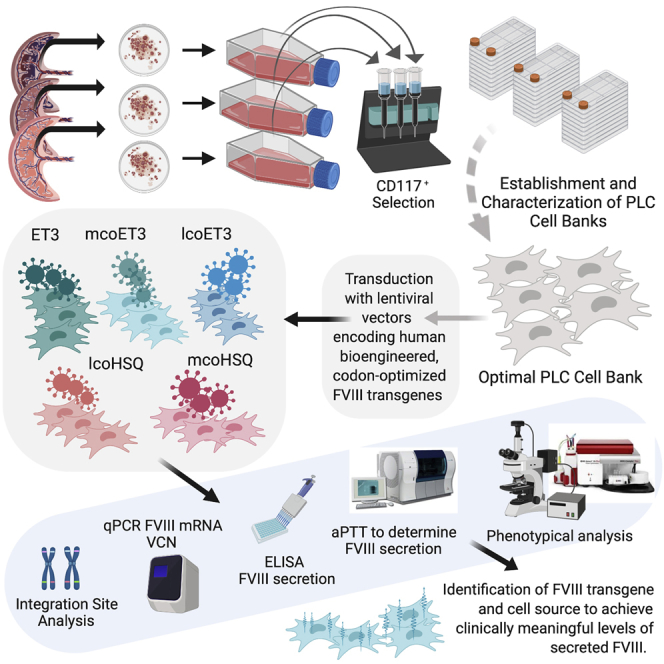
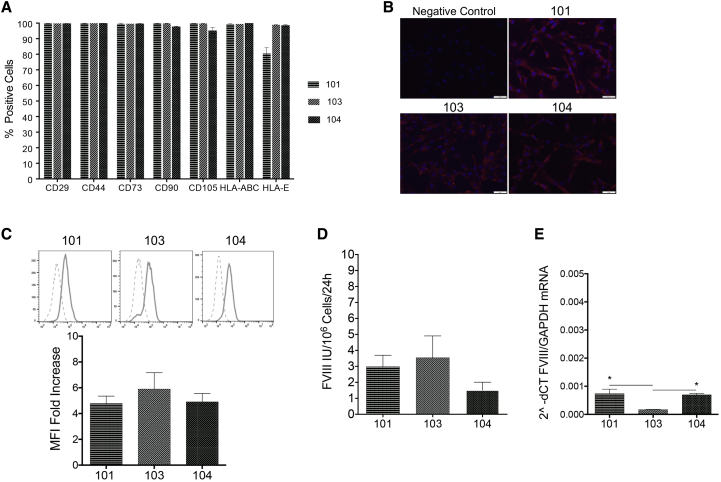
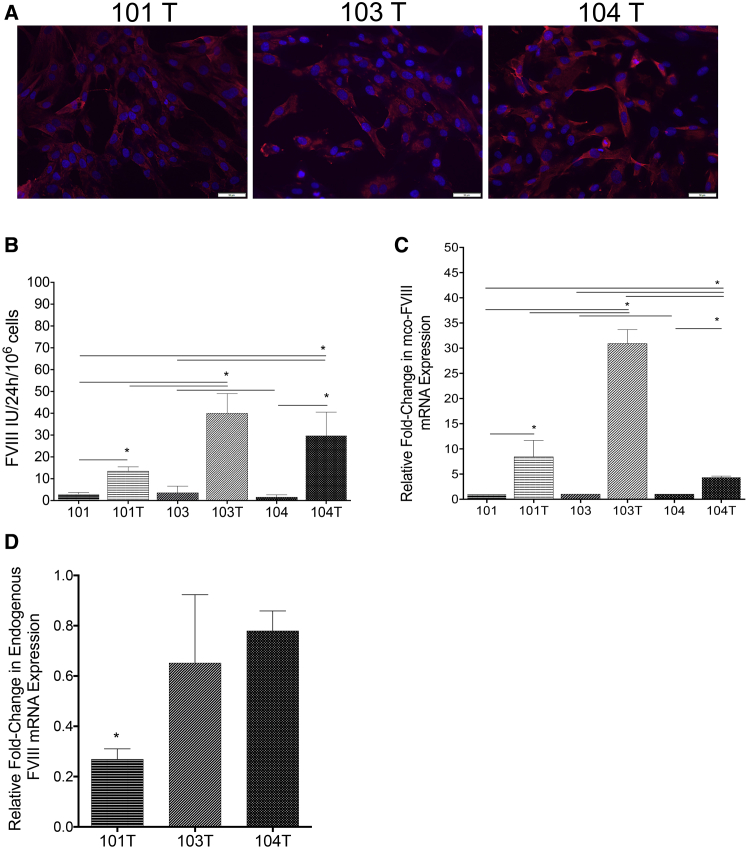
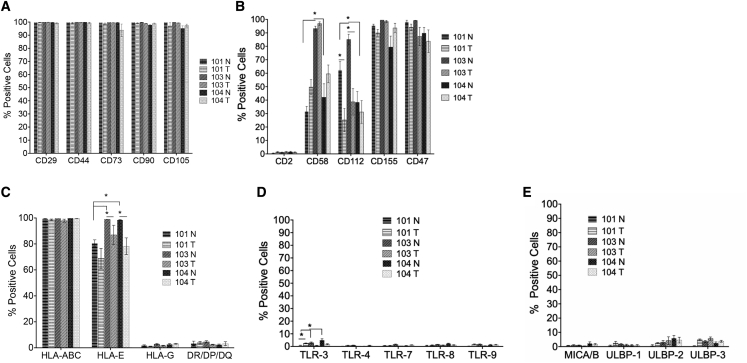
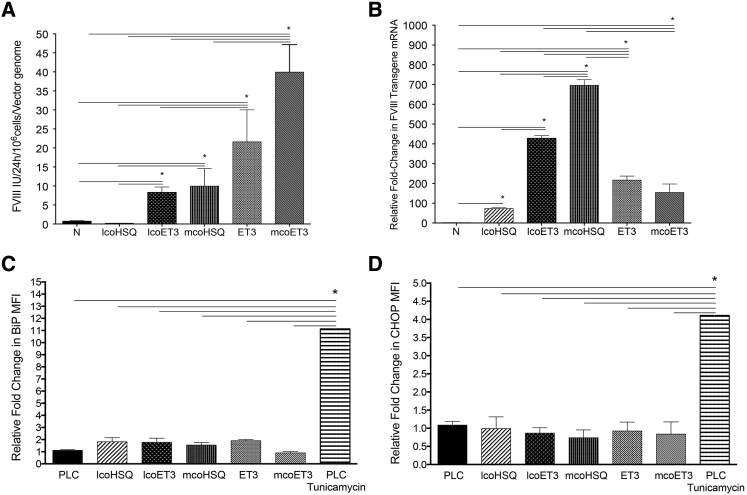
The delivery of factor VIII (FVIII) through gene and/or cellular platforms has emerged as a promising hemophilia A treatment. Herein, we investigated the suitability of human placental cells (PLCs) as delivery vehicles for FVIII and determined an optimal FVIII transgene to produce/secrete therapeutic FVIII levels from these cells. Using three PLC cell banks we demonstrated that PLCs constitutively secreted low levels of FVIII, suggesting their suitability as a transgenic FVIII production platform. Furthermore, PLCs significantly increased FVIII secretion after transduction with a lentiviral vector (LV) encoding a myeloid codon-optimized bioengineered FVIII containing high-expression elements from porcine FVIII. Importantly, transduced PLCs did not upregulate cellular stress or innate immunity molecules, demonstrating that after transduction and FVIII production/secretion, PLCs retained low immunogenicity and cell stress. When LV encoding five different bioengineered FVIII transgenes were compared for transduction efficiency, FVIII production, and secretion, data showed that PLCs transduced with LV encoding hybrid human/porcine FVIII transgenes secreted substantially higher levels of FVIII than did LV encoding B domain-deleted human FVIII. In addition, data showed that in PLCs, myeloid codon optimization is needed to increase FVIII secretion to therapeutic levels. These studies have identified an optimal combination of FVIII transgene and cell source to achieve clinically meaningful levels of secreted FVIII.
通过基因和/或细胞平台递送凝血因子VIII(FVIII)已成为一种有前景的A型血友病治疗方法。在此,我们研究了人胎盘细胞(PLCs)作为FVIII递送载体的适用性,并确定了一种最佳的FVIII转基因,以从这些细胞中产生/分泌治疗性FVIII水平。使用三个PLC细胞库,我们证明PLCs组成性分泌低水平的FVIII,表明它们适合作为转基因FVIII生产平台。此外,在用编码含有来自猪FVIII的高表达元件的髓系密码子优化的生物工程FVIII的慢病毒载体(LV)转导后,PLCs显著增加了FVIII的分泌。重要的是,转导的PLCs没有上调细胞应激或先天免疫分子,表明在转导和FVIII产生/分泌后,PLCs保持低免疫原性和细胞应激。当比较编码五种不同生物工程FVIII转基因的LV的转导效率、FVIII产生和分泌时,数据显示,用编码人/猪杂交FVIII转基因的LV转导的PLCs分泌的FVIII水平明显高于编码B结构域缺失的人FVIII的LV。此外,数据显示,在PLCs中,需要进行髓系密码子优化以将FVIII分泌增加到治疗水平。这些研究确定了FVIII转基因和细胞来源的最佳组合,以实现临床上有意义的分泌FVIII水平。