Dominic C D Midhun, Joseph Rani, Begum P M Sabura, Joseph Meera, Padmanabhan Dileep, Morris Leonna Angela, Kumar Athira S, Formela Krzysztof
Department of Chemistry, Sacred Heart College (Autonomous), Kochi, Kerala PIN-682013, India.
Department of Applied Chemistry, Cochin University of Science and Technology (CUSAT), Kerala PIN-682022, India.
Polymers (Basel). 2020 Apr 4;12(4):814. doi: 10.3390/polym12040814.
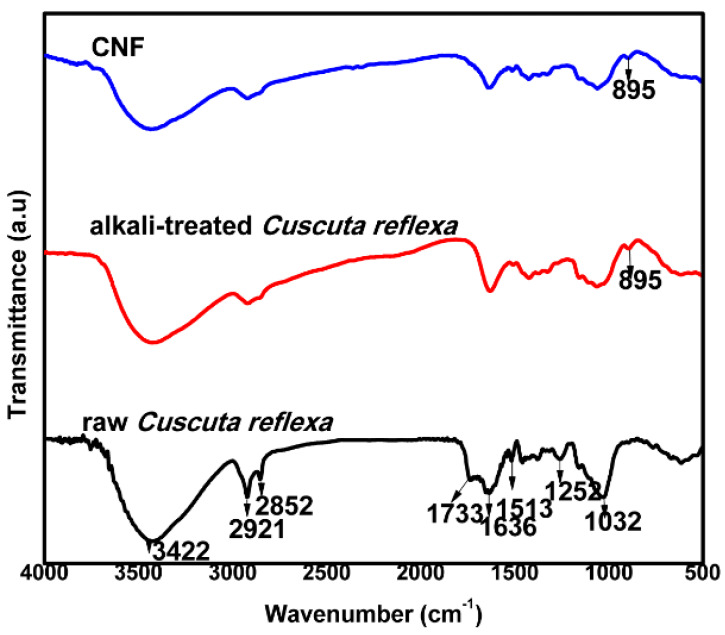
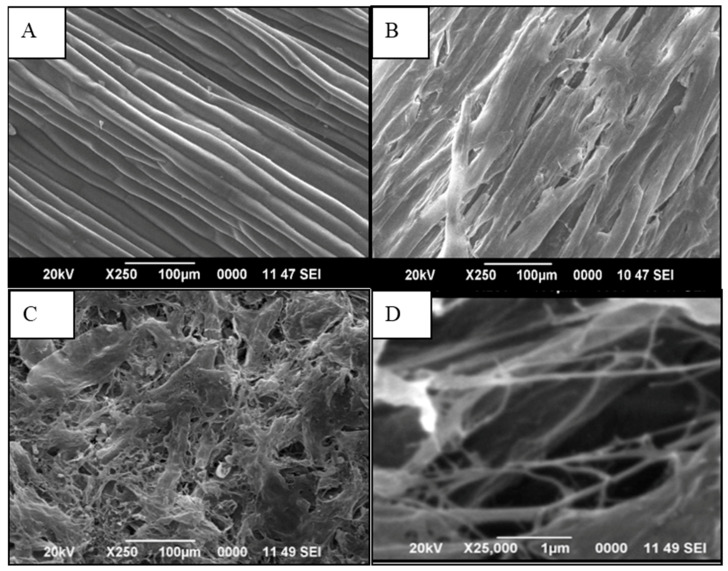
In the present work, we used the steam explosion method for the isolation of cellulose nanofiber (CNF) from , a parasitic plant commonly seen in Kerala and we evaluated its reinforcing efficiency in natural rubber (NR). Fourier Transform Infrared Spectroscopy (FTIR), X-Ray Diffraction (XRD), Scanning Electron Microscopy (SEM), Transmission Electron Microscopy (TEM), and Thermogravimetric analysis (TGA) techniques indicated that type I cellulose nanofibers, with diameter: 10-30 nm and a 67% crystallinity index were obtained by the proposed method. The results showed that application of CNF in NR based nanocomposites resulted in significant improvement of their processing and performance properties. It was observed that the tensile strength and tear strength of NR/CNF nanocomposites are found to be a maximum at 2 phr CNF loading, which corresponds with the studies of equilibrium swelling behavior. Dynamic mechanical analysis, thermogravimetric analysis, and morphological studies of tensile fractured samples also confirm that CNF isolated from plant can be considered as a promising green reinforcement for rubbers.
在本研究中,我们采用蒸汽爆破法从一种在喀拉拉邦常见的寄生植物中分离出纤维素纳米纤维(CNF),并评估了其在天然橡胶(NR)中的增强效率。傅里叶变换红外光谱(FTIR)、X射线衍射(XRD)、扫描电子显微镜(SEM)、透射电子显微镜(TEM)和热重分析(TGA)技术表明,通过该方法获得了直径为10 - 30 nm、结晶度指数为67%的I型纤维素纳米纤维。结果表明,在基于NR的纳米复合材料中应用CNF可显著改善其加工性能和性能。观察到,在CNF用量为2 phr时,NR/CNF纳米复合材料的拉伸强度和撕裂强度达到最大值,这与平衡溶胀行为的研究结果一致。拉伸断裂样品的动态力学分析、热重分析和形态学研究也证实,从该植物中分离出的CNF可被视为一种有前景的橡胶绿色增强剂。