Lu Li, Zhan Sheng, Liu Xiaohui, Zhao Xin, Lin Xiukun, Xu Huanli
Department of Pharmacology, School of Basic Medical Sciences, Capital Medical University, Beijing, China.
The Second Affiliated Hospital of Southern University of Science and Technology, Shenzhen, China.
Front Pharmacol. 2020 Mar 20;11:292. doi: 10.3389/fphar.2020.00292. eCollection 2020.
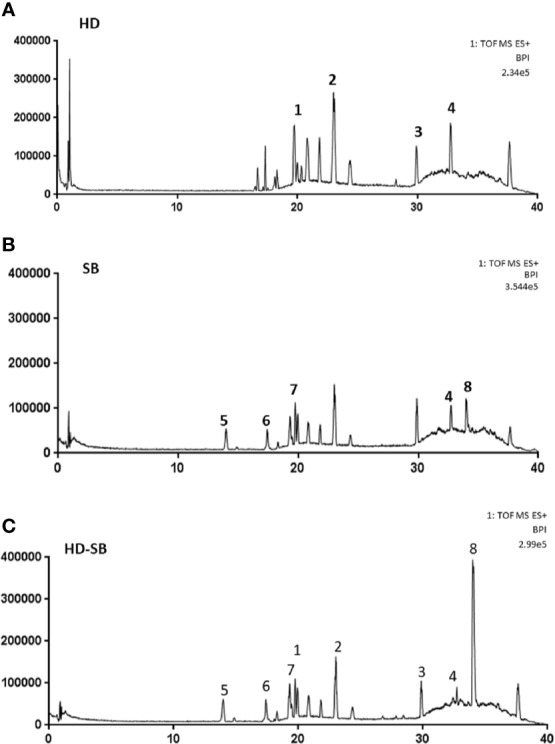
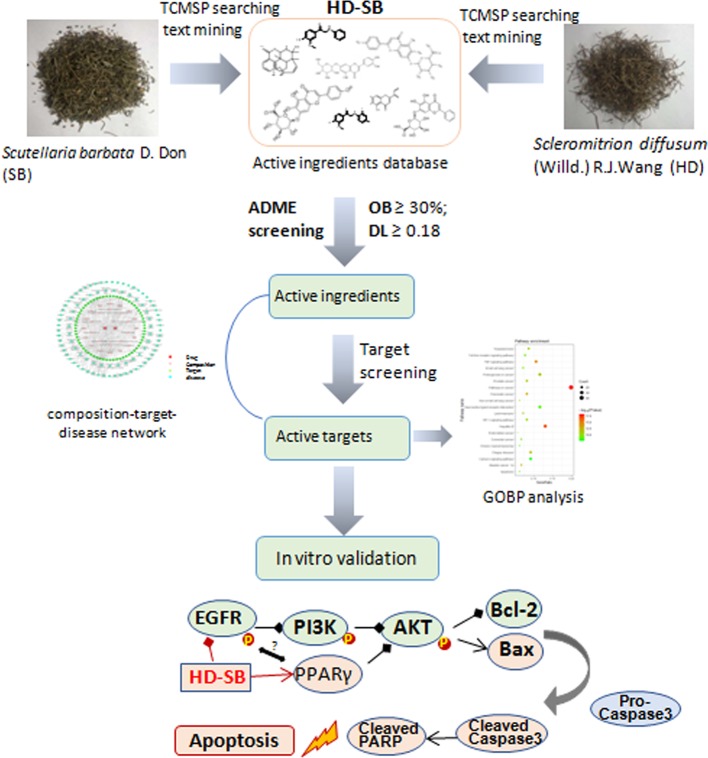
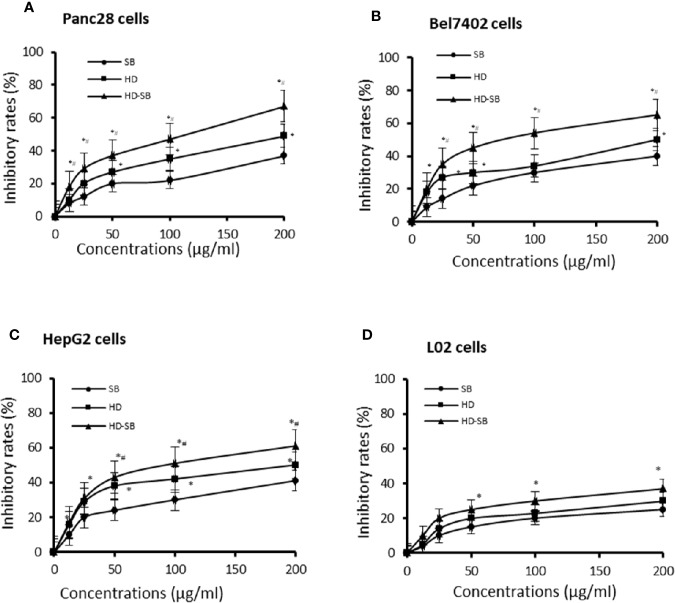
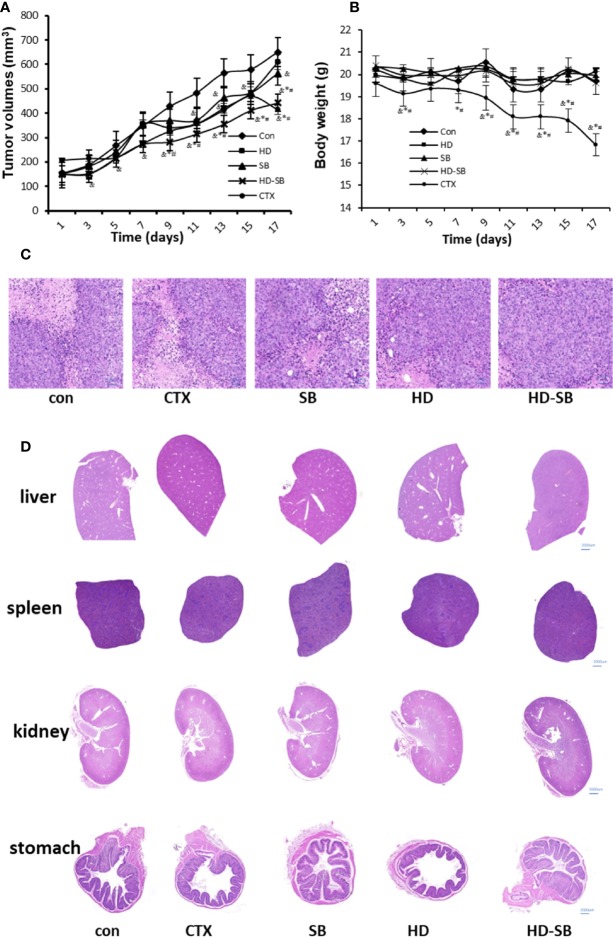
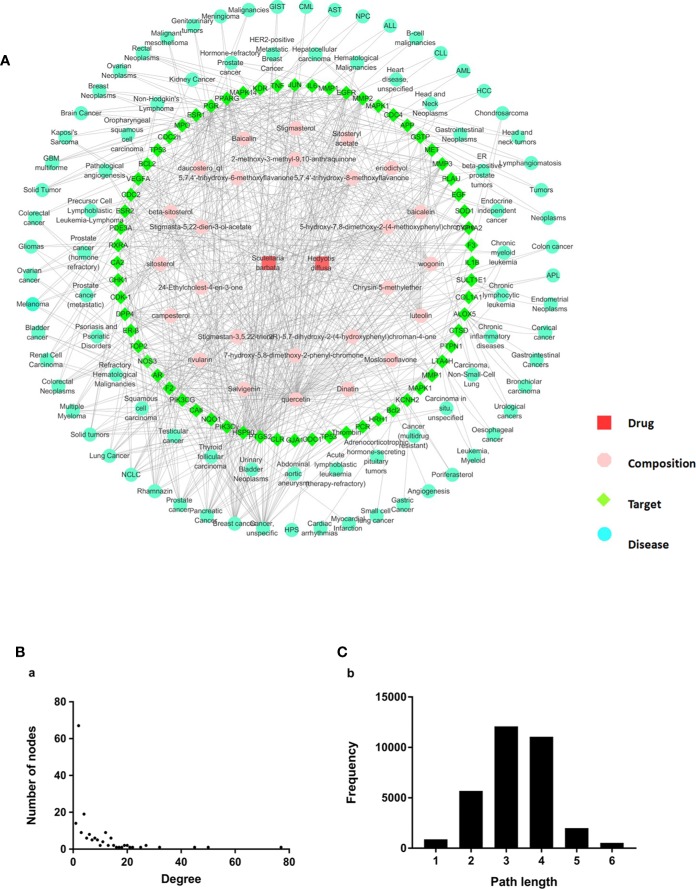
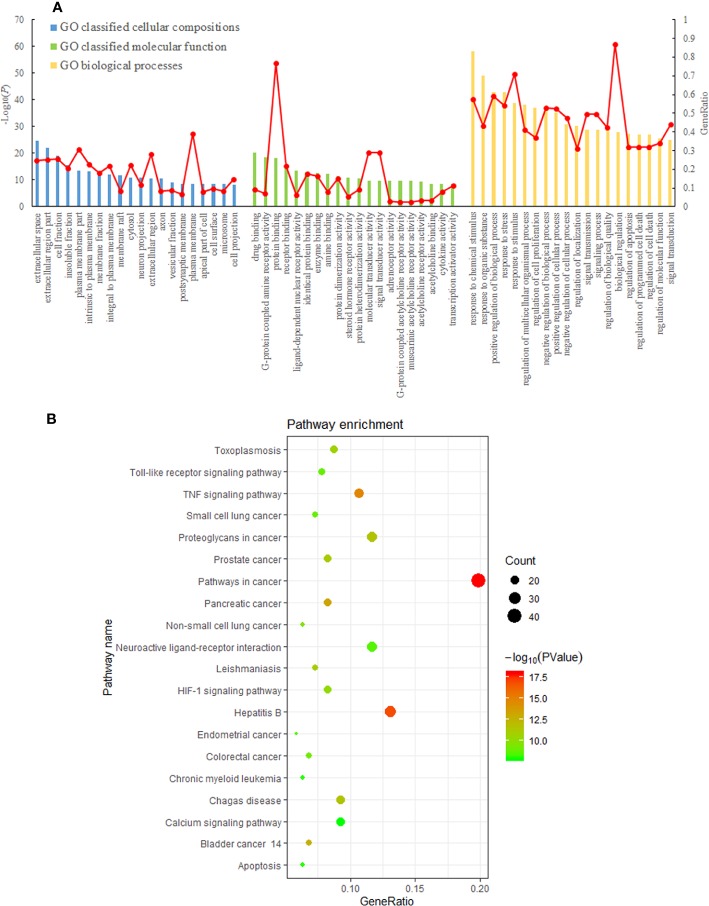
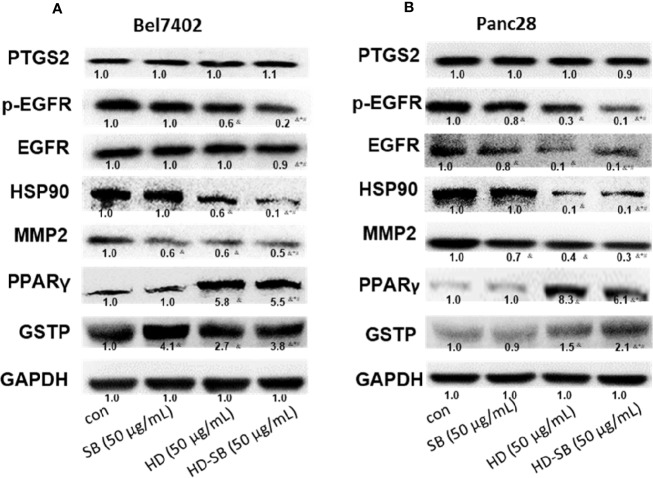
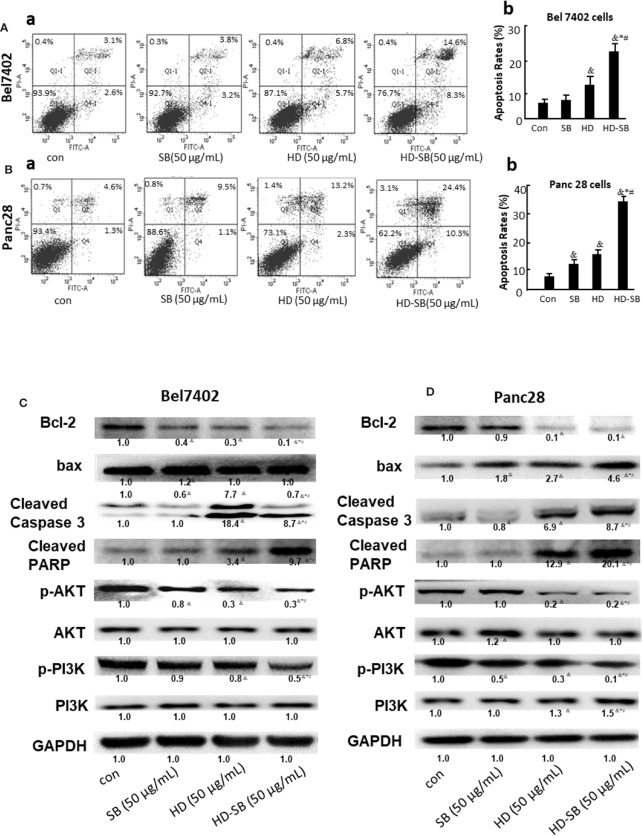
Herb pair (Willd.) R. J. Wang (HD) and D. Don (SB) has been most frequently used for cancer treatment in traditional Chinese medicine. This study aimed to explore the and antitumor effects of HD-SB extract and to elucidate the underlying compatibility mechanisms. HD, SB, and HD-SB extracts were prepared, and the components were detected by ultraperformance liquid chromatography coupled with quadrupole time-of-flight mass spectrometry method. The antitumor effects of various concentrations of these extract were detected on several tumor cell lines using MTS assay. The antitumor effects were evaluated in Panc28 cells-bearing nude mice model. The compatibility mechanisms of herb pair HD-SB were evaluated based on the systems pharmacology strategy and then validated by cellular experiments. HD-SB extract was demonstrated to inhibit the proliferation of the cancer cell lines dose dependently by MTS assay. antitumor effects of HD-SB were much more potent than either of the two single herbs in Panc28 xenograft mice model. A total 29 active ingredients involved in antitumor effects were selected from HD and SB, and the "herb-composition-target-disease" network was constructed. Then, 58 cancer-related targets and 66 KEGG pathways were identified, and PTGS2-, HSP90-, EGFR-, MMP2-, PPARγ-, and GSTP-mediated pathways were predicted to be the antitumor mechanisms of HD-SB. The cellular experiments showed that HD-SB significantly induced cancer cell apoptosis, decreased p-EGFR, HSP90 and bcl-2 expressions, and increased PPARγ, bax, cleaved caspase 3, cleaved PARP, p-AKT, and p-PI3K expressions compared with HD or SB treatment. Our study showed that HD-SB inhibited tumor growth both and , which might be related with apoptosis induction the EGFR/PPARγ/PI3K/AKT pathway.
药对(威灵仙)王瑞杰(HD)和川续断(SB)在传统中医中最常用于癌症治疗。本研究旨在探讨HD-SB提取物的抗肿瘤作用并阐明其潜在的配伍机制。制备了HD、SB和HD-SB提取物,并采用超高效液相色谱-四极杆飞行时间质谱法检测其成分。使用MTS法检测不同浓度的这些提取物对几种肿瘤细胞系的抗肿瘤作用。在荷Panc28细胞的裸鼠模型中评估抗肿瘤作用。基于系统药理学策略评估药对HD-SB的配伍机制,然后通过细胞实验进行验证。通过MTS法证明HD-SB提取物能剂量依赖性地抑制癌细胞系的增殖。在Panc28异种移植小鼠模型中,HD-SB的抗肿瘤作用比两种单味药中的任何一种都要强得多。从HD和SB中筛选出29种参与抗肿瘤作用的活性成分,构建了“草药-成分-靶点-疾病”网络。然后,鉴定出58个癌症相关靶点和66条KEGG通路,并预测PTGS2-、HSP90-、EGFR-、MMP2-、PPARγ-和GSTP介导的通路是HD-SB的抗肿瘤机制。细胞实验表明,与HD或SB处理相比,HD-SB显著诱导癌细胞凋亡,降低p-EGFR、HSP90和bcl-2表达,并增加PPARγ、bax、裂解的caspase 3、裂解的PARP、p-AKT和p-PI3K表达。我们的研究表明,HD-SB在体内和体外均抑制肿瘤生长,这可能与通过EGFR/PPARγ/PI3K/AKT途径诱导凋亡有关。