Douarre Pierre-Emmanuel, Mallet Ludovic, Radomski Nicolas, Felten Arnaud, Mistou Michel-Yves
Agence Nationale de Sécurité Sanitaire de l'Alimentation, de l'Environnement et du Travail, Laboratory for Food Safety, Paris, France.
INRAE, MaIAGE, Université Paris-Saclay, Jouy-en-Josas, France.
Front Microbiol. 2020 Mar 24;11:483. doi: 10.3389/fmicb.2020.00483. eCollection 2020.
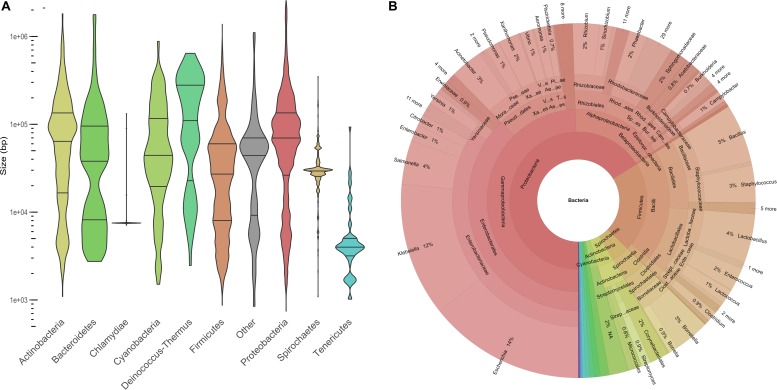
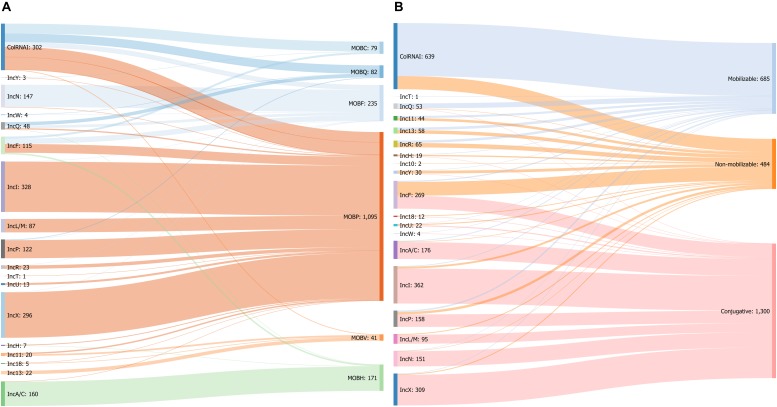
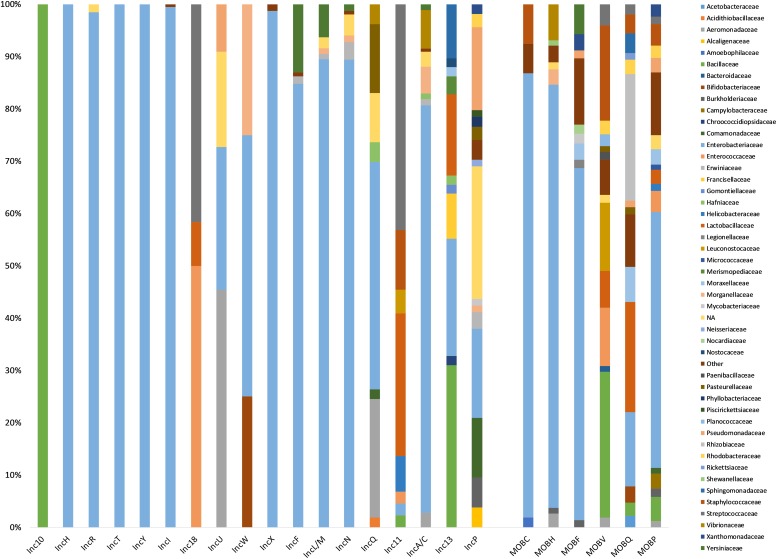
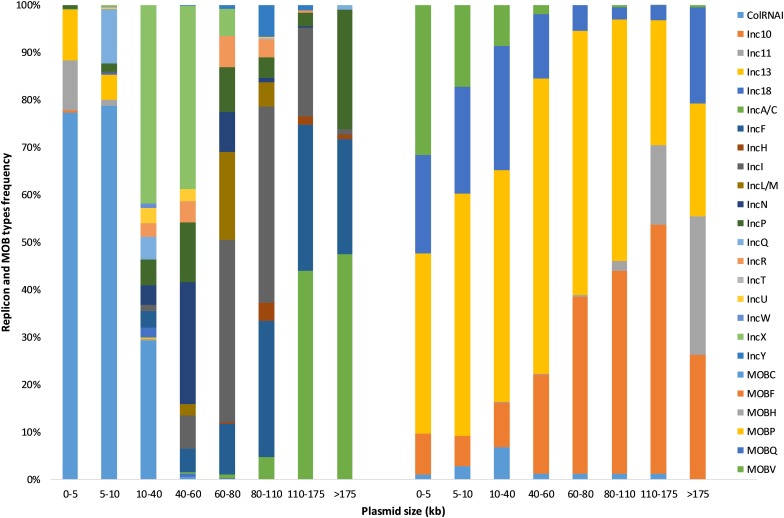
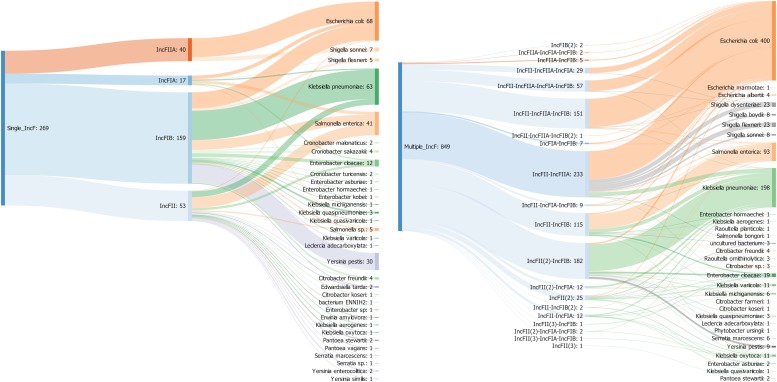
Plasmids are genetic elements that enable rapid adaptation and evolution by transferring genes conferring selective advantages to their hosts. Conjugative plasmids are predominantly responsible for the global dissemination of antimicrobial resistance, representing an important threat to global health. As the number of plasmid sequences grows exponentially, it becomes critical to depict the global diversity and decipher the distribution of circulating plasmids in the bacterial community. To this end, we created COMPASS, a novel and comprehensive database compiling 12,084 complete plasmids with associated metadata from 1571 distinct species isolated worldwide over more than 100 years. The curation of the database allowed us to identify identical plasmids across different bacteria revealing mainly intraspecies dissemination and rare cases of horizontal transmission. We outlined and analyzed all relevant features, plasmid properties, host range and characterized their replication and mobilization systems. After an exhaustive comparison of PlasmidFinder and MOB-typer, the MOB-typer-based analysis revealed that the current knowledge embedded in the current typing schemes fails to classify all the plasmid sequences collected in COMPASS. We were able to categorize 6828 and 5229 plasmids by replicon and MOB typing, respectively, mostly associated with and We then searched for the presence of multiple core genes involved in replication and propagation. Our results showed that 2403 plasmids carried multiple replicons that were distributed in 206 bacterial species. The co-integration of replicon types from different incompatibility (Inc) groups is an adaptive mechanism, which plays an important role in plasmid survival and dissemination by extending their host range. Our results highlight the crucial role of IncF alleles (present in 56% of all multireplicons) and revealed that IncH, IncR, and IncU replicons were also frequently carried in multireplicons. Here, we provided a comprehensive picture of the different IncF subtypes by identifying 20 different profiles in 849 IncF multireplicons, which were mostly associated with . These results could provide the basis for a novel IncF plasmid nomenclature based on different allelic profiles.
质粒是一种遗传元件,可通过转移赋予宿主选择性优势的基因来实现快速适应和进化。接合性质粒是全球抗菌药物耐药性传播的主要原因,对全球健康构成重大威胁。随着质粒序列数量呈指数级增长,描绘全球多样性并解读细菌群落中循环质粒的分布变得至关重要。为此,我们创建了COMPASS,这是一个新颖且全面的数据库,汇编了12084个完整质粒以及来自100多年来在全球分离的1571个不同物种的相关元数据。数据库的整理使我们能够识别不同细菌中的相同质粒,这主要揭示了种内传播以及罕见的水平传播情况。我们概述并分析了所有相关特征、质粒特性、宿主范围,并对它们的复制和转移系统进行了表征。在对PlasmidFinder和MOB - typer进行详尽比较后,基于MOB - typer的分析表明,当前分型方案中所包含的现有知识无法对COMPASS中收集的所有质粒序列进行分类。我们能够分别通过复制子和MOB分型对6828个和5229个质粒进行分类,这些质粒大多与……相关。然后,我们搜索了参与复制和传播的多个核心基因的存在情况。我们的结果表明,2403个质粒携带多个复制子,这些复制子分布在206个细菌物种中。来自不同不相容性(Inc)组的复制子类型的共整合是一种适应性机制,通过扩大宿主范围在质粒的存活和传播中发挥重要作用。我们的结果突出了IncF等位基因(存在于所有多复制子的56%中)的关键作用,并表明IncH、IncR和IncU复制子也经常存在于多复制子中。在这里,我们通过在849个IncF多复制子中识别出20种不同特征,提供了不同IncF亚型的全面情况,这些多复制子大多与……相关。这些结果可为基于不同等位基因特征的新型IncF质粒命名法提供基础。