Zou Fang-Wen, Tang Yi-Fang, Liu Chao-Yuan, Ma Jin-An, Hu Chun-Hong
Department of Oncology, The Second Xiangya Hospital of Central South University, Changsha, China.
Department of Anesthesiology, The Second Xiangya Hospital of Central South University, Changsha, China.
Front Genet. 2020 Mar 24;11:200. doi: 10.3389/fgene.2020.00200. eCollection 2020.
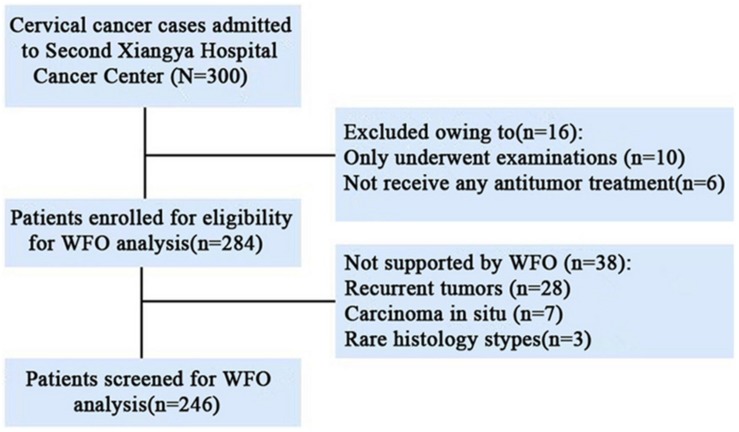
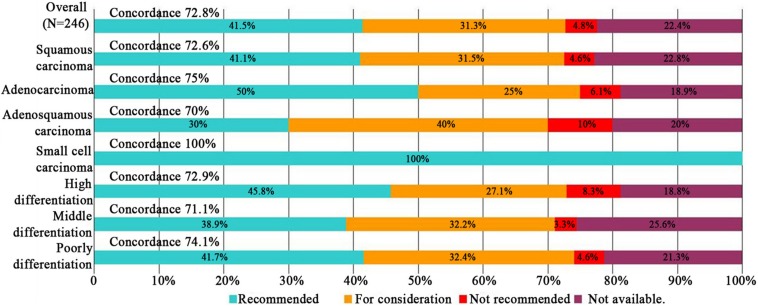
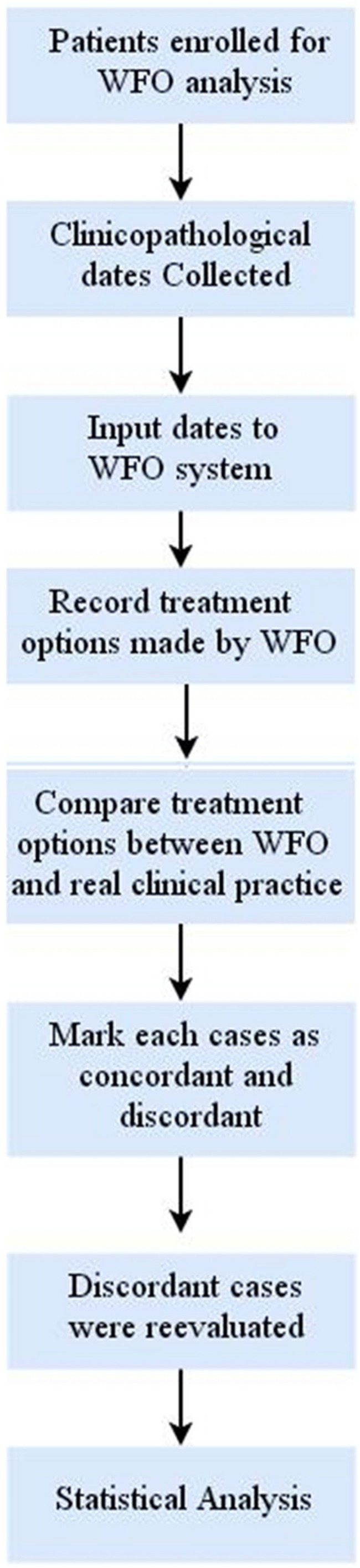
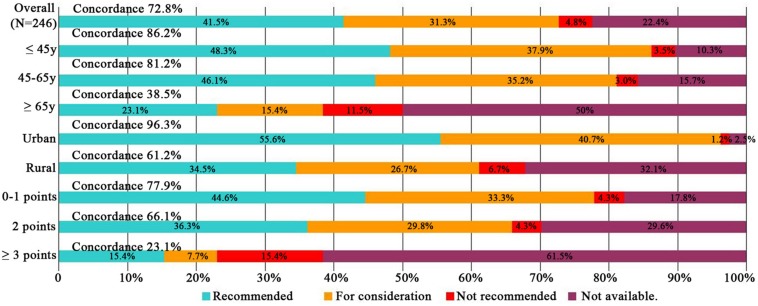
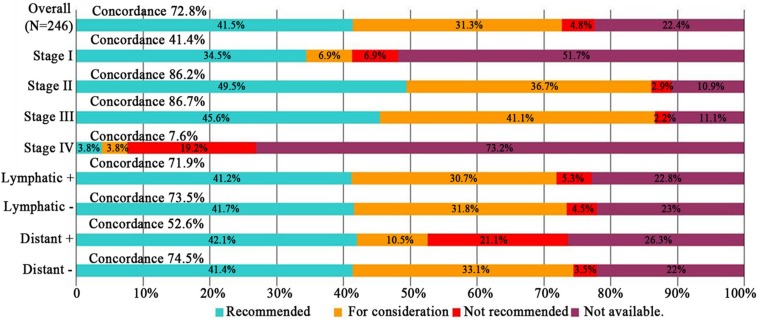
Watson for Oncology (WFO) is a artificial intelligence clinical decision-support system with evidence-based treatment options for oncologists. WFO has been gradually used in China, but limited reports on whether WFO is suitable for Chinese patients. This study aims to investigate the concordance of treatment options between WFO and real clinical practice for Cervical cancer patients retrospectively. We retrospectively enrolled 300 cases of cervical cancer patients. WFO provides treatment options for 246 supported cases. Real clinical practice were defined as concordant if treatment options were designated "recommended" or "for consideration" by WFO. Concordance of treatment option between WFO and real clinical practice was analyzed statistically. The treatment concordance between WFO and real clinical practice occurred in 72.8% (179/246) of cervical cancer cases. Logistic regression analysis showed that rural registration residences, advanced age, poor ECOG performance status, stages II-IV disease have a remarkable impact on consistency. The main reasons attributed to the 27.2% (67/246) of the discordant cases were the substitution of nedaplatin for cisplatin, reimbursement plan of bevacizumab, surgical preference, and absence of neoadjuvant/adjuvant chemotherapy and PD-1/PD-L1 antibodies recommendations. WFO recommendations were in 72.8% of concordant with real clinical practice for cervical cancer patients in China. However, several localization and individual factors limit its wider application. So, WFO could be an essential tool but it cannot currently replace oncologists. To be rapidly and fully apply to cervical cancer patients in China, accelerate localization and improvement were needed for WFO.
肿瘤学沃森(WFO)是一种人工智能临床决策支持系统,可为肿瘤学家提供基于证据的治疗方案。WFO已逐渐在中国应用,但关于WFO是否适用于中国患者的报道有限。本研究旨在回顾性调查WFO与宫颈癌患者实际临床实践中治疗方案的一致性。我们回顾性纳入了300例宫颈癌患者。WFO为246例支持的病例提供了治疗方案。如果WFO将治疗方案指定为“推荐”或“考虑”,则实际临床实践被定义为一致。对WFO与实际临床实践中治疗方案的一致性进行统计学分析。WFO与实际临床实践之间的治疗一致性在72.8%(179/246)的宫颈癌病例中出现。逻辑回归分析表明,农村户籍、高龄、ECOG体能状态差、II-IV期疾病对一致性有显著影响。27.2%(67/246)不一致病例的主要原因是奈达铂替代顺铂、贝伐单抗的报销计划、手术偏好以及缺乏新辅助/辅助化疗和PD-1/PD-L1抗体推荐。在中国,WFO的建议与宫颈癌患者实际临床实践的一致性为72.8%。然而,一些本地化和个体因素限制了其更广泛的应用。因此,WFO可能是一个重要工具,但目前不能取代肿瘤学家。为了在中国快速全面地应用于宫颈癌患者,WFO需要加快本地化和改进。