Emory Vaccine Center, Emory University, Atlanta, GA, United States.
Center for Global Health Research, Kenya Medical Research Institute, Kisumu, Kenya.
Front Cell Infect Microbiol. 2020 Mar 24;10:120. doi: 10.3389/fcimb.2020.00120. eCollection 2020.
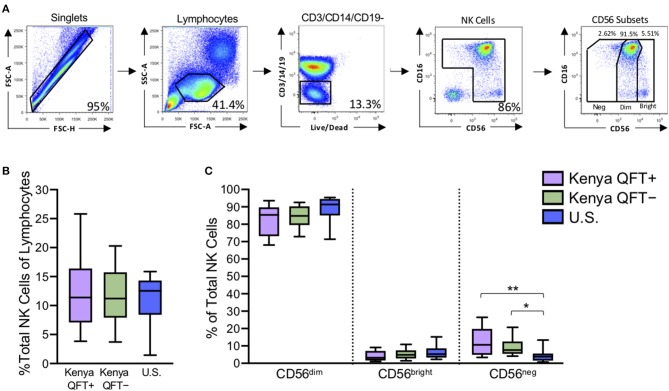
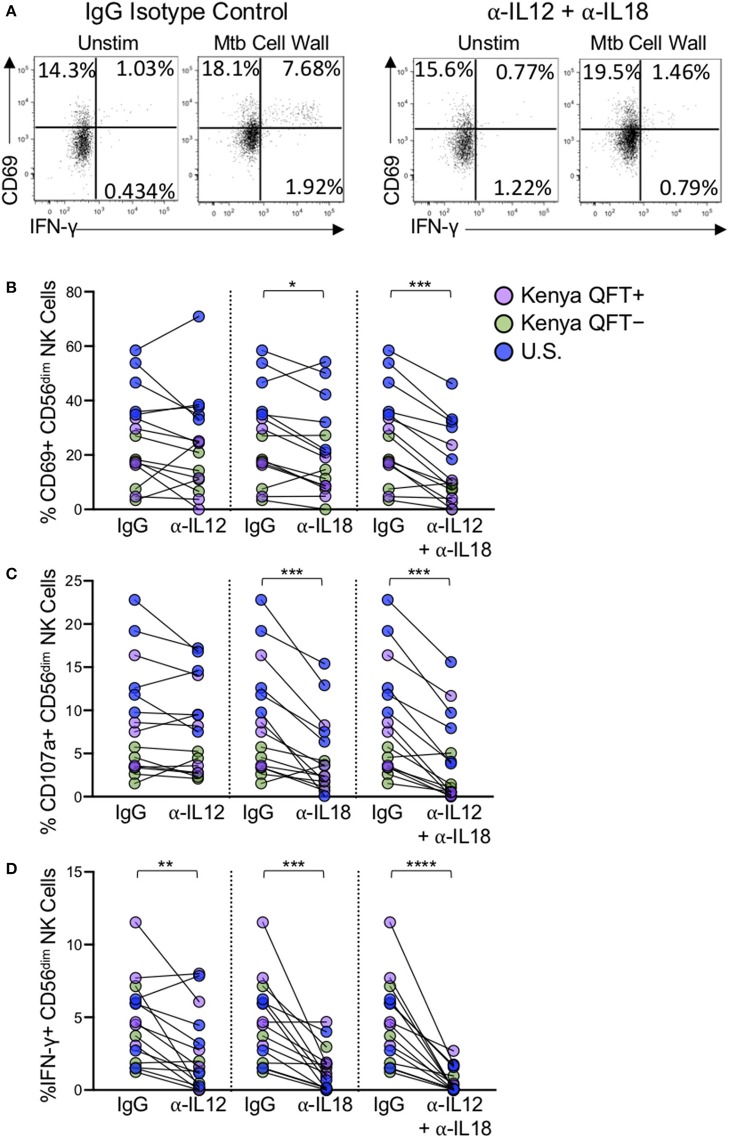
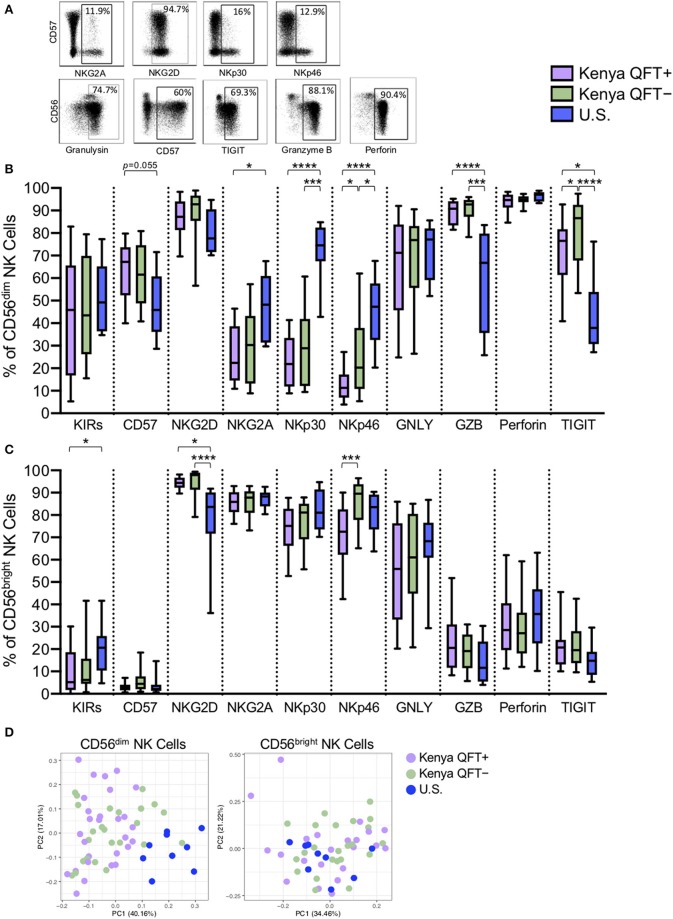
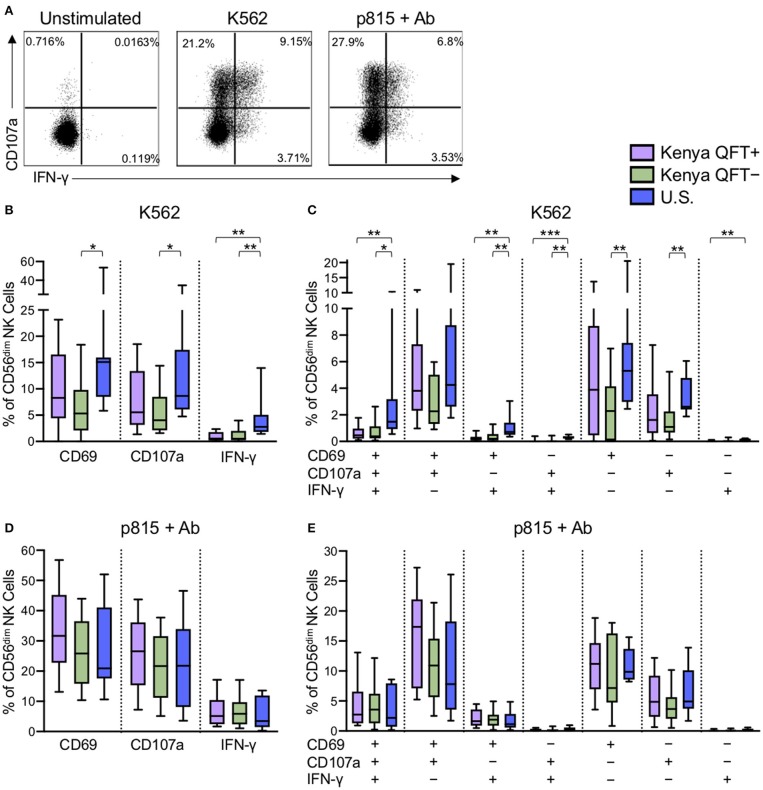
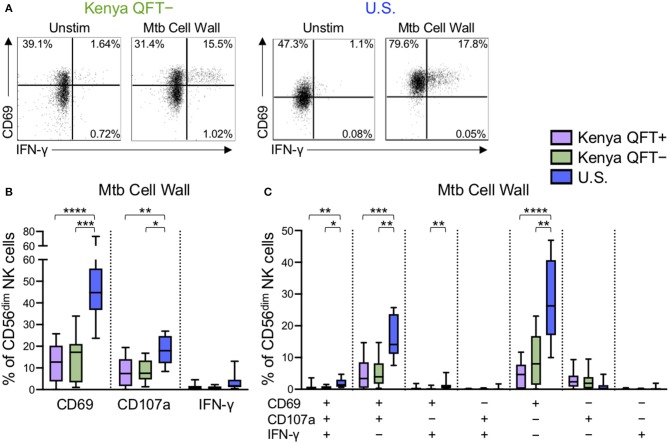
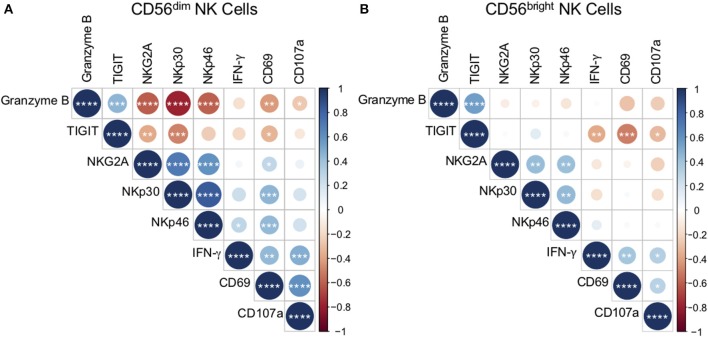
(Mtb) is the causative agent of tuberculosis (TB), which leads to an estimated 1. 5 million deaths worldwide each year. Although the immune correlates of protection against Mtb infection and TB disease have not been well-defined, natural killer (NK) cells are increasingly recognized as a key component of the innate immune response to Mtb and as a link between innate and adaptive immunity. In this study, we evaluated NK cell phenotypic and functional profiles in QuantiFERON-TB (QFT) and QFT adults in a TB endemic setting in Kisumu, Kenya, and compared their NK cell responses to those of Mtb-naïve healthy adult controls in the U.S. We used flow cytometry to define the phenotypic profile of NK cells and identified distinct CD56 NK cell phenotypes that differentiated the Kenyan and U.S. groups. Additionally, among Kenyan participants, NK cells from QFT individuals with latent Mtb infection (LTBI) were characterized by significant downregulation of the natural cytotoxicity receptor NKp46 and the inhibitory receptor TIGIT, compared with QFT individuals. Moreover, the distinct CD56 phenotypic profiles in Kenyan individuals correlated with dampened NK cell responses to tumor cells and diminished activation, degranulation, and cytokine production following stimulation with Mtb antigens, compared with Mtb-naïve U.S. healthy adult controls. Taken together, these data provide evidence that the phenotypic and functional profiles of NK cells are modified in TB endemic settings and will inform future studies aimed at defining NK cell-mediated immune correlates that may be protective against acquisition of Mtb infection and progression to TB disease.
(Mtb)是结核病(TB)的病原体,导致全球每年估计有 150 万人死亡。尽管针对 Mtb 感染和 TB 疾病的免疫相关因素尚未得到很好的定义,但自然杀伤(NK)细胞越来越被认为是针对 Mtb 的先天免疫反应的关键组成部分,也是先天免疫和适应性免疫之间的联系。在这项研究中,我们评估了在肯尼亚基苏木的结核病流行地区 QFT 和 QFT 成人中的 NK 细胞表型和功能特征,并将他们的 NK 细胞反应与美国 Mtb 未感染的健康成人对照进行了比较。我们使用流式细胞术来定义 NK 细胞的表型特征,并确定了区分肯尼亚和美国人群的独特 CD56 NK 细胞表型。此外,在肯尼亚参与者中,与 QFT 个体相比,潜伏性 Mtb 感染(LTBI)的 QFT 个体的 NK 细胞表现出 NKp46 自然细胞毒性受体和抑制性受体 TIGIT 的显著下调。此外,与 Mtb 未感染的美国健康成人对照组相比,肯尼亚个体中独特的 CD56 表型特征与 NK 细胞对肿瘤细胞的反应减弱以及刺激 Mtb 抗原后激活、脱颗粒和细胞因子产生减少相关。综上所述,这些数据提供了证据表明,在结核病流行地区,NK 细胞的表型和功能特征发生了改变,并将为未来旨在定义可能对 Mtb 感染和 TB 疾病进展具有保护作用的 NK 细胞介导的免疫相关因素的研究提供信息。