Zhang Jingjing, Zhou Rui, Xiang Changpei, Fan Fangfang, Gao Jinhuan, Zhang Yi, Tang Shihuan, Xu Haiyu, Yang Hongjun
Institute of Chinese Materia Medica, China Academy of Chinese Medical Sciences, Beijing, China.
J Cell Mol Med. 2020 May;24(9):4967-4980. doi: 10.1111/jcmm.15099. Epub 2020 Apr 7.
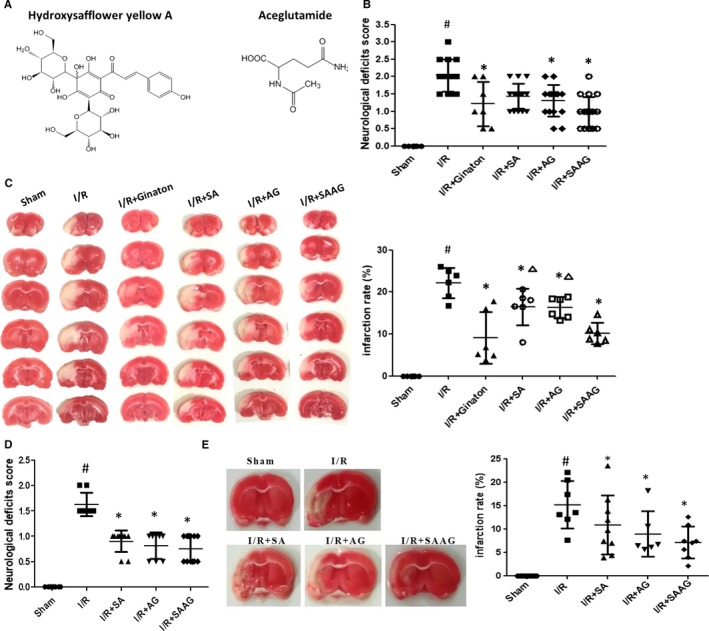
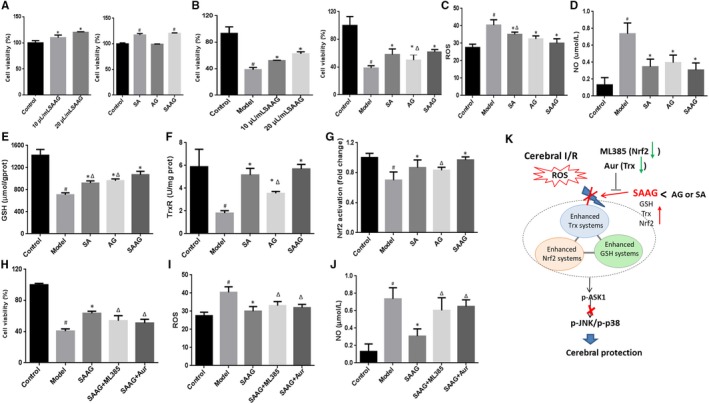
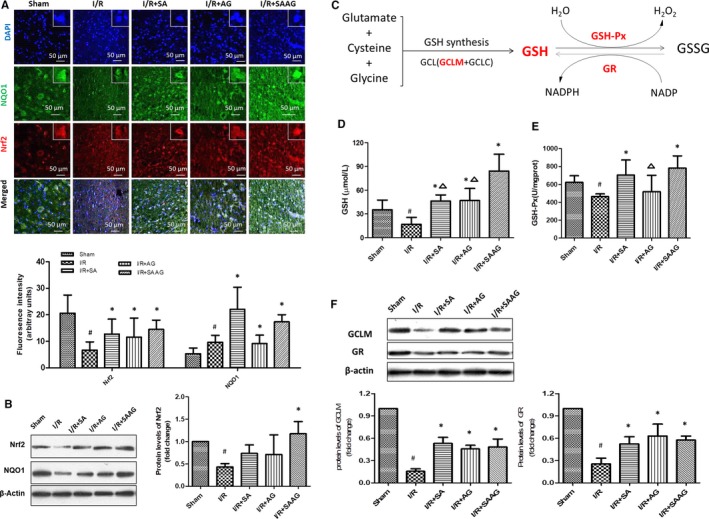
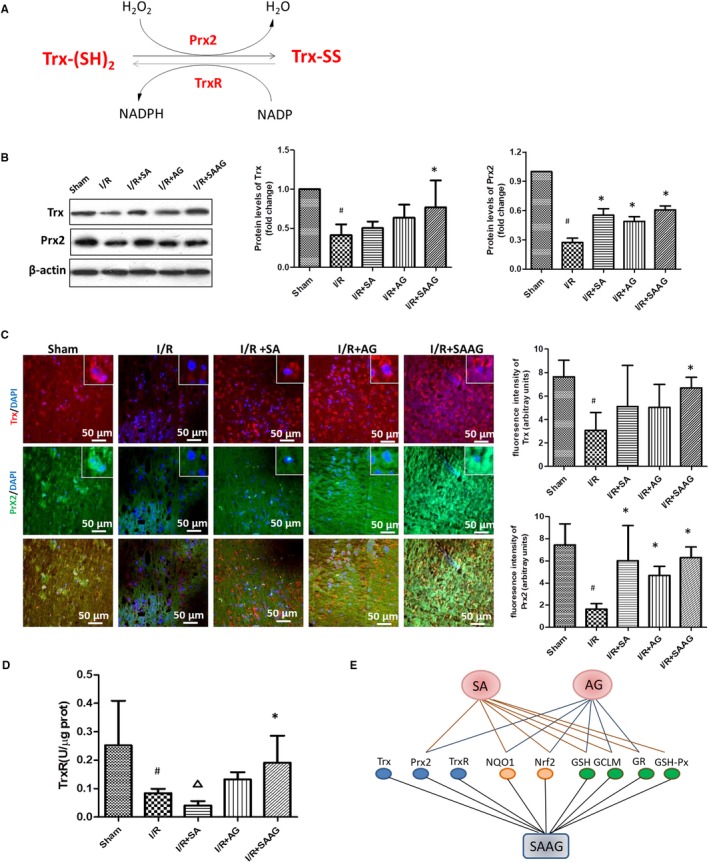
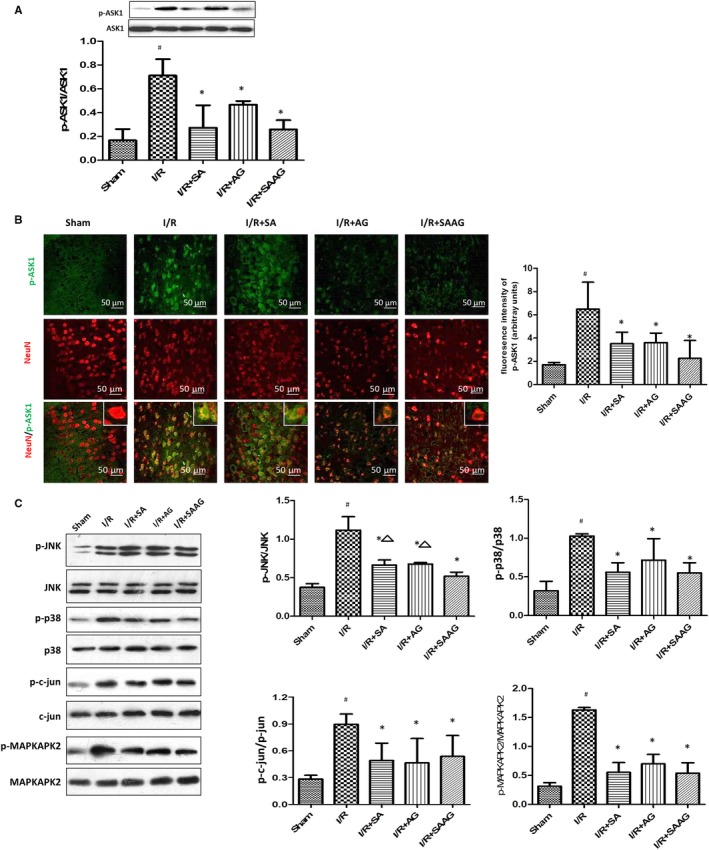
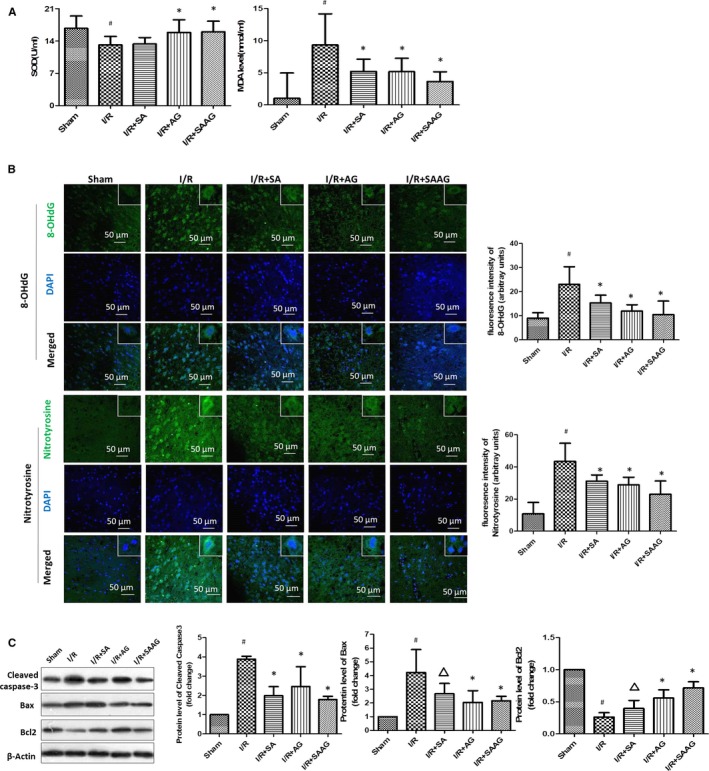
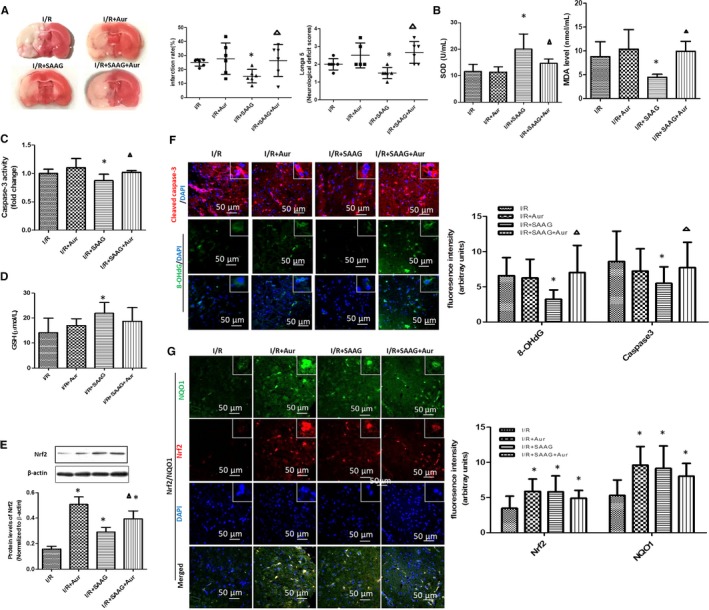
A large number of reactive oxygen species (ROS) aggravate cerebral damage after ischaemia/reperfusion (I/R). Glutathione (GSH), thioredoxin (Trx) and nuclear factor (erythroid-derived 2)-like 2 (Nrf2) represent three major antioxidant systems and play vital roles in affecting each other in eliminating ROS. Identification of drugs targeting triple antioxidant systems simultaneously is vital for inhibiting oxidative damage after cerebral I/R. This study investigated the protective effect of safflower extract and aceglutamide (SAAG) against cerebral I/R injury through modulating multiple antioxidant systems of GSH, Trx and Nrf2 and identified each role of its component acegluatminde (AG) and safflower extract (SA) on these systems. Safflower extract and aceglutamide and its two components decreased neurological deficit scores, infarction rate, apoptosis and oxidative damage after cerebral I/R while enhanced cell viability, decreased reactive oxygen species and nitric oxide level in H O -induced PC12 cell model. Importantly, compared to its two components, SAAG demonstrated more effective enhancement of GSH, Nrf2 and Trx systems and a better protection against cerebral I/R injury. The enhanced antioxidant systems prevented ASK1 activation and suppressed subsequent p38 and JNK cascade-mediated apoptosis. Moreover, inhibition of Trx and Nrf2 systems by auranofin and ML385 abolished SAAG-mediated protection, respectively. Thus, enhanced triple systems by SAAG played a better protective role than those by SA or AG via inhibition of ASK1 cascades. This research provided evidence for the necessity of combination drugs from the perspective of multiple antioxidant systems. Furthermore, it also offers references for the study of combination drugs and inspires novel treatments for ischaemic stroke.
大量活性氧(ROS)会加重缺血/再灌注(I/R)后的脑损伤。谷胱甘肽(GSH)、硫氧还蛋白(Trx)和核因子(红系衍生2)样2(Nrf2)代表三大抗氧化系统,在相互作用以清除ROS方面发挥着至关重要的作用。同时鉴定靶向三重抗氧化系统的药物对于抑制脑I/R后的氧化损伤至关重要。本研究通过调节GSH、Trx和Nrf2的多种抗氧化系统,研究了红花提取物和乙酰谷酰胺(SAAG)对脑I/R损伤的保护作用,并确定了其成分乙酰谷酰胺(AG)和红花提取物(SA)在这些系统中的各自作用。红花提取物、乙酰谷酰胺及其两种成分降低了脑I/R后的神经功能缺损评分、梗死率、细胞凋亡和氧化损伤,同时提高了细胞活力,降低了H₂O₂诱导的PC12细胞模型中的活性氧和一氧化氮水平。重要的是,与两种成分相比,SAAG更有效地增强了GSH、Nrf2和Trx系统,并对脑I/R损伤具有更好的保护作用。增强的抗氧化系统可防止ASK1激活,并抑制随后由p38和JNK级联介导的细胞凋亡。此外,金诺芬和ML385分别抑制Trx和Nrf2系统后,消除了SAAG介导的保护作用。因此,SAAG增强的三重系统通过抑制ASK1级联反应,比SA或AG发挥了更好的保护作用。本研究从多种抗氧化系统的角度为联合用药的必要性提供了证据。此外,它还为联合用药的研究提供了参考,并为缺血性中风的新治疗方法提供了启示。