Centro de Investigación en Sistemas de Salud . Instituto Nacional de Salud Pública de México . Cuernavaca , MOR , México.
Centro de Investigación en Salud Poblacional . Instituto Nacional de Salud Pública de México . Cuernavaca , MOR , México.
Rev Saude Publica. 2020 Apr 6;54:36. doi: 10.11606/s1518-8787.2020054001812. eCollection 2020.
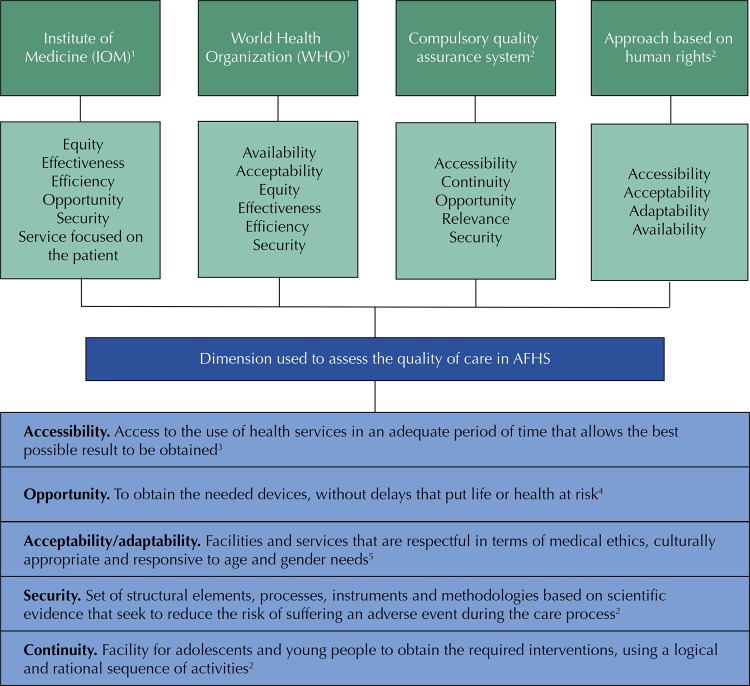
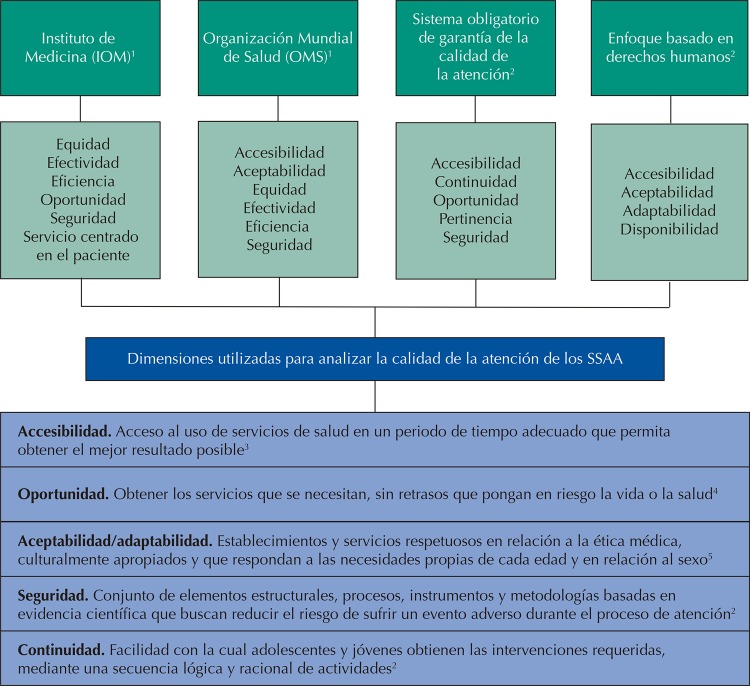
To assess the quality of adolescent friendly health services.
Qualitative assessment using the simulated user technique in first level clinics of Health Services of Morelos, Mexico, during 2018. Ten out of 17 facilities with non-exclusive adolescent friendly services were randomly selected. An additional facility with exclusive adolescent friendly services was included as an intensive subsample. Four adolescents served as simulated users interpreting different cases in the clinics. The total of 43 semi-structured exit interviews were conducted, and two nominal groups were made to assess the perceived quality from the adolescents' perception of friendliness and experience. Thematic analysis of the data obtained was performed.
Staff attitude was highlighted as a key element in the adolescents' experience. Failures were found, such as the existence of bureaucratic barriers to access, lack of signage in clinics, lack of privacy and confidentiality, failure of physical examination during the appointment and lack of monitoring of the reasons for appointment. The exclusive clinic for adolescents offered more appropriate friendly services compared with nonexclusive clinics.
Although the service is accessible in most of the clinics visited, it is still far from being friendly according to international recommendations. The exclusive clinic for adolescents stood out for having better structured mechanisms that can be implemented in nonexclusive clinics to improve the care process.
评估青少年友好型卫生服务的质量。
2018 年,在墨西哥莫雷洛斯州卫生服务机构的一级诊所使用模拟用户技术进行定性评估。从 17 家具有非专设青少年友好服务的机构中随机选择了 10 家。另外选择了一家具有专设青少年友好服务的机构作为强化亚样本。4 名青少年作为模拟用户在诊所中解释不同的病例。共进行了 43 次半结构化的退出访谈,并进行了两次名义小组讨论,以评估青少年对友好和体验的感知质量。对获得的数据进行了主题分析。
工作人员的态度被强调为青少年体验的关键因素。发现了一些失败之处,例如存在进入的官僚障碍、诊所缺乏标识、缺乏隐私和保密性、预约时未能进行体检以及未能监测预约原因。与非专设诊所相比,专设青少年诊所提供了更合适的友好服务。
尽管大多数访问的诊所都可以提供服务,但根据国际建议,它仍然远远不够友好。专门的青少年诊所具有更好的结构机制,这些机制可以在非专设诊所中实施,以改善护理过程。