Department of Public Health, Amsterdam Public Health Research Institute, Amsterdam UMC, University of Amsterdam, Amsterdam, The Netherlands.
The European Hospital and Healthcare Federation, Brussels, Belgium.
PLoS One. 2020 Apr 8;15(4):e0231345. doi: 10.1371/journal.pone.0231345. eCollection 2020.
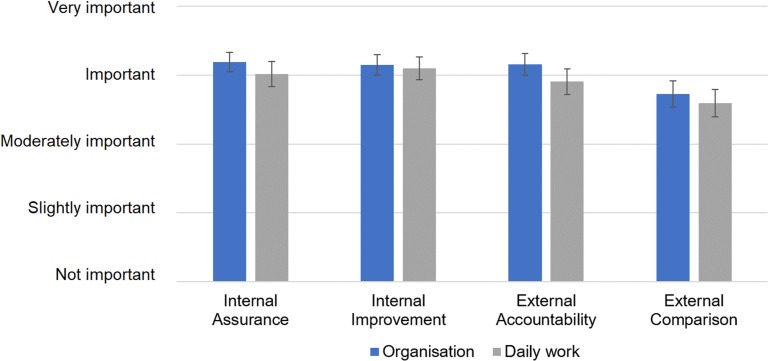
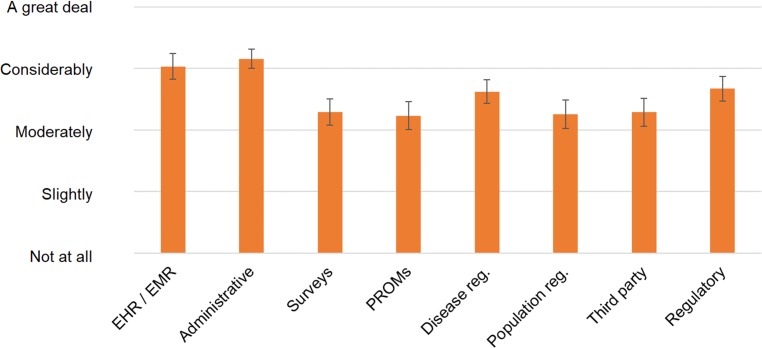
Objective of this study was to better understand the use of performance data for evidence-based decision-making by managers in hospitals and other healthcare organisations in Europe in 2019. In order to explore why, what and how performance data is collected, reported and used, we conducted a cross-sectional study based on a self-reported online questionnaire and a follow-up interactive workshop. Our study population were participants of a pan-European professional Exchange Programme and their hosts (n = 125), mostly mid-level hospital managers. We found that a substantial amount of performance data is collected and reported, but could be utilised better for decision-making purposes. Motivation to collect and report performance data is equally internal and external, for improvement as well as for accountability purposes. Benchmarking between organisations is recognised as being important but is still underused. A plethora of different data sources are used, but more should be done on conceptualising, collecting, reporting and using patient-reported data. Managers working for privately owned organisations reported greater use of performance data than those working for public ones. Strategic levels of management use performance data more for justifying their decisions, while managers on operational and clinical levels use it more for day-to-day decision-making. Our study showed that, despite the substantial and increasing use of performance data for evidence-based management, there is room and need to further explore and expand its role in strategic decision-making and supporting a shift in healthcare from organisational accountability towards the model of learning organisations.
本研究的目的是更好地了解欧洲医院和其他医疗机构的管理者在 2019 年如何利用绩效数据进行循证决策。为了探索绩效数据为何、如何以及如何被收集、报告和使用,我们进行了一项基于自我报告的在线问卷调查和后续互动研讨会的横断面研究。我们的研究对象是泛欧专业交流计划的参与者及其接待者(n=125),主要是中层医院管理者。我们发现,大量的绩效数据被收集和报告,但可以更好地用于决策目的。收集和报告绩效数据的动机既有内部的,也有外部的,既可以用于改进,也可以用于问责。组织之间的基准比较被认为很重要,但仍未得到充分利用。使用了大量不同的数据来源,但在概念化、收集、报告和使用患者报告数据方面应该做得更多。为私营组织工作的管理者比为公共组织工作的管理者更多地使用绩效数据。管理层的战略层面更多地使用绩效数据来为其决策辩护,而运营和临床层面的管理者则更多地将其用于日常决策。我们的研究表明,尽管大量且不断增加的绩效数据被用于循证管理,但仍有空间和需要进一步探索和扩大其在战略决策中的作用,并支持医疗保健从组织问责制向学习型组织模式转变。