Hodžić Adnan, Mateos-Hernández Lourdes, Fréalle Emilie, Román-Carrasco Patricia, Alberdi Pilar, Pichavant Muriel, Risco-Castillo Veronica, Le Roux Delphine, Vicogne Jérôme, Hemmer Wolfgang, Auer Herbert, Swoboda Ines, Duscher Georg Gerhard, de la Fuente José, Cabezas-Cruz Alejandro
Institute of Parasitology, Department of Pathobiology, University of Veterinary Medicine Vienna, 1210 Vienna, Austria.
UMR BIPAR, INRAE, ANSES, Ecole Nationale Vétérinaire d'Alfort, Université Paris-Est, 94706 Maisons-Alfort, France.
Vaccines (Basel). 2020 Apr 6;8(2):167. doi: 10.3390/vaccines8020167.
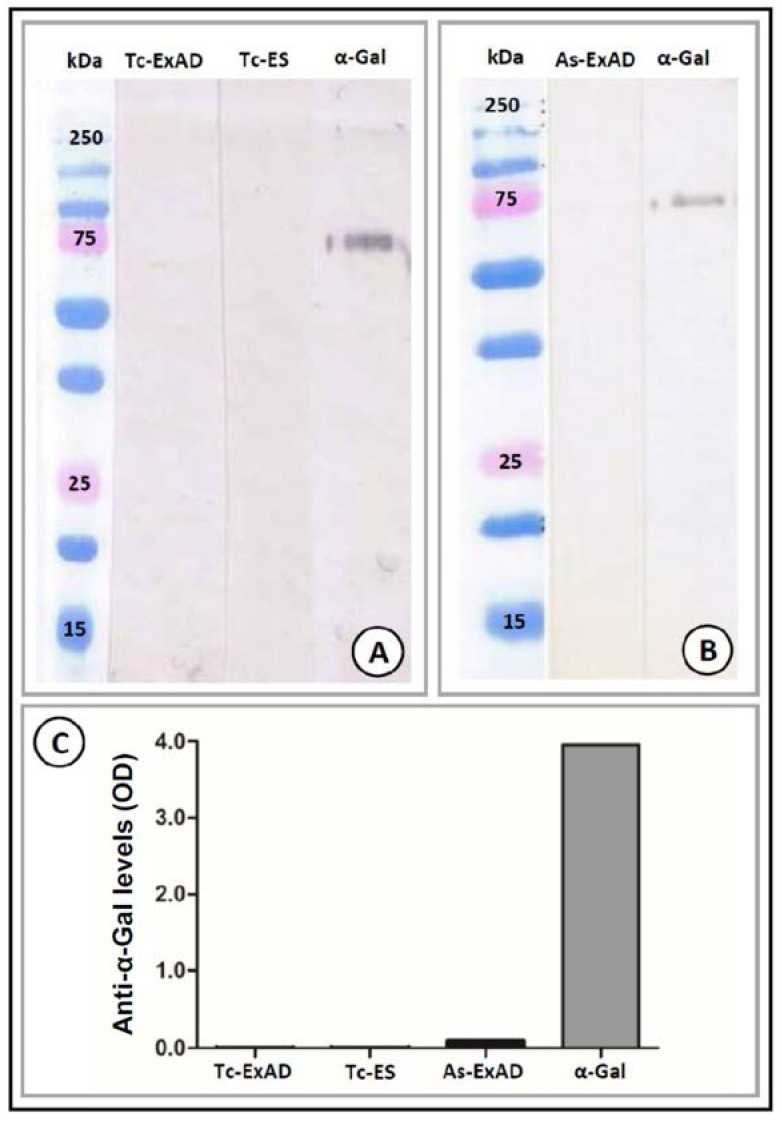
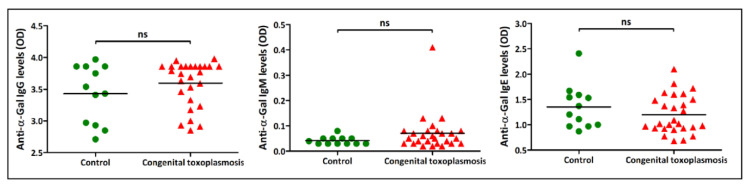
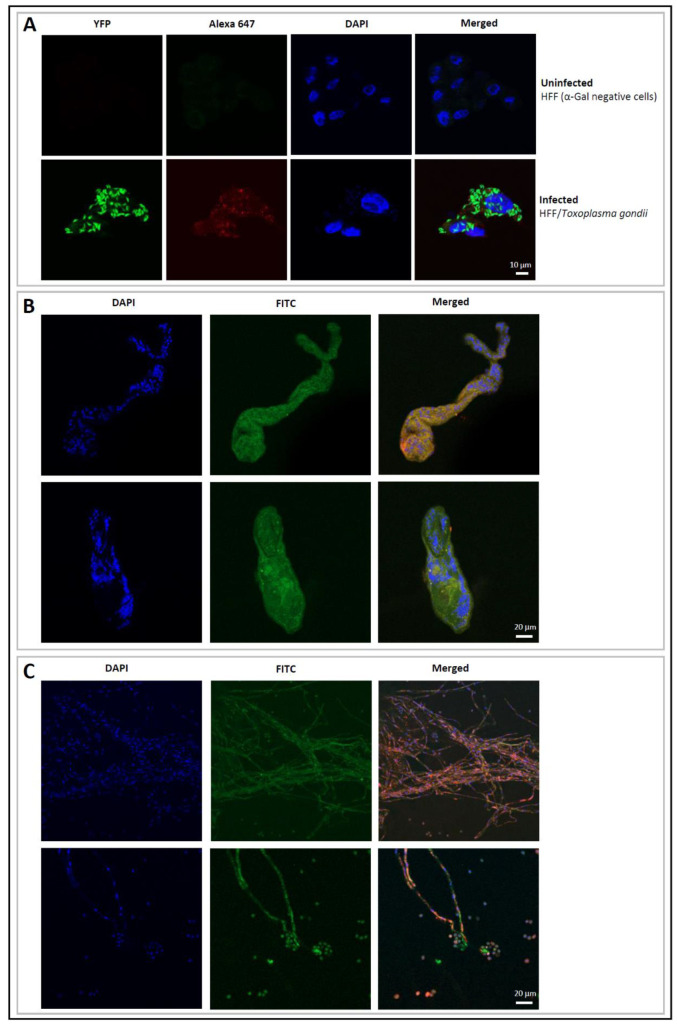
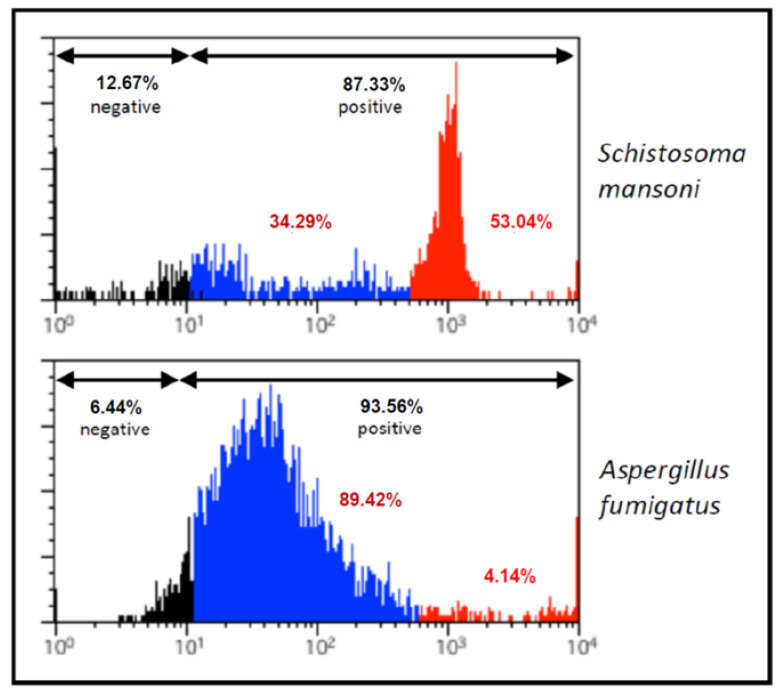
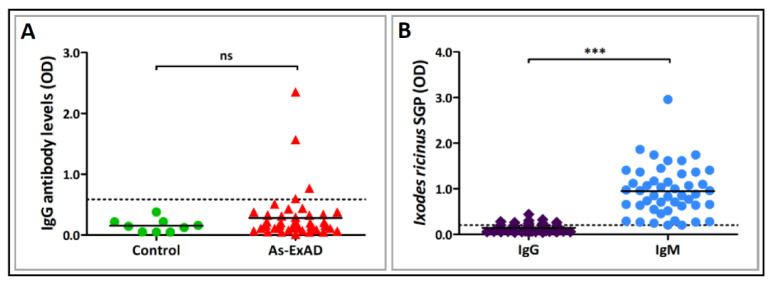
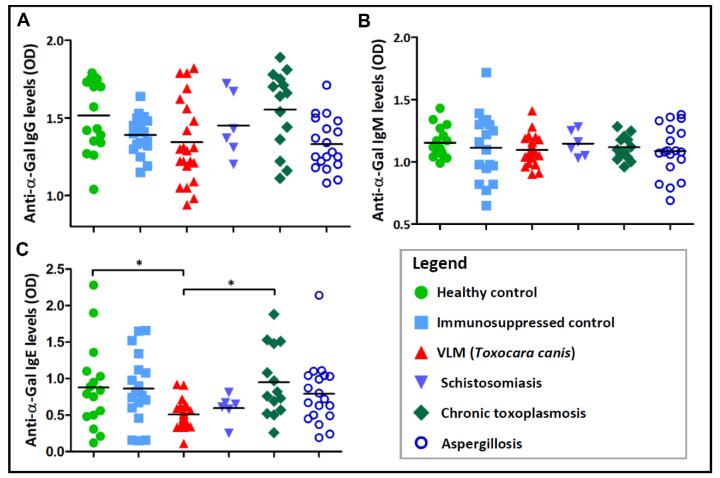
α-Gal syndrome (AGS) is a type of anaphylactic reaction to mammalian meat characterized by an immunoglobulin (Ig)E immune response to the oligosaccharide α-Gal (Galα1-3Galβ1-4GlcNAc-R). Tick bites seems to be a prerequisite for the onset of the allergic disease in humans, but the implication of non-tick parasites in α-Gal sensitization has also been deliberated. In the present study, we therefore evaluated the capacity of helminths (, , ), protozoa (), and parasitic fungi () to induce an immune response to α-Gal. For this, different developmental stages of the infectious agents were tested for the presence of α-Gal. Next, the potential correlation between immune responses to α-Gal and the parasite infections was investigated by testing sera collected from patients with AGS and those infected with the parasites. Our results showed that and produce the terminal α-Gal moieties, but they were not able to induce the production of specific antibodies. By contrast, , and lack the α-Gal epitope. Furthermore, the patients with infection had significantly decreased anti-α-Gal IgE levels when compared to the healthy controls, suggesting the potential role of this nematode parasite in suppressing the allergic response to the glycan molecule. This rather intriguing observation is discussed in the context of the 'hygiene hypothesis'. Taken together, our study provides new insights into the relationships between immune responses to α-Gal and parasitic infections. However, further investigations should be undertaken to identify components with potent immunomodulatory properties and to assess their potential to be used in immunotherapy and control of AGS.
α-半乳糖综合征(AGS)是一种对哺乳动物肉类的过敏反应,其特征是对寡糖α-半乳糖(Galα1-3Galβ1-4GlcNAc-R)产生免疫球蛋白(Ig)E免疫反应。蜱叮咬似乎是人类过敏性疾病发病的先决条件,但非蜱寄生虫在α-半乳糖致敏中的作用也已被探讨。因此,在本研究中,我们评估了蠕虫( 、 、 )、原生动物( )和寄生真菌( )诱导对α-半乳糖免疫反应的能力。为此,测试了感染因子的不同发育阶段是否存在α-半乳糖。接下来,通过检测从AGS患者和感染寄生虫的患者收集的血清,研究了对α-半乳糖的免疫反应与寄生虫感染之间的潜在相关性。我们的结果表明, 和 产生末端α-半乳糖部分,但它们不能诱导特异性抗体的产生。相比之下, 、 和 缺乏α-半乳糖表位。此外,与健康对照相比,感染 的患者抗α-半乳糖IgE水平显著降低,表明这种线虫寄生虫在抑制对聚糖分子的过敏反应中可能发挥作用。在“卫生假说”的背景下讨论了这一相当有趣的观察结果。综上所述,我们的研究为对α-半乳糖的免疫反应与寄生虫感染之间的关系提供了新的见解。然而,应该进行进一步的研究,以确定具有强大免疫调节特性的 成分,并评估它们在免疫治疗和AGS控制中的应用潜力。